

NYU Shanghai, in partnership with the NYU Graduate School of Arts and Science and the NYU Department of Physics, invites applications from exceptional students for PhD study and research in Physics.
Participating students are enrolled in the NYU GSAS Physics PhD program, complete their coursework at the NYU Department of Physics in New York, and then transition to full-time residence at NYU Shanghai where they undertake their doctoral research under the supervision of NYU Shanghai faculty.
Highlights of the Program
- NYU degree upon graduation
- Graduate coursework at the NYU Department of Physics in New York
- Research opportunities with and close mentorship by NYU Shanghai faculty
- Access to the vast intellectual resources of NYU GSAS and NYU Department of Physics
- Cutting-edge research environment at NYU Shanghai, including the Institute of Physics, activities such as a regular program of seminars and visiting academics, a thriving community of PhD students, post-doctoral fellows, and research associates, and links with other universities within and outside China
- Financial aid through the NYU Shanghai Doctoral Fellowship, including tuition, fees, and an annual stipend
- Additional benefits exclusive to the NYU Shanghai program, including international health insurance, housing assistance in New York, and travel funds
Supervising Faculty
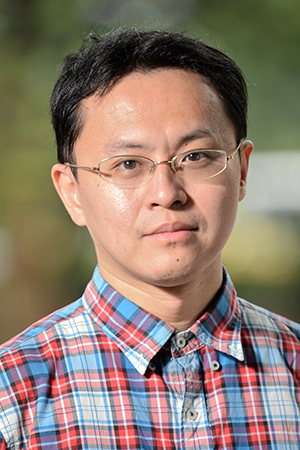
Hanghui Chen
Condensed matter theory and materials modelling; first principles methods and many-body model calculations; strongly correlated properties of quantum materials; superconductivity
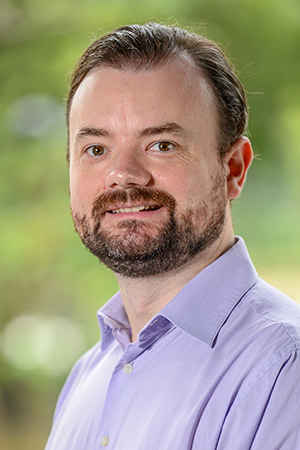
William Glover
Theoretical Photochemistry and Photobiology, Quantum Chemistry
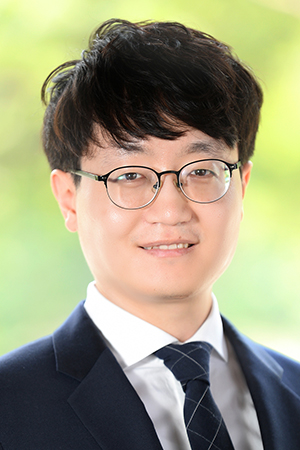
Pilkyung Moon
Condensed Matter Theory, Electronic Properties of Atomically Thin Films, Semiconductor Nanostructures, Quantum Hall Effect
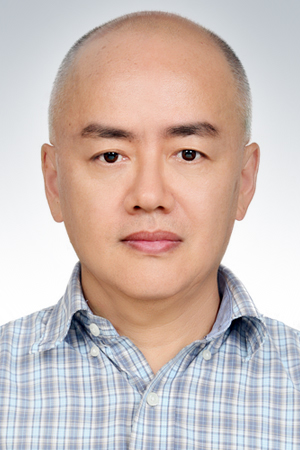
Bing Qi
Quantum Random Number Generation, Quantum Key Distribution, and Other Quantum Cryptographic Protocols; Building Blocks of Quantum Communication Networks; Integration of Quantum Technologies Into Classical Optical Networks; Optical Sensing
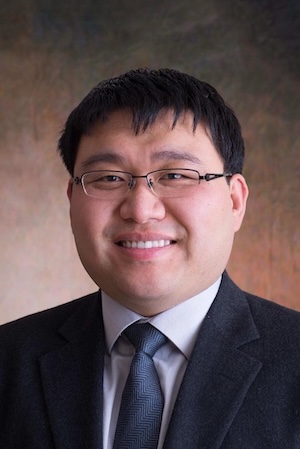
Xiang Sun
Theoretical Chemical Physics, Quantum Dynamics, Statistical Mechanics, Ultrafast Spectroscopy
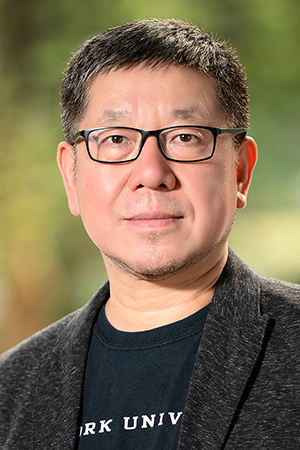
Jun Zhang
Fluid Dynamics, Biomechanics and Biophysics, Self-Organizing Phenomena at Microscopic and Macroscopic Scales
Recent Publications by NYU Shanghai Faculty
William Glover
- Alexander Humeniuk, William J. Glover, Multistate, polarizable QM/MM embedding scheme based on the direct reaction field method: Solvatochromic shifts, analytical gradients and optimizations of conical intersections in solution, J. Chem. Theory Comput. 20, 2111-2126 (2024)
- Amiel S. P. Paz, William J. Glover, Efficient analytical gradients of property-based diabatic states: Geometry optimizations for localized holes, J. Chem. Phys. 158, 204107 (2023)
- Xingpin Li, Xiangyu Jia, Amiel S. P. Paz, Yuquan Cao, William J. Glover,* Evidence for water antibonding orbital mixing in the hydrated electron from its oxygen 1s X-ray absorption spectrum, J. Am. Chem. Soc. 144, 19668-19672 (2022)
- Yuanming Bai, Leslie Vogt-Maranto, Mark E. Tuckerman, William J. Glover,* Machine learning the Hohenberg-Kohn map to molecular excited states, Nat. Commun. 13, 7044 (2022)
- Zhuofan Shen, Shaoting Peng, William J. Glover,* Flexible boundary layer using exchange for embedding theories. II. QM/MM dynamics of the hydrated electron, J. Chem. Phys. 155, 224113 (2021)
Hanghui Chen
- Yu Zhou, Xinyu Shu, Yang Zhang, Zhiwei Liu, Liangyang Liu, Kunhong Xiao, Shengchun Shen, Sijie Wu, Cong Li, Jianbing Zhang, Yingjie Lyu, Yongshun Wu, Houssam Sabri, Meng Wang, Di Yi, Tianxiang Nan, Guang-Ming Zhang, Qing He, Jiadong Zang, Luyi Yang, Shuyun Zhou, Hanghui Chen, Pu Yu, "Geometry-driven polar antiferromagnetic metallicity in a double-layered perovskite cobaltate", Nature Materials (2025)
- Chengliang Xia, Hongquan Liu, Shengjie Zhou, Hanghui Chen, "Sensitive dependence of pairing symmetry on Ni-eg crystal field splitting in the nickelate superconductor La3Ni2O7", Nature Communications 16, 1054 (2025)
- Wenjie Sun, Zhicheng Jiang, Chengliang Xia, Bo Hao, Shengjun Yan, Maosen Wang, Yueying Li, Hongquan Liu, Jianyang Ding, Jiayu Liu, Zhengtai Liu, Jishan Liu, Hanghui Chen, Dawei Shen, Yuefeng Nie, "Electronic structure of superconducting infinite-layer lanthanum nickelates", Science Advances 11, eadr5116 (2025)
- Yifei Hao, Xuegang Chen, Le Zhang, Myung-Geun Han, Wei Wang, Yue-Wen Fang, Hanghui Chen, Yimei Zhu, Xia Hong, "Record high room temperature resistance switching in ferroelectric-gated Mott transistors unlocked by interfacial charge engineering", Nature Communications 14, 8247 (2023)
- Hanghui Chen, Yifeng Yang, Guangming Zhang, Hongquan Liu, "An electronic origin of charge order in infinite-layer nickelates", Nature Communications 14, 5477 (2023)
- Jiaji Ma, Ruihan Yang, Hanghui Chen, "A large modulation of electron-phonon coupling and an emergent superconducting dome in doped strong ferroelectrics", Nature Communications 12, 2314 (2021)
- Di Tian, Zhiwei Liu, Shengchun Shen, Zhuolu Li, Yu Zhou, Hongquan Liu, Hanghui Chen, Pu Yu, "Manipulating Berry curvature of SrRuO3 thin films via epitaxial strain", PNAS 118 e2101946118 (2021)
- Zhangzhang Cui, Alexander J Grutter, Hua Zhou, Hui Cao, Yongqi Dong, Dustin A Gilbert, Jingyuan Wang, Yi-Sheng Liu, Jiaji Ma, Zhenpeng Hu, Jinghua Guo, Jing Xia, Brian J Kirby, Padraic Shafer, Elke Arenholz, Hanghui Chen, Xiaofang Zhai, Yalin Lu, "Correlationdriven eightfold magnetic anisotropy in a two-dimensional oxide monolayer", Science Advances 6, eaay0114 (2020)
Pilkyung Moon
- "Gate tunable optical absorption and band structure of twisted bilayer graphene", K. Yu, N. V. Luan, T. Kim, J. Jeon, J. Kim, P. Moon*, Y. H. Lee*, E. J. Choi*, Phys. Rev. B (Rapid Communications) 99, 241405(R) (2019). (doi: 10.1103/PhysRevB.99.241405)
- “Band Structure Engineering of 2D Materials using Patterned Dielectric Superlattices”, C. Forsythe, X. Zhou, T. Taniguchi, K. Watanabe, A. Pasupathy, P. Moon, M. Koshino, P. Kim, C. R. Dean, Nat. Nanotechnol. 13, 566 (2018). (doi: 10.1038/s41565-018-0138-7).
- “Dirac Electrons in a Dodecagonal Graphene Quasicrystal”, S. J. Ahn*, P. Moon*, T.-H. Kim,* H.-W. Kim, H.-C. Shin, E. H. Kim, H. W. Cha, S.-J. Kahng, P. Kim, M. Koshino, Y.-W. Son, C.-W. Yang, J. R. Ahn, Science 361, 782 (2018). (doi: 10.1126/science.aar8412) (* These authors contributed equally to this work.)
- Incommensurate double-walled carbon nanotubes as one-dimensional moiré crystals, Mikito Koshino,* Pilkyung Moon,* Young-Woo Son,* Physical Review B 91, 035405 (2015)
Bing Qi
- Reem Mandil, Stephen DiAdamo, Bing Qi, Alireza Shabani, “Quantum key distribution in a packet-switched network”, npj Quantum Inf 9, 85 (2023)
- Wang, Wenyuan, Rong Wang, Chengqiu Hu, Victor Zapatero, Li Qian, Bing Qi, Marcos Curty, and Hoi-Kwong Lo, “Fully Passive Quantum Key Distribution”, Physical Review Letters 130, 220801 (2023)
- Brian J. Rollick, George Siopsis, and Bing Qi, “Dynamic attenuation scheme in measurement- device-independent quantum key distribution over turbulent channels”, Phys. Rev. A 106, 032405 (2022)
- J.C. Chapman, J.M. Lukens, B. Qi, R.C. Pooser, and N.A. Peters, “Bayesian homodyne and heterodyne tomography”, Optics Express, 30(9), pp.15184-15200 (2022)
- S. DiAdamo, B. Qi, G Miller, R Kompella, A Shabani, “Packet Switching in Quantum Networks: A Path to Quantum Internet”, Phys. Rev. Research 4, 043064 (2022)
- Bing Qi, “Bennett-Brassard 1984 quantum key distribution using conjugate homodyne detection”, Phys. Rev. A 103, 012606 (2021)
- Eleftherios Moschandreou, Brian J. Rollick, Bing Qi, and George Siopsis, “Experimental decoy- state Bennett-Brassard 1984 quantum key distribution through a turbulent channel”, Phys. Rev. A 103, 032614 (2021)
- Y. Liu, D. Winder, B. Qi, C. Long and W. Lu, “Upgraded Fiber-Optic Sensor System for Dynamic Strain Measurement in Spallation Neutron Source,” IEEE Sensors Journal 21.23, 26772-26784 (2021)
- Yun Liu, Bing Qi, Drew E Winder, “Faraday Michelson interferometers for signal demodulation of fiber-optic sensors”, Journal of Lightwave Technology 39 (8), 2552-2558 (2021)
- Bing Qi, Pavel Lougovski, and Brian P. Williams, “Characterizing photon number statistics using conjugate optical homodyne detection”, Optics Express 28, 2276-2290 (2020)
- Bing Qi, Hyrum Gunther, Philip G. Evans, Brian P. Williams, Ryan M. Camacho, and Nicholas A. Peters, “Experimental passive-state preparation for continuous-variable quantum communications”, Physical Review Applied 13 (5), 054065 (2020)
- Hsuan-Hao Lu, Bing Qi, Brian P. Williams, Pavel Lougovski, Andrew M. Weiner, and Joseph M. Lukens, “Agile frequency transformations for dense wavelength-multiplexed communications”, Optics Express 28 (14), 20379-20390, (2020)
- Joseph Lukens, Hsuan-Hao Lu, Bing Qi, Pavel Lougovski, Andrew Weiner, Brian P. Williams, “All- Optical Frequency Processor for Networking Applications”, Journal of Lightwave Technology 38 (7), 1678-1687 (2020)
Xiang Sun
- Zengkui Liu, Xiang Sun*, Direct All-Atom Nonadiabatic Semiclassical Simulations for Electronic Absorption Spectroscopy of Organic Photovoltaic Chromophore in Solution, J. Phys. Chem. Lett. 16, 4463-4473 (2025).
- Hao Zeng, Yitian Kou, Xiang Sun*, How Sophisticated Are Neural Networks Needed to Predict Long-Term Nonadiabatic Dynamics?J. Chem. Theory Comput. 20, 9832-9848 (2024).
- Zengkui Liu, Zailing Song, Xiang Sun*, All-Atom Photoinduced Charge Transfer Dynamics in Condensed Phase via Multistate Nonlinear-Response Instantaneous Marcus Theory, J. Chem. Theory Comput. 20, 3993-4006 (2024).
- Zhubin Hu, Xiang Sun*, All-Atom Nonadiabatic Semiclassical Mapping Dynamics for Photoinduced Charge Transfer of Organic Photovoltaic Molecules in Explicit Solvents, J. Chem. Theory Comput. 18, 5819-5836 (2022).
- Tao Wang, Zhubin Hu, Xiancheng Nie, Linkun Huang, Hui Miao, Xiang Sun*, Guoqing Zhang*, Thermochromic Aggregation-Induced Dual Phosphorescence via Temperature-Dependent sp3-Linked Donor-Acceptor Electronic Coupling, Nat. Commun. 12, 1364 (2021).
Jun Zhang
- Levy walks and path chaos in the dispersal of elongated structures moving across cellular vortical flows, Hu SY, Chu JJ, Shelley M, Zhang J., Phys. Rev. Lett. 127, 074503 (2021)
- Metallic microswimmers driven up the wall by gravity, Brosseau, Usabiaga, Lushi, Wu, Ristroph, Ward, Shelley and Zhang, Soft Matter. 17, 6597 (2021)
- Streaming controlled by meniscus shape, Huang, Wolfe, Zhang and Zhong, J. Fluid Mech. 895, A1 (2020)
- Zhang J. "Footprints of a flapping wing," Journal of Fluid Mechanics 818, 1-4 (2017)
- Ristroph L, Liao J, and Zhang J. "Lateral Line Layout Correlates with the Differential Hydrodynamic Pressure on Swimming Fish," Phys. Rev. Lett.114, 018102 (2015)
Selected Faculty and Student Features
"New Findings in Nickelate Superconductors" (Hanghui Chen)
“Professor Jun Zhang Elected as Member of Academia Europaea” (Jun Zhang)
"Physicists Explain the Origin of Charge Order in Nickelate Superconductors" (Hanghui Chen)
"Controlling Heat with Heat: New Approach Proposed to Tame Thermal Convection" (Jun Zhang)
"Physics Institute Co-Sponsors Leading Quantum Information Conference" (Tim Byrnes)
"Institute Members Participate in Research Funded by NSFC Major Research Plan" (Jun Zhang)
"Building ‘Lego’ Blocks in Physics: New Mechanism Designed to Induce Topological States in Oxides" (Hanghui Chen)
"Ultrafast Polariton Switch Realized by Institute of Physics Members" (Tim Byrnes)
"NYU Shanghai Hosts International Forum of Fluid Physics" (Jun Zhang)
"Soft Ferromagnetism Found in Oxide Thin Films, NYU Shanghai Scientists Give Theoretical Explanation" (Hanghui Chen)
"NYU Shanghai Grants First Tenure Awards to Neuroscience, Physics Faculty Members" (Tim Byrnes)
"NYU Shanghai Researchers Find a Possible Way to Induce Superconductivity in Ferroelectrics" (Hanghui Chen)
"NYU Shanghai Scientists Develop a Method of Teleporting Quantum States Using Majorana Fermions" (Tim Byrnes, Marek Narozniak)
"HED: Research Discovers New Physical Properties in a Magnetic Oxide Monolayer" (Hanghui Chen)
"Fluid Dynamics Helps Researchers Uncover the Mysteries of Shooting Stars" (Jun Zhang)
"A New Way to Achieve the Entanglement between Two Bose-Einstein Condensates" (Tim Byrnes)
"NYU Shanghai Professor and Colleagues Create a New Type of Quasicrystal" (Pilkyung Moon)
"A Glimpse into a 'Two-Faced' Material" (Hanghui Chen)
"Professor Jun Zhang Elected APS Fellow, Cited for 'His Elegant and Artful Experiments" (Jun Zhang)
"Distinguished Young Scholar" (Tim Byrnes)
“Students and Scholars Gather for 2025 Summer School on Machine Learning and Artificial Intelligence for the Molecular Science at NYU Shanghai” (William Glover, Sun Xiang, John Zhang)
“Chemistry Faculty Xiang Sun Wins Prestigious Research Grant” (Xiang Sun)
“NYU Shanghai Hosts Frontier Symposium on Theoretical and Computational Chemistry” (William Glover, Xiang Sun, John Zhang)
"Cover article: New Computational Technique Investigates Charge Transfer in DNA" (Amiel Paz, William Glover)
"NYU Shanghai PhD Student Wins Best Poster at Chinese Chemical Society Congress" (Zengkui Liu, Xiang Sun)
"Dialogue with Directors: Pushing the Boundaries of Research Through Interdisciplinary Collaboration" (William Glover, John Zhang)
"Scientists Develop Artificial Intelligence to Predict Photochemical Reactions" (William Glover, Yuanming Bai)
"Professor William Glover Wins OpenEye Outstanding Junior Faculty Award in Computational Chemistry" (William Glover)
"New NYU Shanghai Study Explores the Nature of Hydrated Electrons" (William Glover, Xinping Li)
"NYU Shanghai Scientists Propose New Approach for Charge Transfer Rate Calculation" (Xiang Sun, Zengkui Liu)
"NYU Shanghai Researchers Construct New Models for Energy Transfer Simulation" (Xiang Sun, Dominikus Brian)
Structure of Program
Participating students complete the PhD degree requirements set by the NYU Department of Physics and in accordance with the academic policies of NYU GSAS. Each student develops an individualized course and research plan in consultation with the Director of Graduate Study at the NYU Department of Physics and the student’s NYU Shanghai faculty advisor. Most students will complete their PhD in 4-5 years. A typical sequence follows:
in Shanghai
border
Begin program with funded research rotation, up to 3 months preceding first Fall semester, to familiarize with NYU Shanghai and faculty as well as lay a foundation for future doctoral study.
(Fall and Spring)
in New York
border
Complete PhD coursework at Department of Physics alongside other NYU PhD students.
in Shanghai
border
Return to Shanghai for second funded research rotation to solidify relationships with NYU Shanghai faculty and make further progress in research.
in Shanghai
border
Under supervision of NYU Shanghai faculty advisor, pursue dissertation research and continue coursework. Depending on each student’s individualized course of study, return visits to New York may also occur. Complete all required examinations and progress evaluations, both oral and written, leading up to submission and defense of doctoral thesis.
To learn more about the NYU Physics PhD program degree requirements, please visit this page.
Current Students
| Name | Research Areas |
| Roy Pace | Quantum Information Technology |
| Shihong Pan | Quantum Information Science, Quantum Key Distribution, Quantum Network |
| Jonathan Raghoonanan | Quantum Information, Quantum Computing |
| Hanzhou Tan | Condensed Matter Physics, Low-dimensional Systems |
| Krzysztof Warmuz | Quantum Computing, Quantum Information, Quantum Cryptography |
| Kaixuan Zhou | Quantum Information Technology, Quantum Computation |
Alumni
| Name | First Placement |
| Marek Narozniak | Startup Founder |
Application Process and Dates
Applications are to be submitted through the NYU GSAS Application portal, within which students should select the Physics PhD as their program of interest, and then indicate their preference for NYU Shanghai by marking the appropriate checkbox when prompted. Applicants will be evaluated by a joint admissions committee of New York and Shanghai faculty. Application requirements are set by the NYU Department of Physics and are the same as those for all NYU PhD applicants, no matter their campus preference; however, candidates are recommended to elaborate in their application and personal statements about their specific interests in the NYU Shanghai program and faculty.
For admission in Fall 2027, the application deadline is December 30, 2026.
Contact Us
Interested students are welcome to contact Vivien Du, PhD Program Manager, at shanghai.phd@nyu.edu with any inquiries or to request more information.