

Understanding Our World Through Food is a comprehensive, engaging, and fun course for anyone curious about the role food plays in our lives. Everybody eats. Inevitably, we think we are experts — and, in a way, we are. We all talk about cooking, look at dishes on the Internet, and go to grocery stores and restaurants. We all experience food in different ways, and we tend to have strong feelings and ideas about it. As it contributes to our cultural and social identity, food defines communities at all levels and can be used as a powerful political symbol.
This course is designed for a wide audience of lifelong learners who want to understand their own involvement in the complex and worldwide networks of food systems: from the familiar and the nearby to the foreign and the faraway. Through this course, gourmets, professionals, culinary entrepreneurs, and curious individuals alike will acquire a comprehensive introduction to food culture and food systems. Through a mix of lectures, case studies, activities, and media analysis, participants will think critically about how cultural dynamics, social structures, and economic mechanisms determine where the products we eat come from, how they get to us, and why we have access to those and not others.
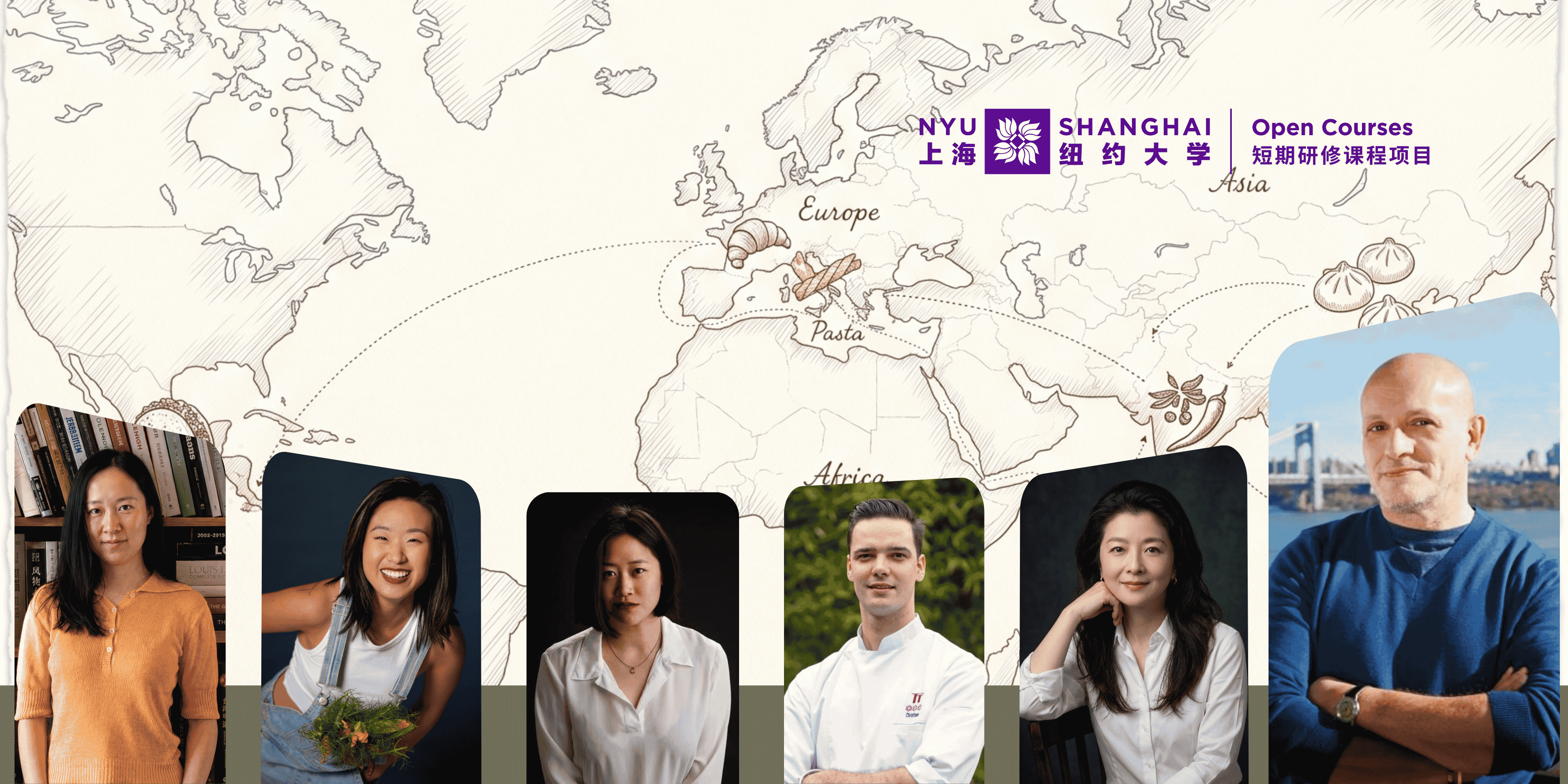
In the course, participants will gain a better understanding of the changes in their own food culture and food system, reflecting creatively about what can be done to improve such a ubiquitous aspect of everyday life.
Course Highlights
- Explore the roots of cuisines around the world being recognized as UNESCO intangible cultural heritages
- Uncover the answer to what trendy restaurants in Shanghai, Cape Town, Mumbai, Copenhagen, Rio de Janeiro, and Tel Aviv all have in common
- Learn the secrets behind the only 3-star Michelin restaurant in Shanghai
- Hear behind-the-scenes stories about the making of the world-famous A Bite of China documentary series
- Chronicle the rise of social media as a phenomenon impacting the success or failure of food institutions
- Dive into the fascinating stories of Guizhou cuisine in China and what Cantonese soup traditions can teach us about life
- Learn about the surprising ways that food and political movements intersect
- Examine the challenges and opportunities of international culinary tourism
- Participate in an immersive food design and product innovation experience workshop
- Discover the cultural similarities between Italy and China in cooking with offal
- Explore the history of Cockaigne, the mythical land of plenty in medieval European folklore, that allowed peasants in the Middle Ages to dream of a luxury food paradise
- And MANY MORE…
Learning Objectives
By the end of this course, learners will be able to:
- Achieve a deeper and wider understanding of the influence of food on the cultural and social life of individuals and communities.
- Identify the relations among global food trade, power structures, and geopolitical dynamics.
- Develop critical skills in the analysis of the global food system.
- Evaluate the role of food in media and popular culture.
- Identify key institutions and stakeholders that have shaped the way we produce, distribute, consume, and dispose of food.
- Articulate some of the historical, social, and cultural transformations in the food system related to innovation and the introduction of new technologies.
Course Outline
Section I — Food Fundamentals
Saturday, August 1 from 9 a.m. – 12 p.m.,1:30 – 4:30 p.m.
Food Fundamentals: The Senses, Memory, and the Self
- Food and the senses.
- Food, memory, and emotions.
- Food and human psychology: pleasure, disgust, body image, eating disorders.
- Food and individual identity: preferences, taste, nostalgia, and imagination.
- Food and communal identity: family, friends.
Sunday, August 2 from 9 a.m. – 12 p.m.,1:30 – 4:30 p.m.
Food Fundamentals: Culture, Society, and Heritage
- Food as culture, sign, and symbol.
- Food and society: gender, class, age, religion, social and political movements.
- Food and collective identity: rituals, traditions, heritage.
- Traditional artisanal products, varieties, breeds, place-based labels, agrobiodiversity.
- Food and institutional frameworks: marks, geographical indications, UNESCO Intangible
- Cultural Heritage
Saturday, August 8 from 9 a.m. – 12 p.m.
Food Fundamentals: Systems, Sustainability, and Security
- Food systems: from the local to the international.
- Supply chains.
- Food provisioning: informal exchange networks, street food, markets, stores, restaurants.
- Food, the environment, and sustainability.
- Food loss and food waste.
- Food safety and food security.
Sunday, August 9 from 9 a.m. – 12 p.m.,1:30 – 4:30 p.m.
Food Fundamentals: Digital Foodscapes and the Future
- Digital foodscapes.
- Food and media (popular culture, TV, film).
- Food and technology (e-agriculture, genetic modifications, blockchain).
Section II — Advanced Seminar
Tuesday, August 4, at 6:00 p.m. - 9:00 p.m.
Food and Globalization
Thursday, August 6, at 6:00 p.m. - 9:00 p.m.
Food, Design, and Innovation