

Parenting has never been simple, and it has become more and more intense in contemporary China. With the rapid social, economic, and policy changes in China, the ideas about “good parenting” also have been changing constantly. How one was brought up in the past can be very different from how one might be expected to act as a parent nowadays. In contemporary China, children and adolescents continue to face high academic pressure, with all sorts of distractions in the new digital era. Meanwhile, families are of diverse structures (e.g., living with grandparents, parents living apart, single-parent households, internal migration and international immigration, blended families), and the prevalence of child psychological and behavioral issues seems to be increasing. All these happenings have made parents disoriented in their daily practices and left them an unpredictable future.
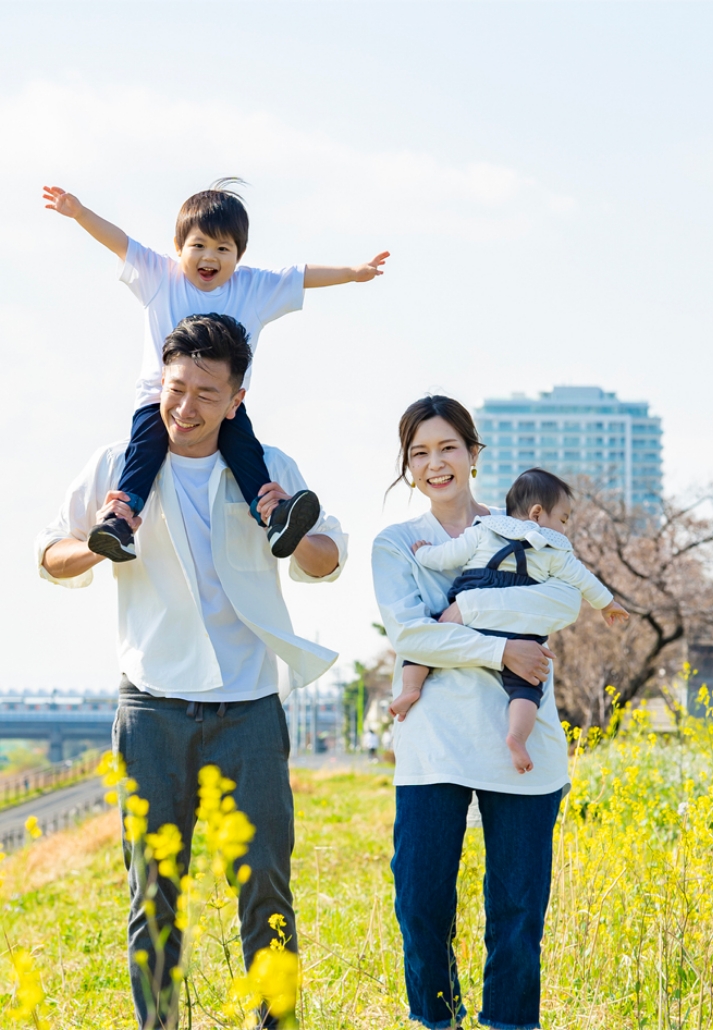
This short, discussion-based course is designed for a wide audience of lifelong learners who want to understand how caregivers influence child development over time in contemporary China. This course invites you to step back from the daily rush and take a thoughtful, research-informed look at parent-child relationships. Rather than offering “perfect” prescriptions for parenting, this course focuses on what actually shapes children’s development over time—across infancy, childhood, and adolescence—and how everyday parenting choices, emotions, and habits make a difference. No prior expertise in these fields is required nor is it necessary to be a current parent to enroll. Future parents or anyone who is open-minded and curious about parent-child relationships are welcome to join.
In this course, we’ll explore classic ideas such as parenting styles and attachment, but in a very practical manner. For example, what does “being firm but fair” look like with a stubborn three-year-old, or a silent fifteen-year-old? How does one set limits without constant conflict or guilt? Rooted in real-world Chinese family experiences, this course looks at topics such as grandparents’ involvement, “tiger parenting”, gender expectations for sons and daughters, and how today’s meritocratic, competitive environment affects both parents and kids. We’ll also learn about new challenges including social media, online games, and “technoference” (when phones and screens disrupt parent-child connection) and discuss concrete strategies for digital-age parenting that protect children while respecting their growing independence.
Throughout the course, you’ll be invited to reflect on your own story: your hopes, your worries, and the patterns you may have inherited from your own upbringing. We will learn about practical tools such as emotion coaching, mindful parenting, and ways to respond to children’s misbehavior without escalating power struggles. Special attention is given to parenting children with different temperaments (e.g., so-called “orchid” and “dandelion” kids) and those with special needs such as autism or ADHD. Whether you are a parent, grandparent, educator, or simply someone who cares about children, this course offers a rare opportunity to pause, connect with others facing similar challenges, and rethink what it means to raise a child well in contemporary China.
Learning Objectives
- Gain a clearer understanding of yourself and your child, and a deeper appreciation of the “village” that shapes Chinese families today. If you have a child, gain a new perspective on your child’s unique personhood, psychology, and behavior.
- Obtain a toolkit of ideas in parenting you can start using immediately at home or in the future
- Understand current research and theories on parenting and its impact on children, with an emphasis on parenting throughout the lifespan
- Develop self-care and coping strategies, and create support systems to reduce stress and burnout
Selected Course Topics
- Diana Baumrind’s parenting styles and dimensions
- Authoritative parenting: Integration of control and negotiation
- Psychological control vs. autonomy granting, setting limits
- Parental monitoring: parental knowledge
- Parenting across developmental stages: infancy, early childhood, middle childhood, adolescence
- Uri Bronfenbrenner’s Bioecological systems theory
- Social and economic changes and parenting: shyness, emotion expression, autonomy, social and emotional parenting
- Globalization, geopolitical influences, meritocracy
- Attachment: Parent-child emotional bond
- Adverse childhood experiences (ACEs) and Protective and compensatory experiences (PACEs)
- Effective parenting practices: attunement; mindfulness; validation; acceptance
- Mindful parenting: parental self-efficacy
- Emotion-related parenting practices: emotion coaching, emotion dismissing, meta-emotion philosophy (the measure)
- Responses to children’s negative and positive emotions
- Parental psychopathology and child adjustment
- How parents take care of themselves
- Dandelion and orchid children
- Parenting with multiple children, differential treatment, and the influence of siblings
- Grandparenting
- Parenting children with special needs: autism, ADHD, ODD, learning difficulties
- Responding to misbehavior and aggression in children
- Parenting children of different sex: gender socialization, masculinity and femininity
- Parental gender role beliefs
- Parenting in the digital era and the role of social media in child development
- Debunking Chinese parenting myths: tiger parenting, “父母之爱子,则为之计深远”;穷养和富养, “Genes make parents irrelevant”
- The inverse power of praise
- Influences of family structure: single-parent, blended family, etc.