

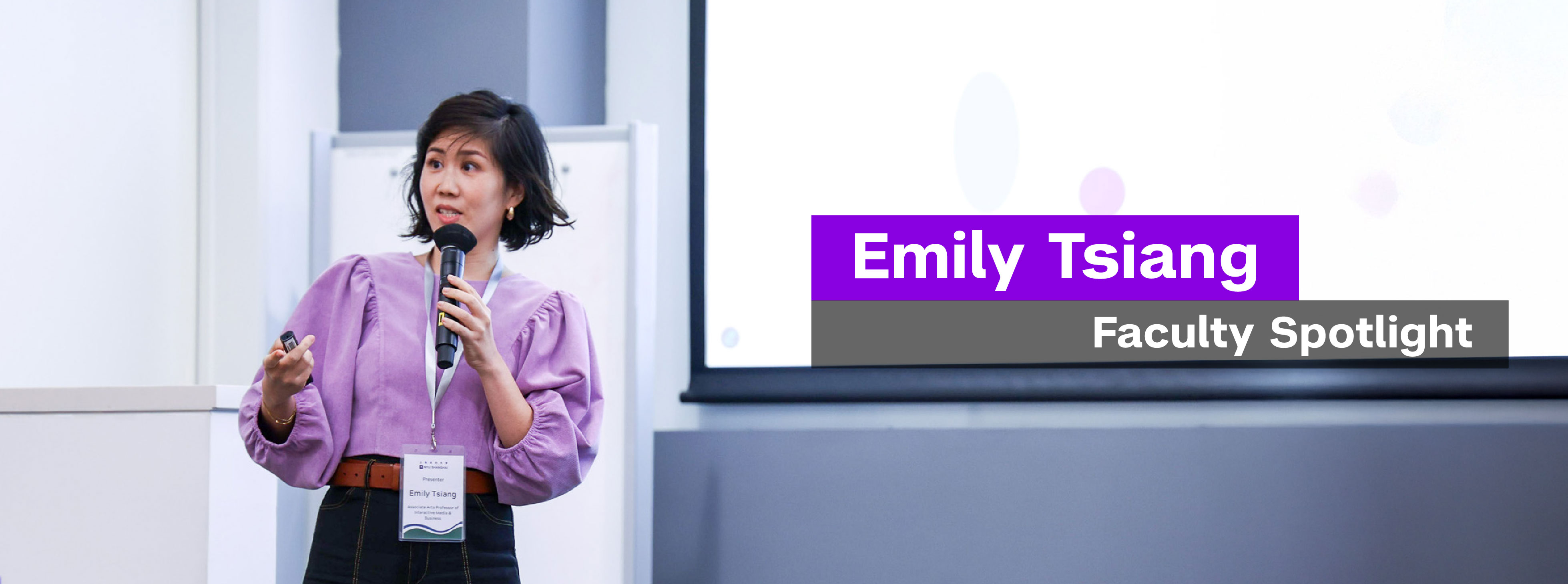
Associate Arts Professor of Interactive Media Business Emily Tsiang exemplifies how life design extends beyond the classroom, emphasizing the importance of the questions we ask ourselves in the places we inhabit. As the director of Global Experiential Learning within the Program on Creativity and Innovation, her work and perspective invite students to make meaning from experience and author the evolving story of their lives.
You often talk about “design thinking” as something that feels innate to you. Where did that begin?
It started with my dad, who earned his doctorate in mechanical engineering and the discipline where design thinking originated. I realize now that he was teaching me the designer’s mindset from the time I was born. We had family meetings using heat maps and color-coded Post-its to evaluate decisions.
We always explored problems looking at it visually first. Before solving something, you sketched it out: observe, map, prototype, adjust.
When I later encountered Stanford’s design thinking methodology in my 20s, it felt like someone had taken my brain and made it into a methodology. I didn’t learn it from a textbook. It was just the way my dad taught us to see the world.
Your early career didn’t start off in academia. What were you doing before teaching?
In Life Design, we reframe the classic question “What do I want to be when I grow up?” to “What do I want to grow into as I explore the next part of my life? This releases the expectation that we need to know what we’re going to do with the rest of our lives by the time we graduate. I like to think of my own professional journey as places I’m interested in exploring.
My first exploration was with cities. I was fascinated by urban studies and my freshman summer I interned at the LA Mayor’s Office of Economic Development. Unlike the suburbs I grew up in, cities are such vibrant and diverse places, their density forces you to live in relation to people. I spent a decade working with cities, from LA to Boston to NYC, and I’m excited to still stay connected through NYU’s Institute for Cities and Real Estate in Emerging Markets at NYU Shanghai (ICREEM) and also using the city as a learning lab through my Experience Studio courses.
Prior to teaching, I was leading organizational design in tech companies in San Francisco. I was curious how a company’s structure informs its strategy and how leadership styles inform culture.
You started teaching at Stanford. Did you always plan to go into academia?
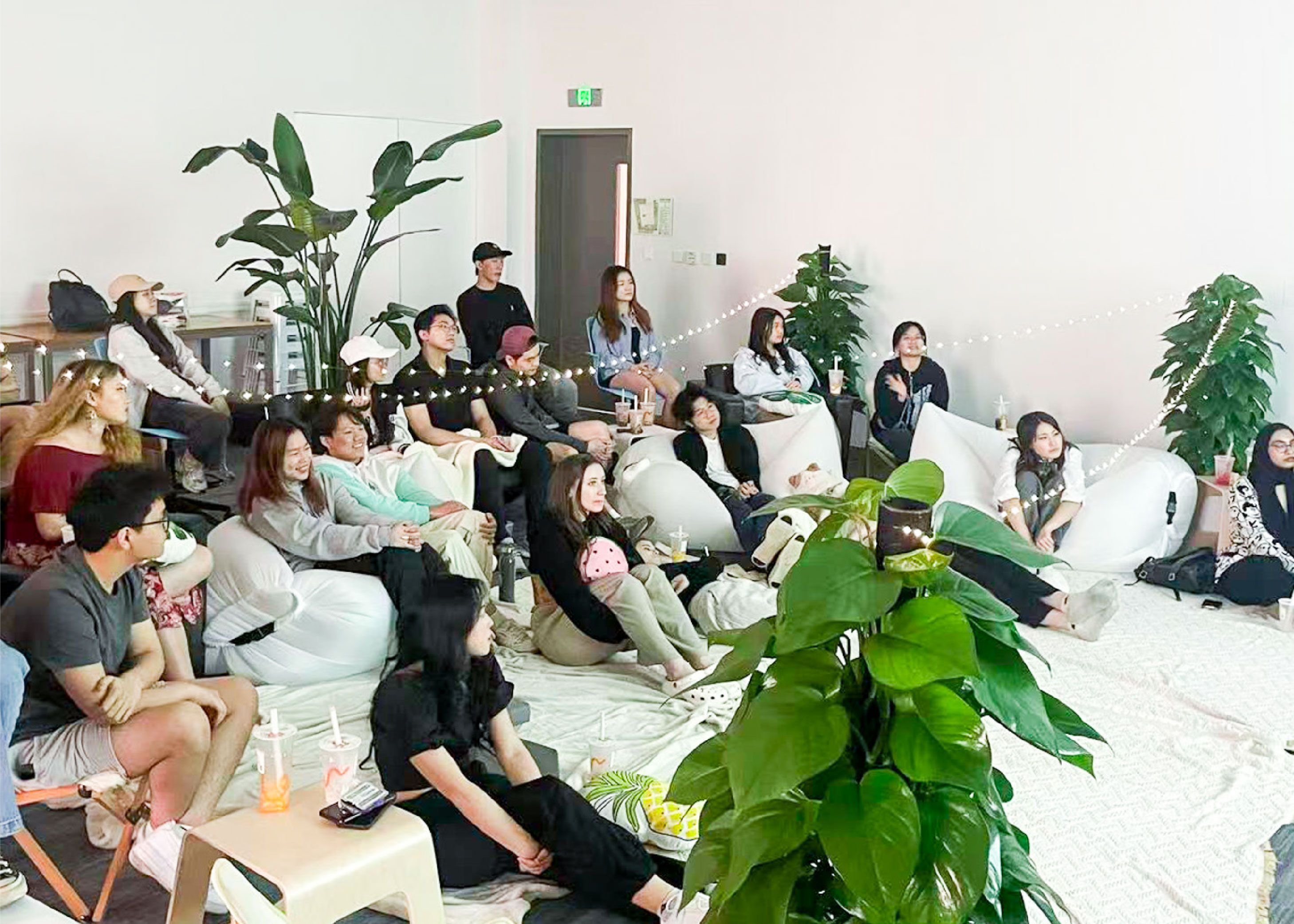
Not at all. I started teaching at Stanford as a sabbatical from industry. The Designing Your Life instructors were on their book tour, and they needed folks to teach the class. I thought I’d go back to industry after a year.
But I was immediately hooked and realized how much I love working with those who are just “coming of age.” College students are constantly reshaping who they are and who they want to become every hour of the day. That kind of energy is infectious and fuels my own desire to keep learning. And so, nine years later, I’m still being inspired.
You’ve described your time in China as transformative on a personal level. What do you mean by that?
My dad used to say, “China is the future.” And I’d used to joke back, “Sure, but not my future.” Turns out the joke is on me.
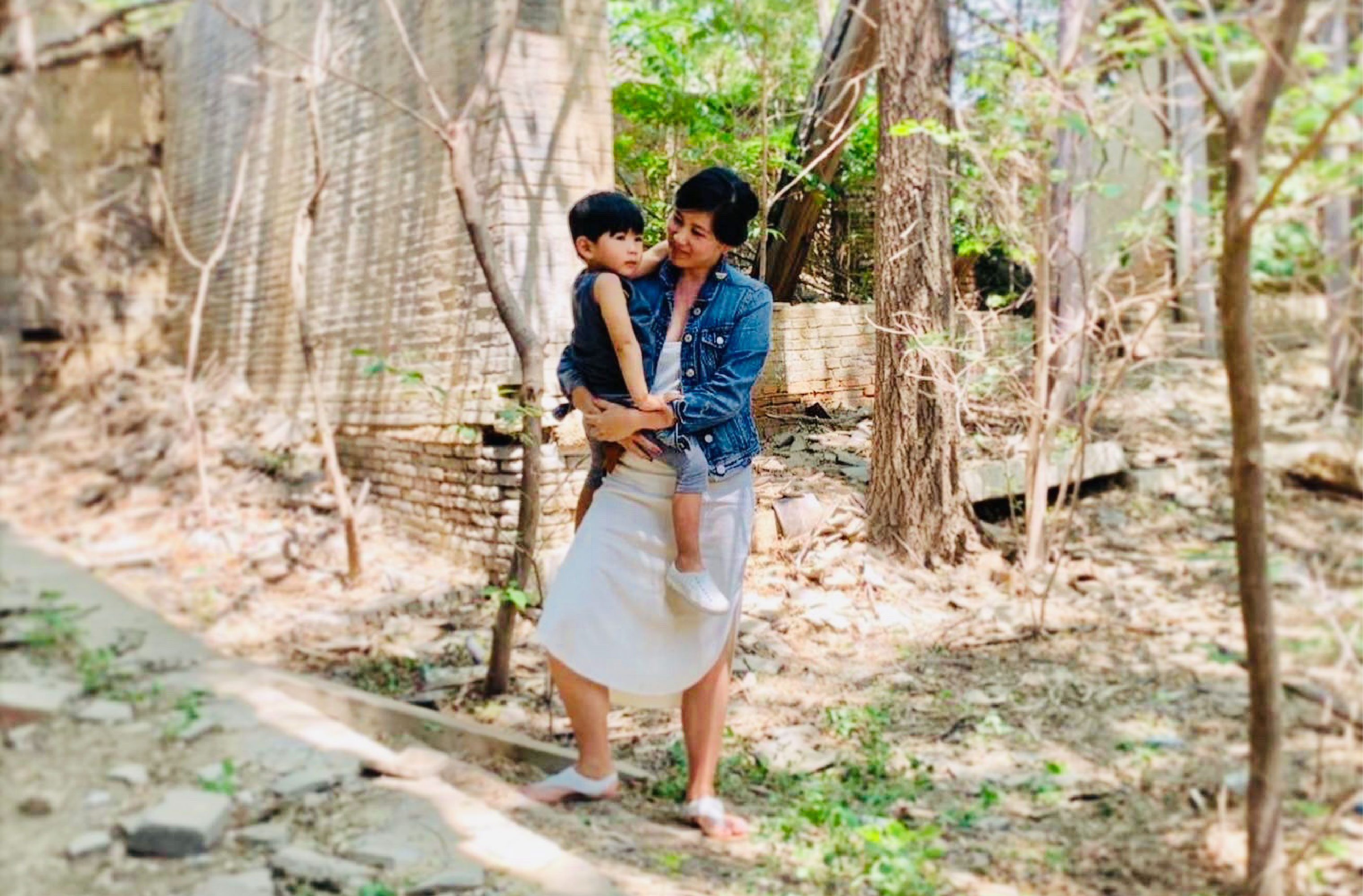
Coming here has felt like an ancestral pull. In my TEDx talk Travel as Transformation, I share the story of how I find myself standing among the ruins of my family’s ancestral home in Hebei province. To be the first in my generation to have visited the home where six centuries of my family once lived is mind altering. To do so as a child of immigrants who fled this country over 75 years ago is truly mind blowing.
Also seeing my child recite Tang era poetry and write essays in Chinese is a reality I never imagined. That, regardless of how many degrees I hold, I struggle to help him with his homework. And I am experiencing a fraction of what my parents went through, raising a family in a country they weren’t linguistically fluent in.
Was there a teaching moment that surprised you?
As an educator, I often think my job is planting seeds without knowing if or when they will sprout. This was especially true for the Designing Your NYU Shanghai, a class I taught for the Class of 2025 when the international students were stuck abroad during COVID. It was a synchronous online class of 500 first years at 8am NYC and 8pm Shanghai. Not exactly the ideal teaching or learning environment, to say the least. But last year when they were graduating, they asked me to be the speaker for their 88 Countdown Kickoff. I was totally shocked. Turns out this class was the only full-class experience they shared.
The cherry on top was when I got notes from students saying they had received letters from their freshman selves, an exercise I had them do in class. Desiree Harmon, who had been selected as the NYU Student Commencement Speaker, received hers right before going on stage.
After so many years of teaching, what excites you now?
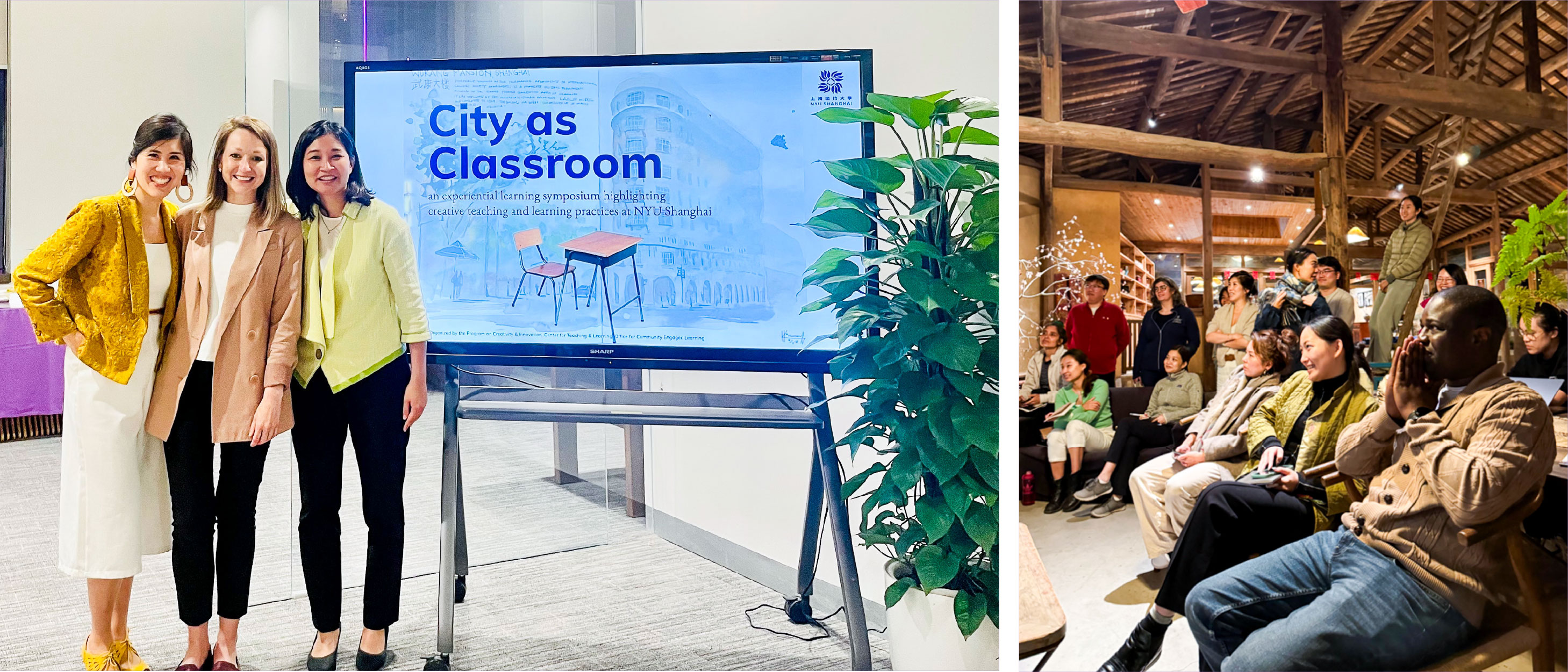
Teaching has been like a full circle moment for me. I was an urban planner 20 years ago, but now I’m able to incorporate these approaches into my courses. My research explores innovative pedagogy that integrates the city as both space and subject. A few years ago, a group of us launched City as Classroom, the first experiential learning symposium at NYU Shanghai, and we’re excited to have a grant that allows us to bring that knowledge to more educators in China.
What’s next for you professionally?
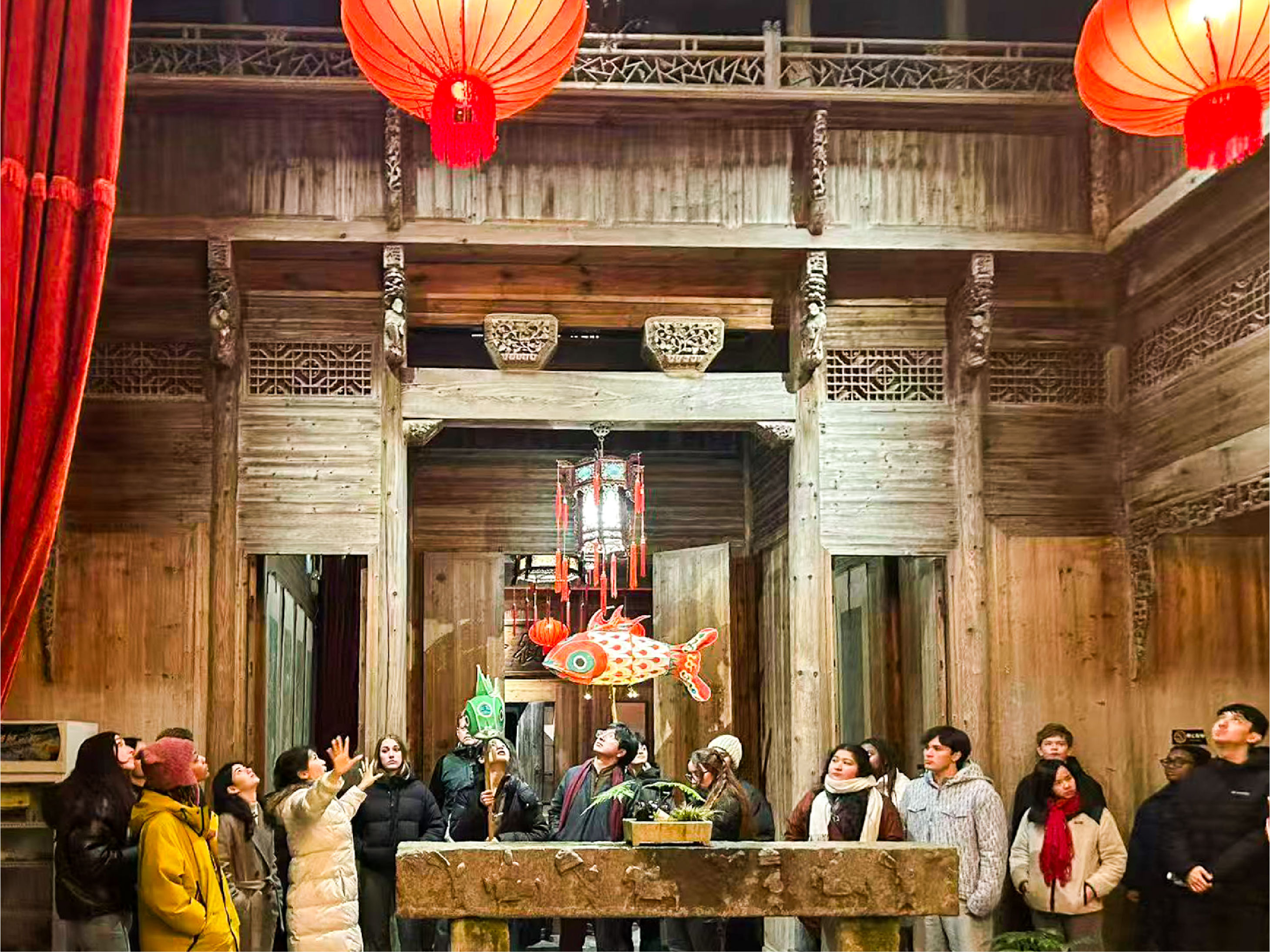
In my global experiential learning role, one focus is sharing methodologies across our global network. Faculty in very different disciplines—whether it’s medieval studies in Florence or math in Shanghai—often teach similarly. I’m hoping to bring this teaching community together to surface how faculty connect what they teach with where they teach, using place to orient learning so it becomes relevant to the context students are living in.
We’re also bringing an industry lens to Experience Studio courses, giving students more access to real business issues. This semester we’re partnering with the travel experience company WildChina and next semester we’re engaging with ESPN China.
What advice do you give to students?
It used to be, “be in the driver, not passenger, seat of your own life.” But now with autonomous driving, perhaps I’ll switch to a more age-old saying: to be the author of your own story.
Our lives are constantly in motion, how might you shape it? What are the chapters you want to create in this book of yours? Who are the characters you want alongside you? What kinds of adventures do you want to unfold across its pages?
You may not know what the book is about yet. But you can start crafting the kind of book you want to read. It is your book after all.