

Current Role: Founder and CEO of Braintrance
Hometown: Oakland, California
Major: Business and Finance with a minor in Computer Science
After graduation, many graduates follow a familiar script: get a job, gain experience, and slowly build a career. William Yeh ’25 had that option. But instead of starting a career as an investment banker in New York, he struck a different path—building a startup. Within a year, his company Braintrance has raised $5 million in funding as Yeh explores what could become the next generation of digital media.
Looking back, what made you choose NYU Shanghai?
Growing up between the United States, Hong Kong, and Taiwan, I was interested in gaining a deeper understanding of China and experiencing a different part of the world. NYU Shanghai offered something unique that no other schools could provide: the chance to study between the two most innovative and cultural economies in human history.
When everyone follows the same path, that signals me to do the complete opposite. The upside becomes an infinitely interesting experience, while the downside is at worst a normal life. NYU Shanghai offered an asymmetric upside that felt genuinely different.
I noticed that many NYU Shanghai students were willing to take different paths. Studying in China, especially during the Shanghai lockdown, requires optimism to see the light at the end-of-the-tunnel while enduring periods of uncertainty. Fortunately, that is an important quality for entrepreneurship.
How has NYU Shanghai shaped your career?
I majored in Business and Finance and minored in Computer Science. Finance helped me understand private capital markets and corporate finance, while computer science let me interface with engineers and gave me enough knowledge to build anything in the age of AI. It turned out to be a very useful combination. More importantly, NYU Shanghai exposed me to both American and Chinese perspectives on technology and innovation. That dual perspective has been valuable throughout my career.
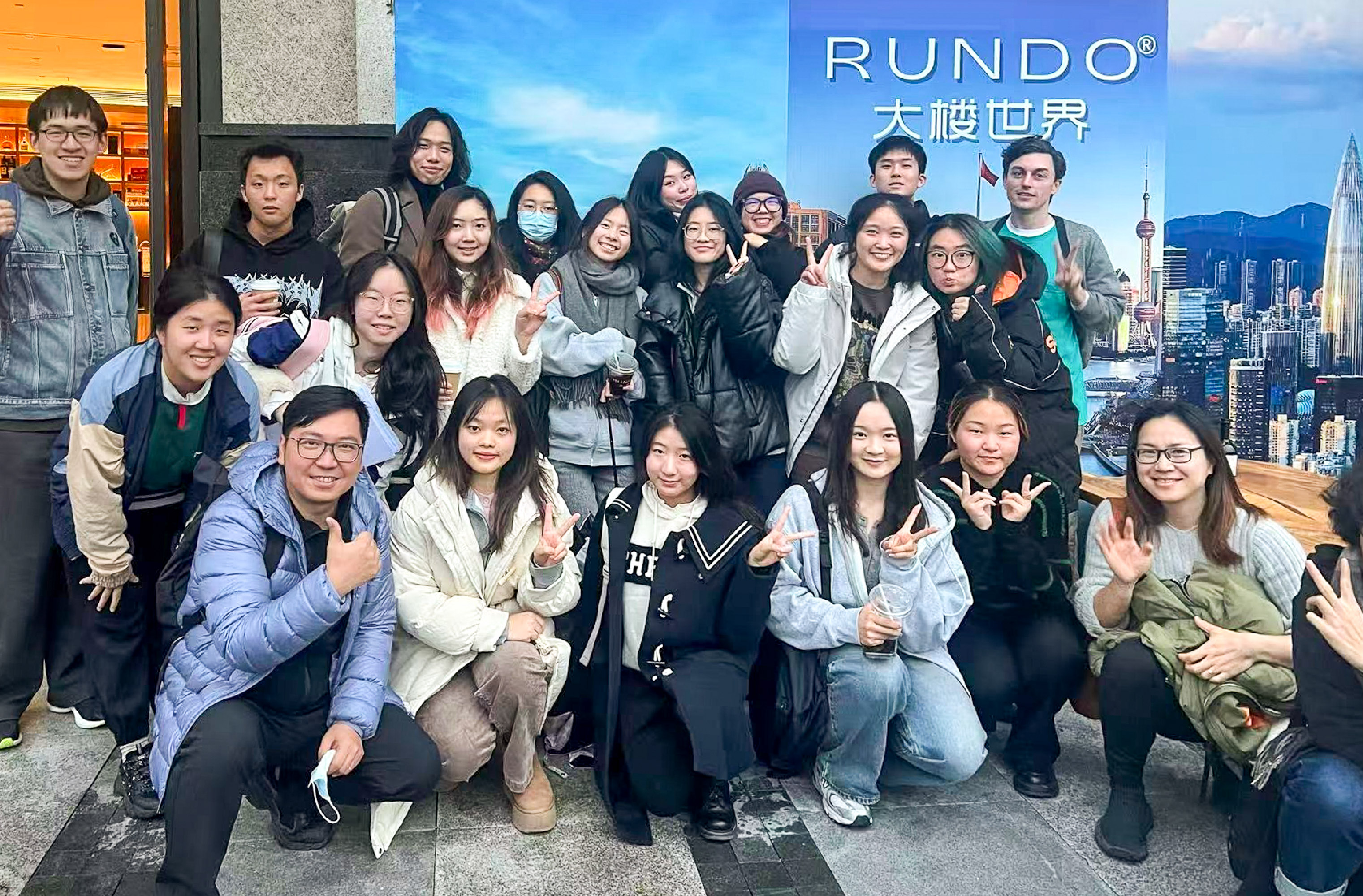
The course “Mixed Reality and Cultural Heritage” taught by Clinical Assistant Professor of Interactive Media Arts Zhang Xinchen and Associate Professor of Art History Zuo Lala had a significant impact on me. We used 3D reconstruction tools to document historical sites around Shanghai, and that experience changed how I thought about technology.
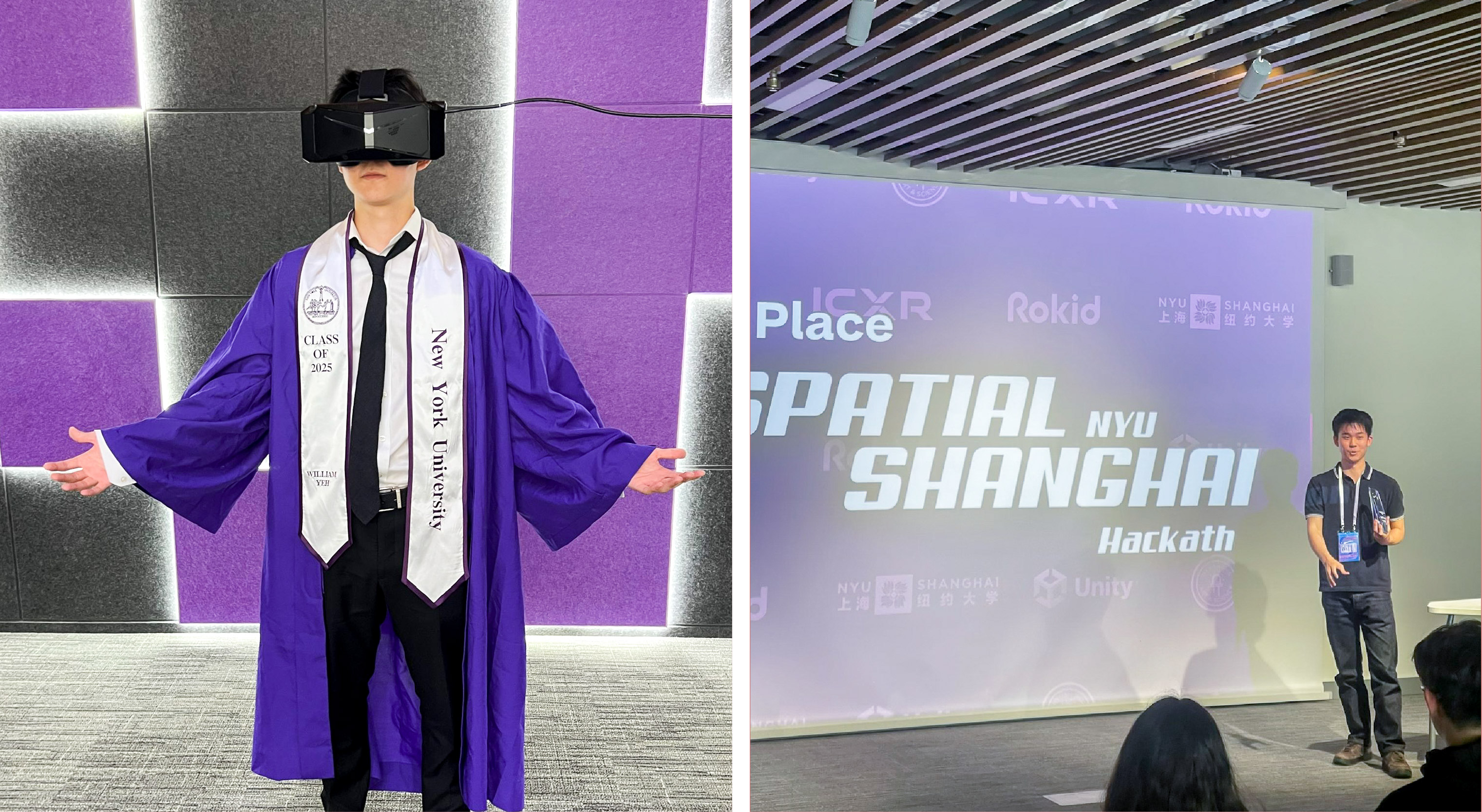
Some of my most important learning experiences happened outside the classroom. I co-founded the XR Lab with Library staff and co-organized Spatial Shanghai, the largest in-person AR/VR hackathon in China at that time. I also launched Intercollegiate XR’s Asia region, a global intercollegiate organization of 35 university XR clubs, helping 13 universities in China from HKUST to Peking University to start their own AR/VR clubs.
I also served as president of TAMID Group, the premier business club on campus that gives undergraduates off-cycle internships in investment banking and consulting. Those experiences taught me leadership, event planning, and how to bring people together around a shared mission.
Why did you back out of a solid job offer to launch Braintrance?
Shortly after I graduated, before I was set to start the job, I attended Augmented World Expo, the world’s largest AR/VR conference. I met an internet friend there, CIX, who had just raised $5 million to build the UFC for humanoid robots. He strongly suggested that I join the Founder’s Inc startup accelerator in San Francisco and referred me.
What began as a short experiment quickly became something much bigger. My team entered the accelerator, won the program, and eventually built Braintrance. I felt like the upside was infinitely high, and my downside was continuing to my job in NYC.
Tell us about Braintrance.
Imagine being teleported to the last core memory you had and experiencing it exactly as it was. Instead of viewing your birthday celebration through photos or video, you could relive it in three dimensions, move around the scene, and experience it from different perspectives – you could experience it from your mom’s eyes, your dog’s perspective, or even be the birthday candle being blown out. Braintrance is using spatial media to build a new way to communicate – immersive 3D technology that allows people to capture, and step inside real moments.
Our goal is to make this technology accessible to everyday users, so people from all over the world can tell new kinds of stories that bring the audience to their location, instead of watching through a virtual window. Today, creating spatial volumetric content often requires specialized hardware and complicated setups. We’re working to make it possible using devices people already own, including smartphones.
What inspired you to pursue that idea?
The idea started from something personal. My grandfather’s health was declining, and I wanted to preserve not just photos, but memories in a more immersive way – something that could help people revisit moments, conversations, and experiences more vividly.
Over time, that idea grew into something much bigger. I began to see volumetric media not just as a tool for memory preservation, but as a completely new communication paradigm that could tell human stories in a completely new way.
Braintrance grew out of taking those ideas beyond historical sites [as we did in the class at NYU Shanghai] and applying them to everyday life. I started to see digital preservation not just as a technical problem, but as a way to protect culture, history, and human experience from being lost.
What advice would you give current students?
All of the opportunities that shaped my career came through leaving campus to go talk to people, clubs, internships, conferences, and relationships. The people you meet during university can have a lasting impact on your future.
Maximize the surface area of your luck. If you sit at home all day, the possibility of something lucky happening to you is zero. If you walk to the financial district, the possibility of meeting someone that can change your life increases to 5-10%. If you sneak into a room of CEOs, the probability increases significantly.
I would also encourage students to explore areas that genuinely excite them, even if they don’t fit neatly into a predefined career path. Some of the most meaningful opportunities come from interests that seem unconventional at first. Don’t be afraid to pursue something that others don’t fully understand yet. The most valuable opportunities are the ones that haven’t become obvious to everyone else.