

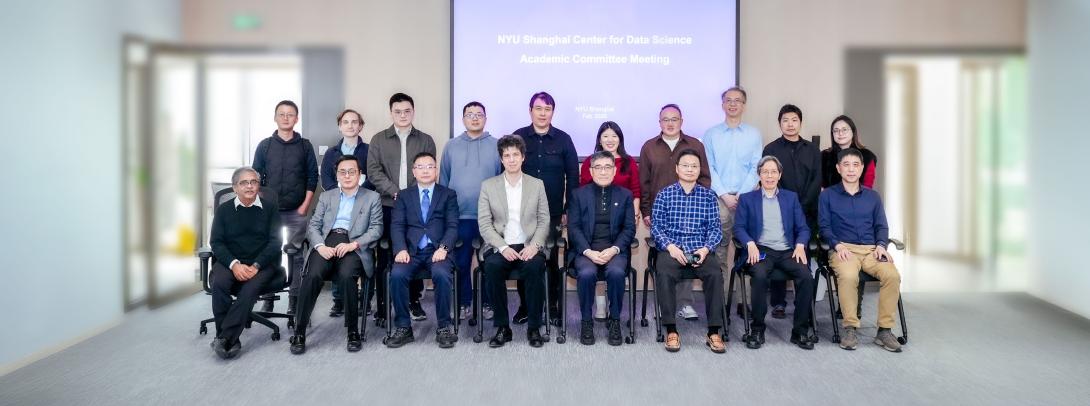
On February 9, the NYU Shanghai Center for Data Science convened its third Academic Committee Meeting, bringing together faculty, researchers, and advisory committee members to review the center’s progress over the past year, exchange perspectives on ongoing research, and discuss strategic priorities for the years ahead.
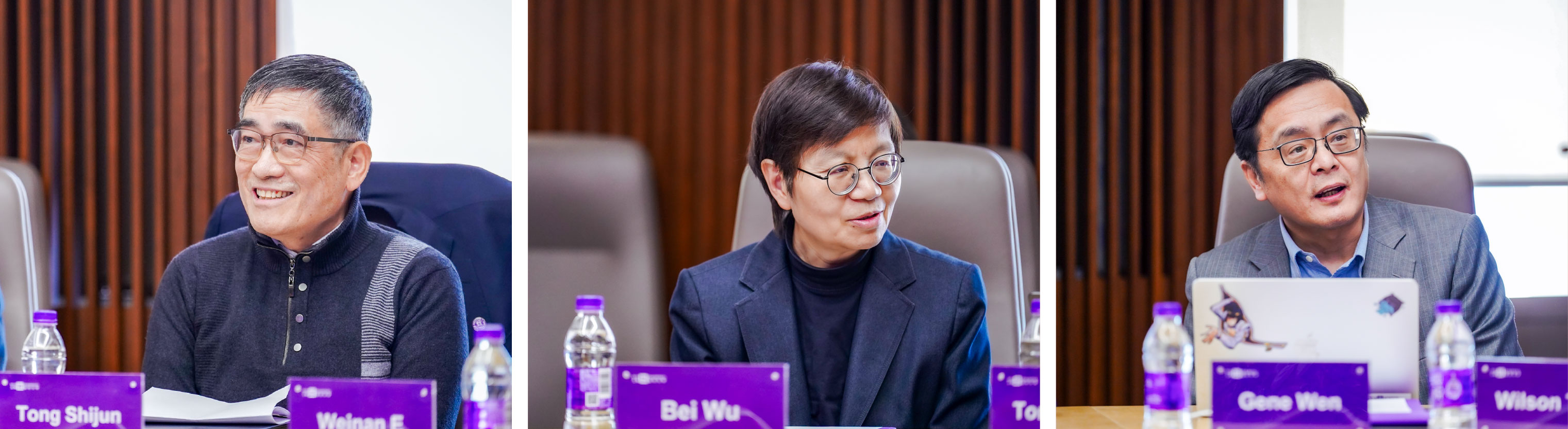
Chancellor Tong Shijun opened the meeting by thanking the Academic Committee for its continued guidance and recognizing the dedication of the center’s faculty and staff. He noted that, thanks to their work, NYU Shanghai has been able to engage the ongoing AI transformation not only as an observer, but as an active participant—and, in certain areas, a distinctive contributor.
Provost Bei Wu echoed the importance of the center’s role in advancing interdisciplinary collaborations across campus. Noting that faculty engagement already expands beyond computer science and engineering to include colleagues in the social sciences and humanities, Wu emphasized that AI’s growing ethical and societal implications make it essential to tackle emerging challenges through interdisciplinary approaches.
A central portion of the meeting focused on the center’s annual report and forward-looking agenda. Center Director and Senior Research Scientist Gene Wen presented an overview of the center’s vision and highlights from the past year spanning research output, global collaboration and talent training, recruitment and talent-award recipients, academic and industry engagement, and the center’s new space at the East Hall.
The center also reported the year of programming ahead. On the cross-campus front, it highlighted continued momentum from the Serendipity Research Confluence series, in its second year. In outreach, the center noted that NYU Shanghai launched its first pre-college AI summer program with the center’s support, enrolling 43 high school students, and hosted a summer school on machine learning and AI for the molecular sciences, with participation from ECNU and NYU, and NYU Shanghai.
The meeting also featured presentations from three faculty members, each representing one of the center’s core research directions. Assistant Professor of Chemistry Sun Xiang discussed research in the AI for Science direction, focusing on leveraging deep learning to solve scientific problems. Assistant Professor of Computer Science Wen Hongyi shared the work of his group, focusing on moving towards trustworthy foundation models. Additionally, Assistant Professor of Mathematics and Data Science Mathieu Laurière presented on the mathematical foundations of machine learning and artificial intelligence.
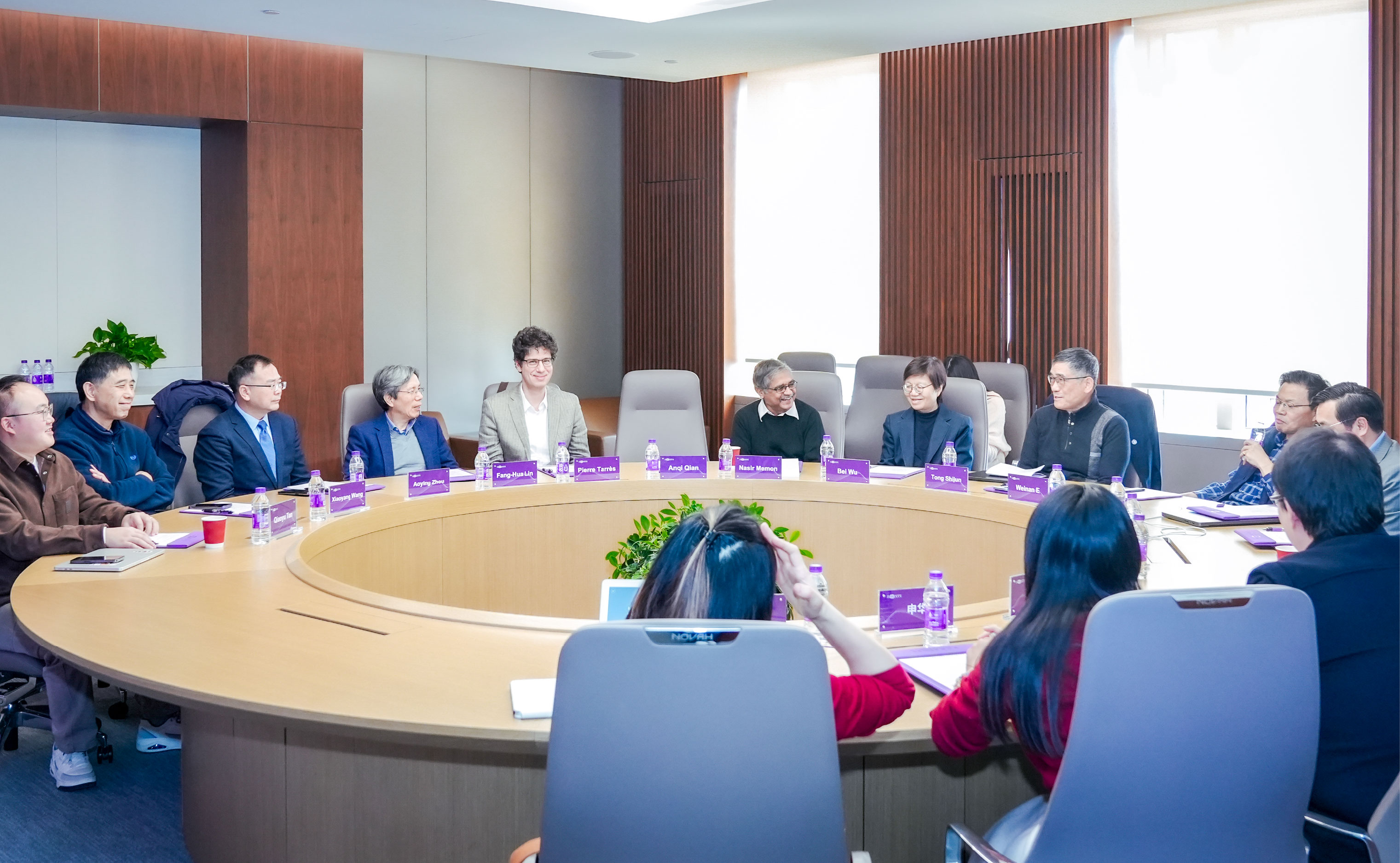
Advisory Committee Chair E Weinan also led a discussion on the center’s progress over the past year, particularly highlighting successes in faculty team building, robust research outputs, and rich academic activities. The committee encouraged the center to push more research outcomes toward practical application, suggesting that experimental initiatives like the student and faculty-developed AI learning companion Kiwi be promoted on a broader scale. Furthermore, the experts advised the center to maintain its leading advantages in certain areas by striving to be the top in specific sub-fields. They emphasized the importance of maintaining a clear, “truly focused” rather than scattering effort, and recommended continuing to strengthen collaborations with local universities and securing additional funding support.