

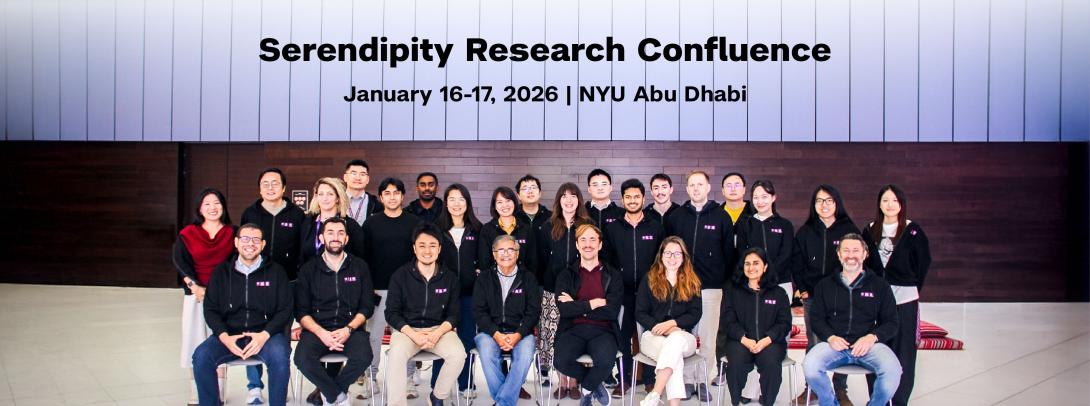
On January 16-17, about 30 faculty members from NYU’s New York, Abu Dhabi, and Shanghai campuses convened at NYU Abu Dhabi for the second Serendipity Research Confluence.
This year’s confluence focused on strengthening collaborations already in motion and sparking new interdisciplinary research partnerships centered on AI and its emerging applications. In his opening remarks, Interim Dean of Computer Science, Data Science, and Engineering Nasir Memon marveled at the progress already made since last year’s inaugural gathering. “We’ve seen conversations turn into real collaborations, with several projects already moving forward,” he said. “This year, I hope you build on that momentum, meet people outside your usual circles, and leave with a few concrete next steps you can carry back to your campus.”
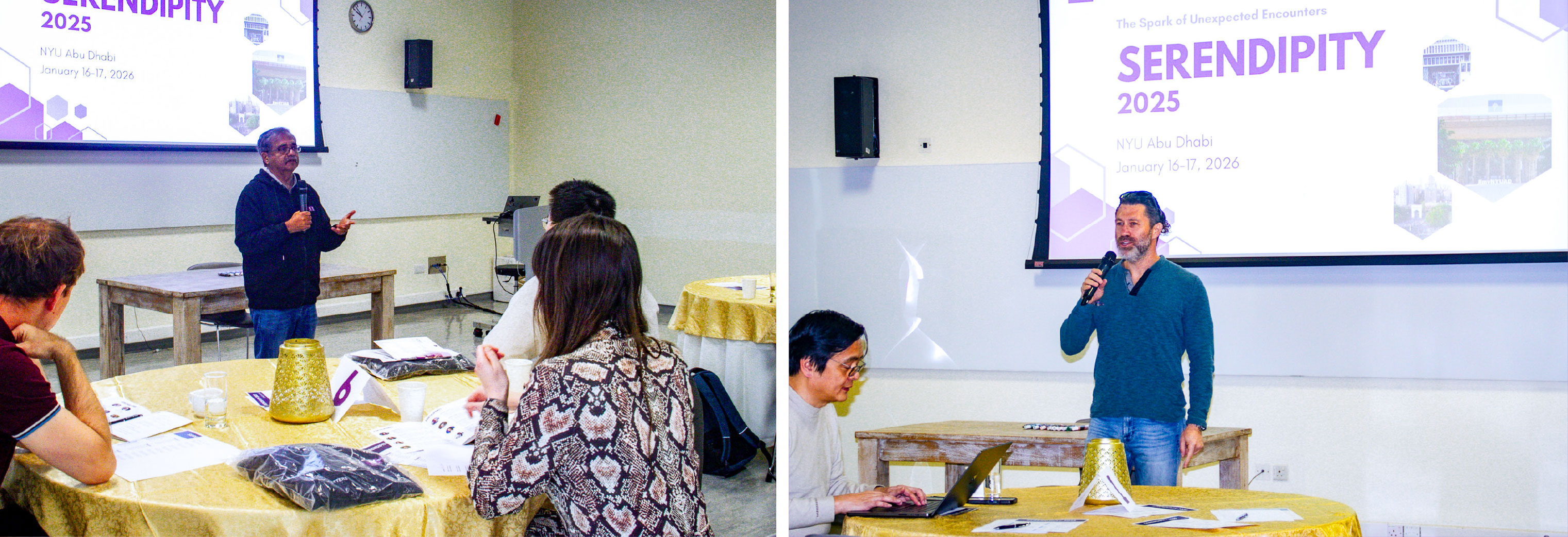
NYU Abu Dhabi Associate Dean for Faculty Development Ozgur Sinanoglu emphasized that cultivating junior faculty remained a core goal of the gathering. He noted that early-career scholars especially benefit from connecting across campuses and disciplines early in their academic journeys. “This year we intentionally invited more junior faculty and more participants beyond computer science and data science,” he said. “That mix brings new energy to the room and creates more opportunities for genuinely interdisciplinary collaborations.”
A “scientist speed dating” session was designed to facilitate rapid, focused conversations. Participants rotated in 10-minute intervals, introducing their research, exchanging ideas, and identifying potential areas for collaboration.
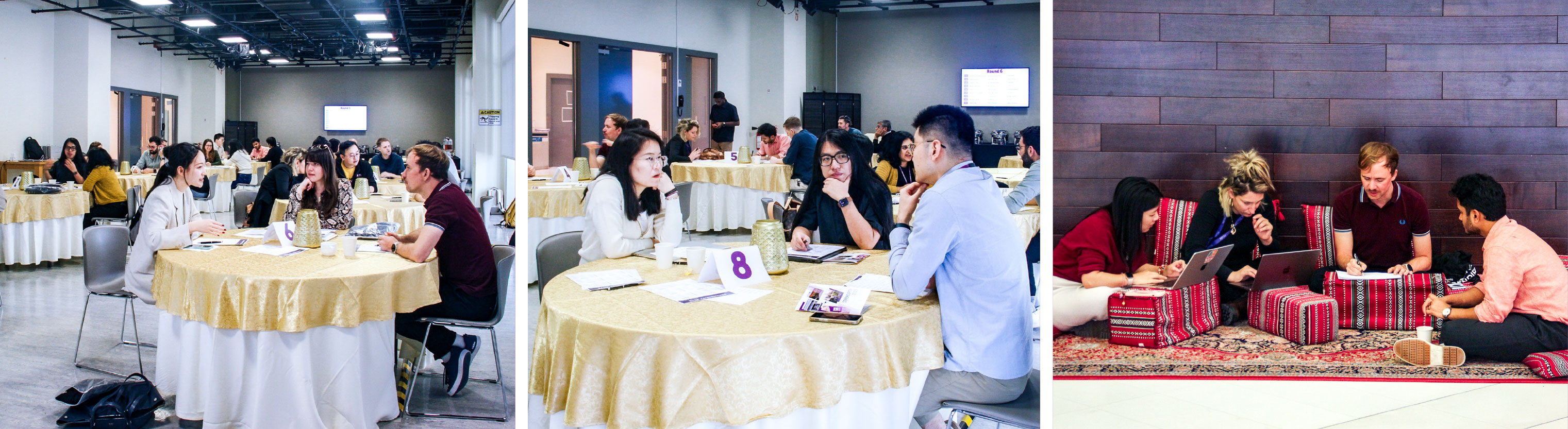
Intensive discussions on the first day brought researchers into six groups, spanning topics including security and safety for human-agent interactions, adversarial AI, text diffusion models, efficient vision-and-action robotics, and AI-informed urban planning. Each group developed a project concept, refined it through discussion, and formally presented its plan the next day. The teams, each drawing members from at least two campuses, began drafting white papers outlining research directions, potential applications, and possible funding pathways.
NYU Abu Dhabi Professor of Computer Engineering Muhammad Shafique, a returning participant, said he had seen the benefits of the gathering. “The confluence helps us move from simply knowing about each other’s work to actually building together,” he said. “I always leave with fresh ideas and specific follow-ups, and I’m excited to see what takes shape from this year’s projects.” He gave examples of collaborations that grew from last year’s confluence, including cross-campus undergraduate capstone projects, shared hiring of student research assistants, postdoctoral exchanges, and an AI4Healthcare center currently under development.
This year, one cross-campus team coalesced around shared interests in adversarial and abusive agents, bringing together Professor Shafique with NYU Shanghai Assistant Professor of Interactive Media and Business Helena Rong, NYU Tandon Assistant Professor of Computer Science and Engineering Rosanna Bellini, and NYU Abu Dhabi Assistant Professor of Computer Engineering Sandra Siby.
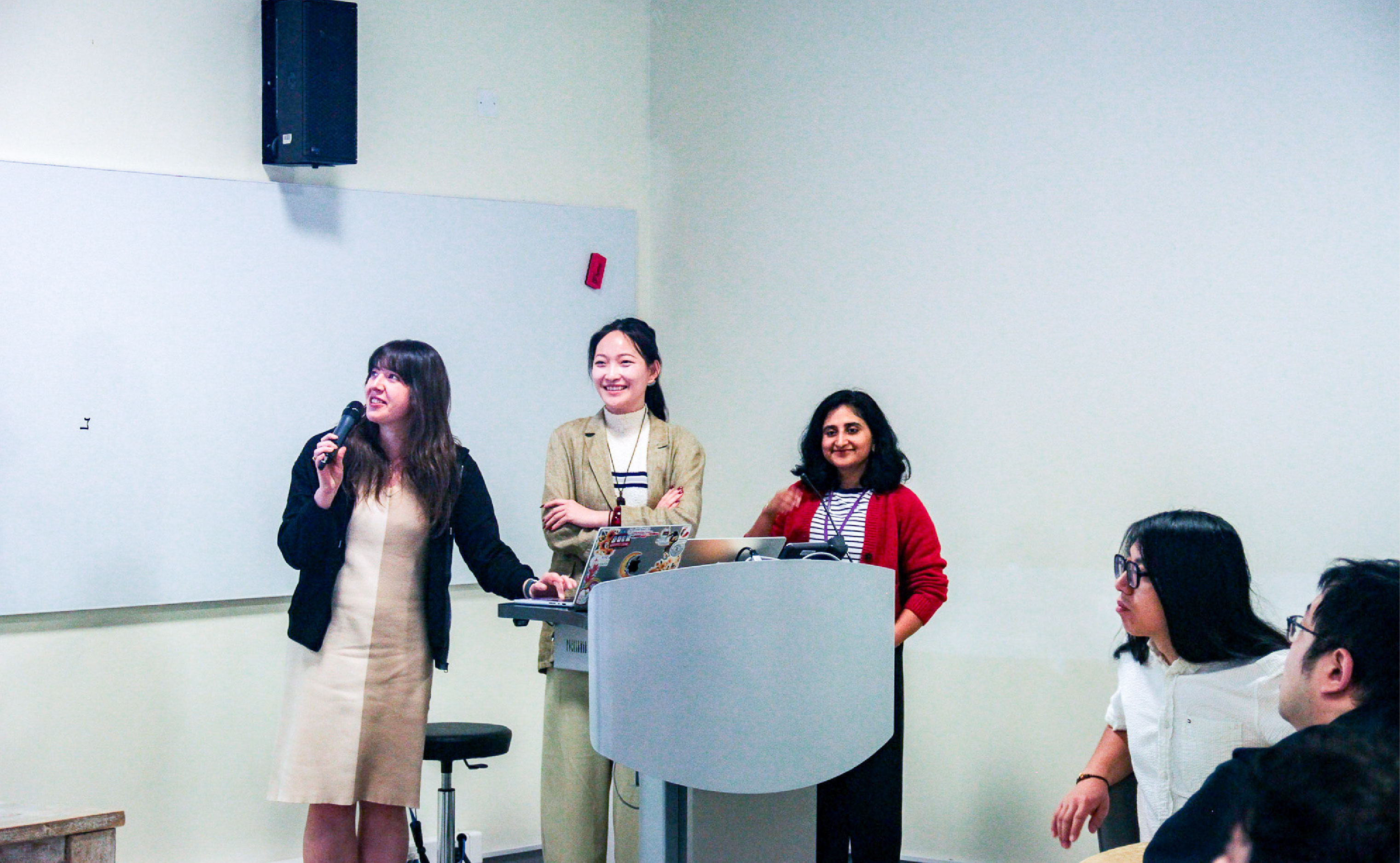
As a returning participant, Siby said the discussions felt more productive this time around. “This year the conversations went deeper and led us to a more promising project direction,” she said. “When you bring three campuses together, you can find the right collaborators much faster and start building immediately.”
Rong, whose work sits at the intersection of technology and society, said she was especially excited about the group’s interdisciplinary mix. “In computer science, there’s growing attention to sociotechnical systems — not just the technical side, but how the social world intersects with the technologies we build,” she said. “That’s where I come in, bringing social science and design perspectives that help connect technical innovation with real social contexts.”
Bellini also pointed to the practical advantage of working within NYU’s global network. “We share a common institutional context from the start, which reduces friction,” she said. “Being under the same umbrella makes it easier to move from interest to action.”
NYU Shanghai Assistant Professor of Computer Science Shen Hua, who joined another interest group, highlighted both the scale and the diversity of research directions that the confluence enables. “When you bring three campuses together, you suddenly have a critical mass, people immediately resonate with each other and spark new ideas,” she said. At the same time, each campus brings distinct experiences and perspectives. That helps us think at a more universal level and design projects that genuinely connect the global network.”
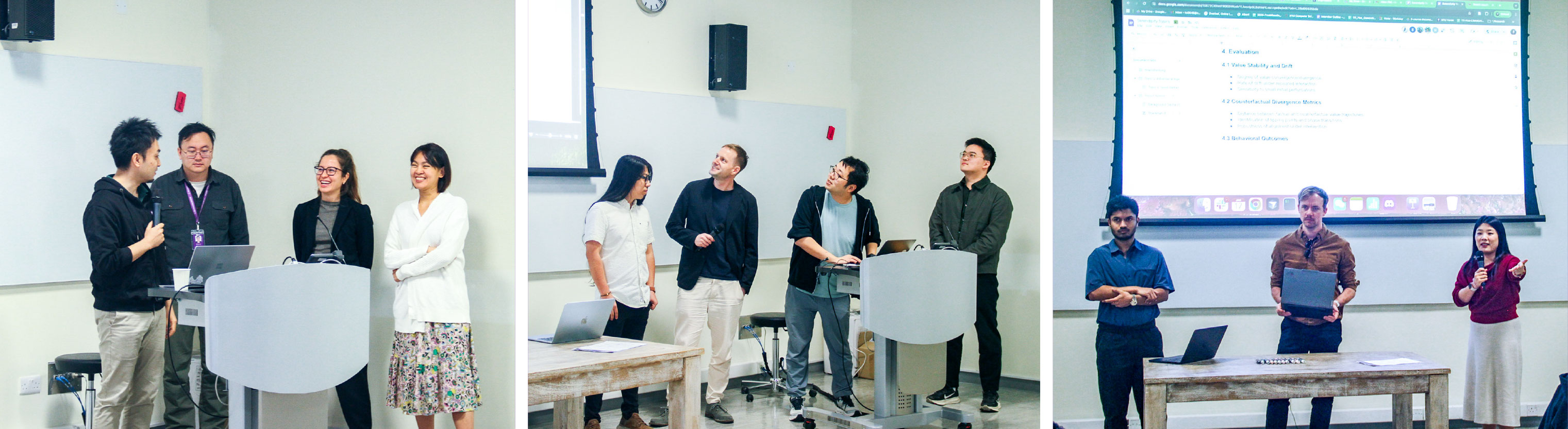
At the closing ceremony, Dean Memon encouraged participants to sustain these newly formed connections. “When we collaborate across sites, we can pair complementary expertise, create richer research environments, and open meaningful opportunities for students and early-career researchers to contribute across borders,” he said. “The goal now is to keep the conversations going and turn the strongest ideas into durable, working partnerships.”
Participant Reflections
Jack B. Du (Visiting Assistant Professor of Interactive Media, NYU Abu Dhabi; NYU Shanghai Class of 2017 alum)
“At this event, I met many interesting colleagues and also learned more, from a computer scientist’s perspective, about current research and teaching in machine learning. It complemented my own work and teaching in a really helpful way.”
Lu Yucheng (Assistant Professor of Computer Science, NYU Shanghai)
“The speed-dating format pushed us to introduce our work to colleagues we’d never met right away. For junior faculty, it’s especially valuable practice, particularly when the person you’re speaking with isn’t from computer science. You have to explain your research quickly in a way that resonates with a broad audience, and that’s a valuable skill.”
Ben Rosche (Assistant Professor of Social Research and Public Policy and of Computational Social Science, NYU Abu Dhabi)
“The speed dating conversations were especially inspiring because we had permission to brainstorm freely. I walked into topics I hadn’t worked on before, and within hours we were already shaping a project together.”
Gottfried Haider (Assistant Arts Professor of Interactive Media Arts, NYU Shanghai)
“I found real overlaps where we can collaborate, and I’m excited about how some of these research ideas could translate into meaningful applications in art and design.”