

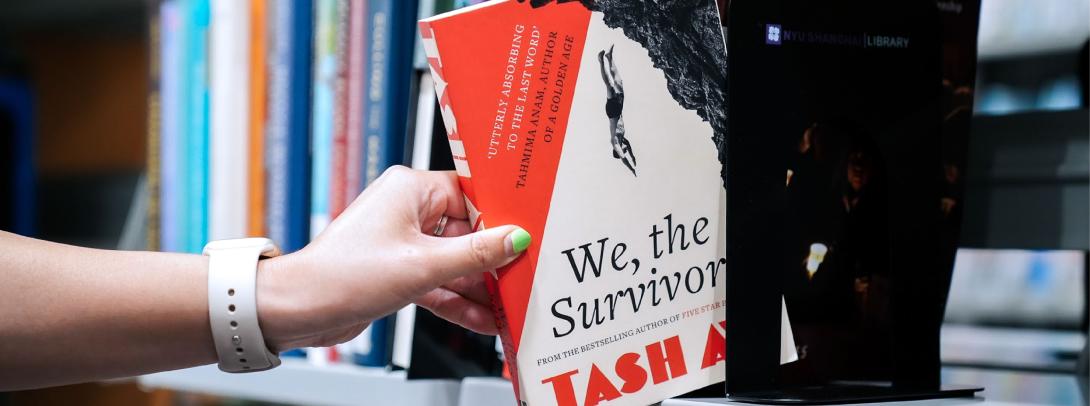
What does home sound like? At the first NYU Shanghai Reads event of the fall semester students were asked to consider how sound, language, migration, and popular culture can shape our ideas of home and belonging.
Zandrea Xi ’27, a double major in Social Science (International Relations) and Global China Studies, did not immediately have an answer for that question. “That made me reflect more deeply on the question of what do we think of when we think of home?” she said. “For me, I tend to think of home as tied to people—such as family—as opposed to places.”
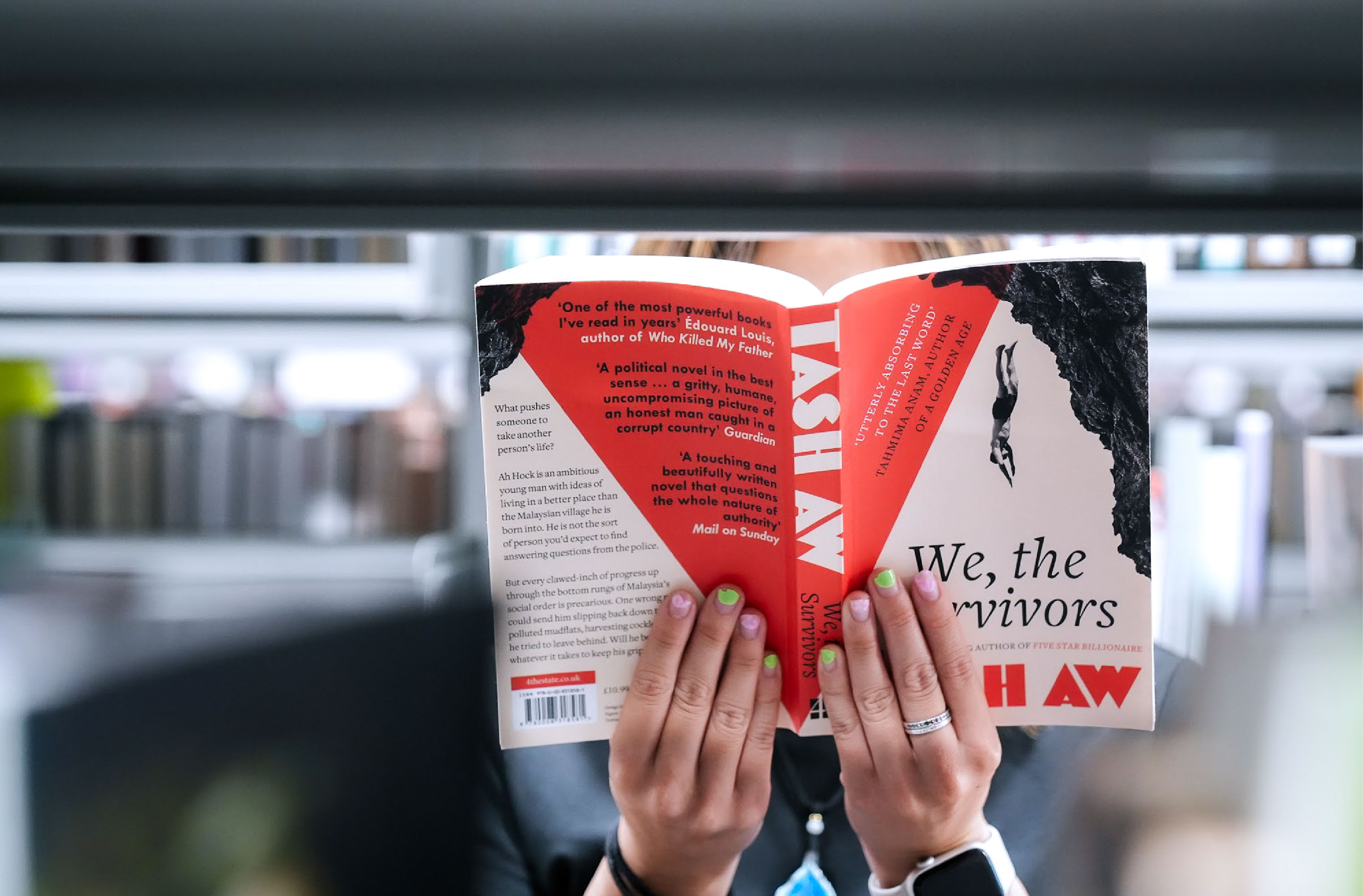
The NYU Shanghai Reads program offers an entry point to exploring difficult subjects such as class, race, and diaspora through individual experiences. This year’s selection, Tash Aw’s We, The Survivors, takes place in present day Malaysia and follows a working class Malaysian Chinese man whose life experiences are shaped by migration, labor, ethnicity, class, and a sense of “uneven belonging.”
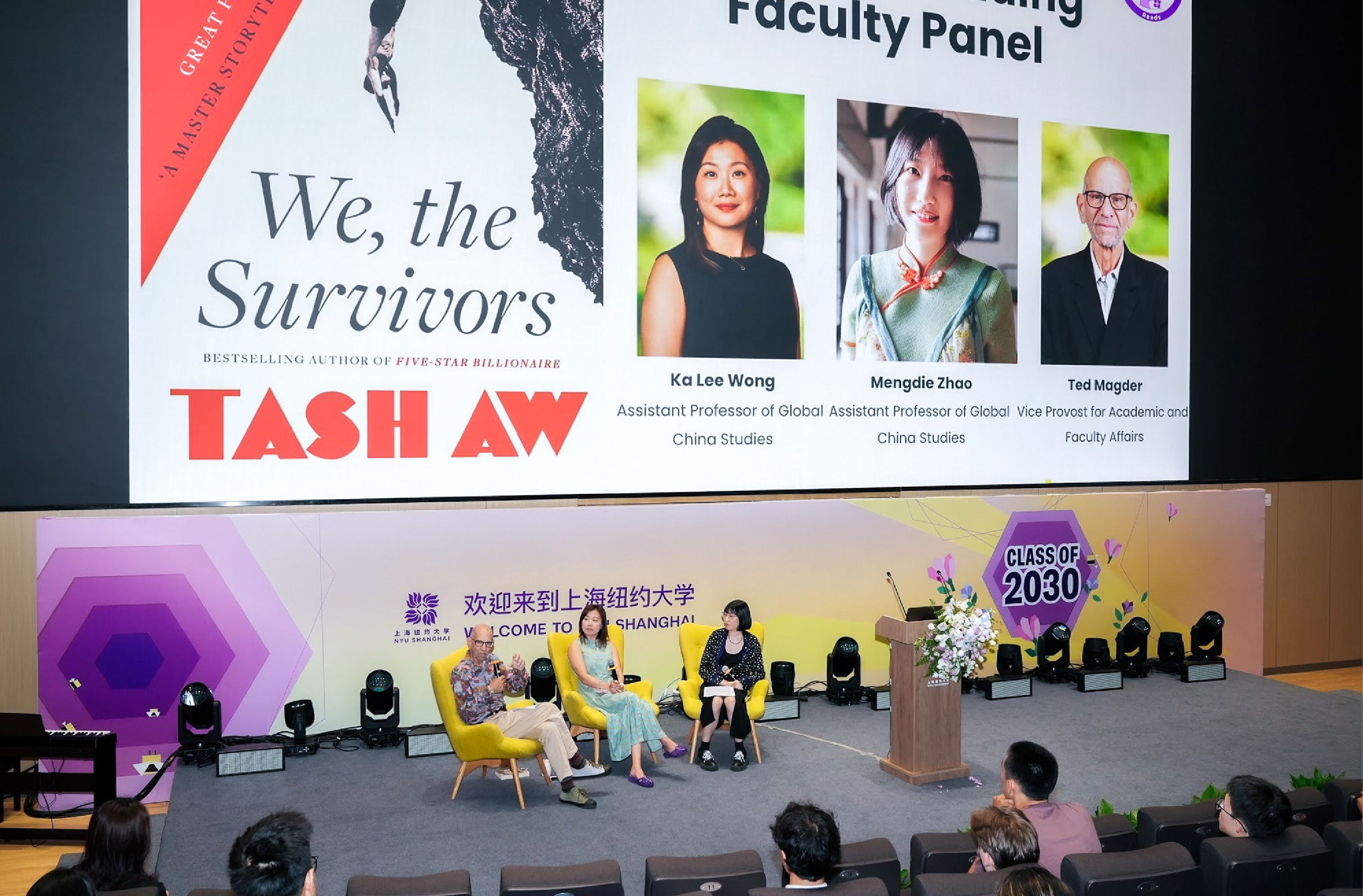
At the first event, Assistant Professor of Global China Studies Ka Lee Wong led a group discussion on popular culture and the global Chinese diaspora in Southeast Asia. Drawing on her research in Sinophone media and Southeast Asian popular culture, Professor Wong suggested a reading of the novel’s multilingualism as evidence of diaspora, not just a minor background detail.
Noting that throughout the book,English, Malay, Mandarin, Cantonese, Hokkien, Teochew, and other dialects overlap, Wong discussed how language can communicate more than just an ethnicity: it can also be indicative of a generation, class, education, and social distance. She said the result challenges and adds nuance to the idea of “Chinese” as a single language, place, or cultural identity.
She also introduced students to a “Sinophone way of reading,” the prevalent assumption that Chinese culture originates from one center and moves outward. Instead, it asks readers to notice how culture is created and transformed across different places through multilingualism, code-switching, dialect, and media.
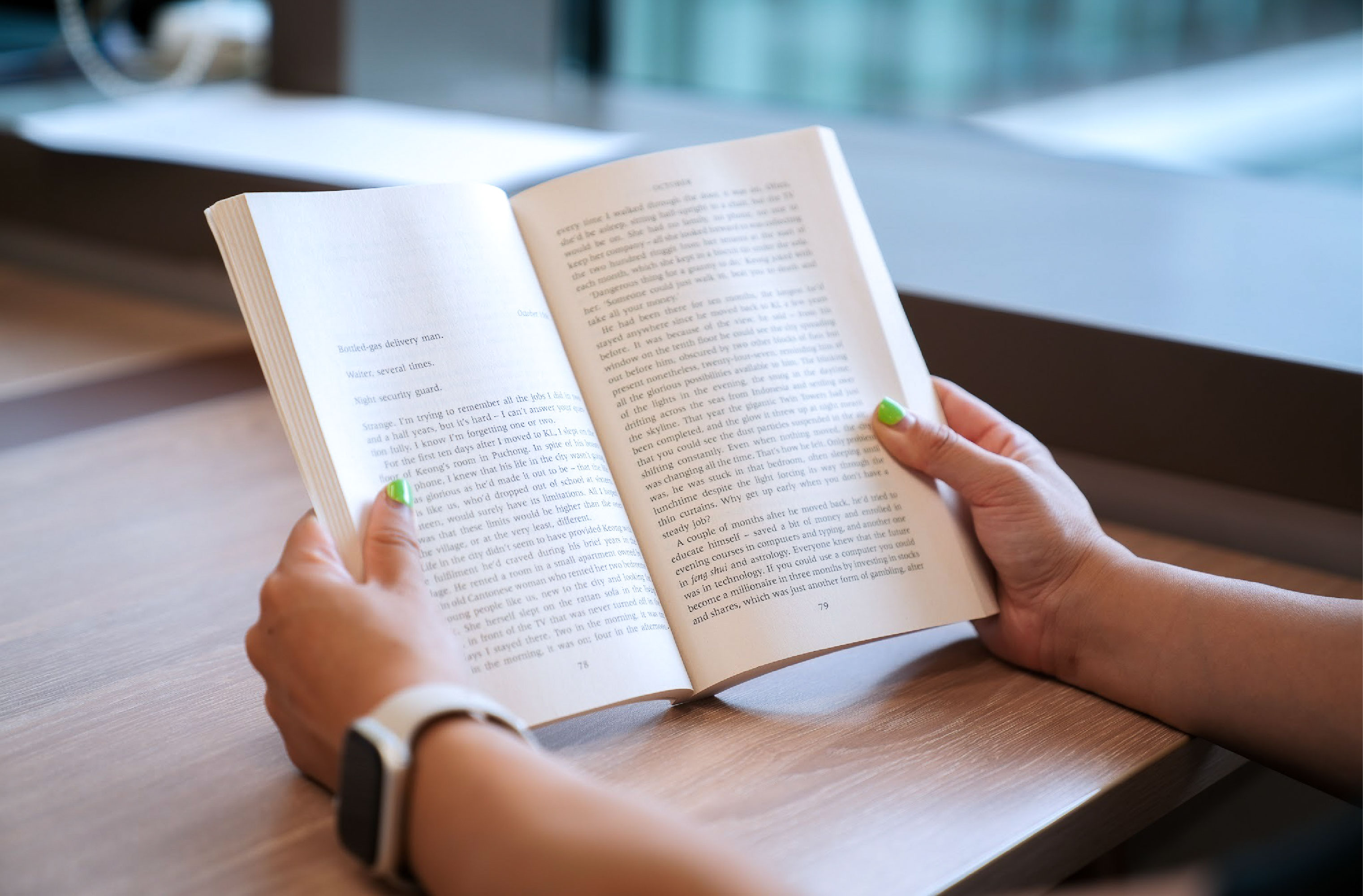
Referencing scenes in the novel that feature the music of Hong Kong Cantopop star Jacky Cheung, Professor Wong described popular culture as a kind of “portable home” made up of a collection of sounds, images, stories, celebrities, jokes, and memories that people recognize themselves in and one another through, even across national borders.
“Home is not always where culture begins,” she argued. “Sometimes home is what culture allows us to carry.”
The event closed with another thought-provoking question : If you had to leave home tomorrow, what song, film, book, game, or other piece of popular culture would you carry with you?
The discussion of We, the Survivors will continue at a series of events throughout the academic year. On October 28, Assistant Professor Faculty Fellow of Psychology Yuerui Wu will explore how responsibility and justice can be understood using psychology, law, and the aftermath of violence.
Wu said the discussion will allow students to better understand “the complexity of trauma and its aftermath,” including the challenges faced by survivors, bystanders, and professionals navigating what comes after violence. She also hopes the discussion will spark conversations about how science can help people understand complex experiences and develop more thoughtful responses.
This semester’s events will conclude on November 4 with “The Path to Forgiveness in Tash Aw’s We, the Survivors,” – a conversation led by Postdoctoral Teaching Fellow for GPS Michael Bruckner about the ethics surrounding the protagonist’s decision to take someone’s life. The discussion asks the question – who deserves blame, and when is it time to forgive?