
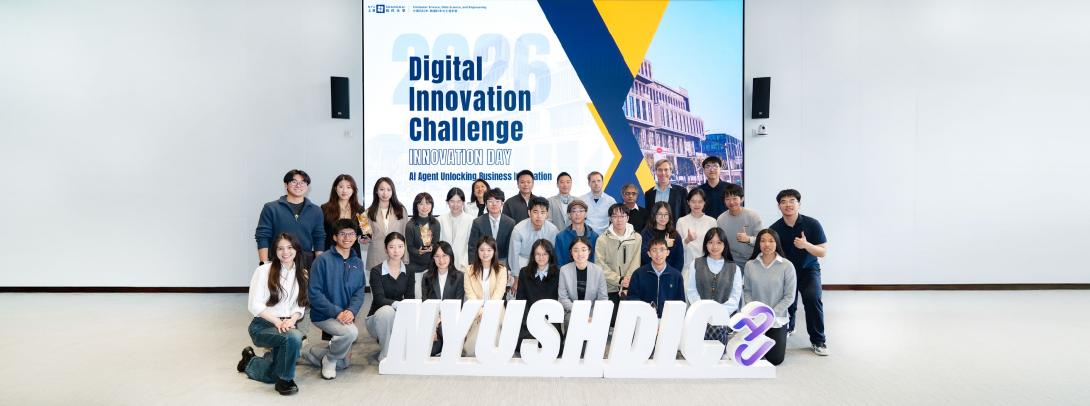
On March 29, NYU Shanghai hosted the final round of its fifth annual Digital Innovation Challenge (2025–2026 DIC). The competition was organized by the Digital Innovation Challenge student club under the guidance of the Division of Computer Science, Data Science, and Engineering (CSDSE) and Center for Data Science, with support from industry partners including Tencent, Henlius, and ChillPrep.
A technology-driven innovation competition, DIC encourages cross-disciplinary student teams to apply cutting-edge digital technologies to real-world problems. This year’s theme invited participants to explore how AI agents—systems capable of perceiving, reasoning, acting autonomously, and continuously learning—can drive innovation in both business and society.
The competition also expanded its international reach this year, attracting 75 teams from six countries, including students from universities such as Cornell University, the University of Chicago, and Duke University. After roughly five months of selection and development, nine teams advanced to the final round to present their projects on Innovation Day.
This year’s teams built innovative solutions in one of three fields: education, healthcare, and finance. Teams were tasked with developing AI-based solutions to real-world needs, transforming classroom knowledge into practical applications through the integration of technology, industry insight, and problem-solving.
Over the past year, the DIC committee has worked to help students turn their ideas into reality, including company visits, guest talks, and hands-on workshops. Teams were paired with dedicated mentors for guidance throughout the process.
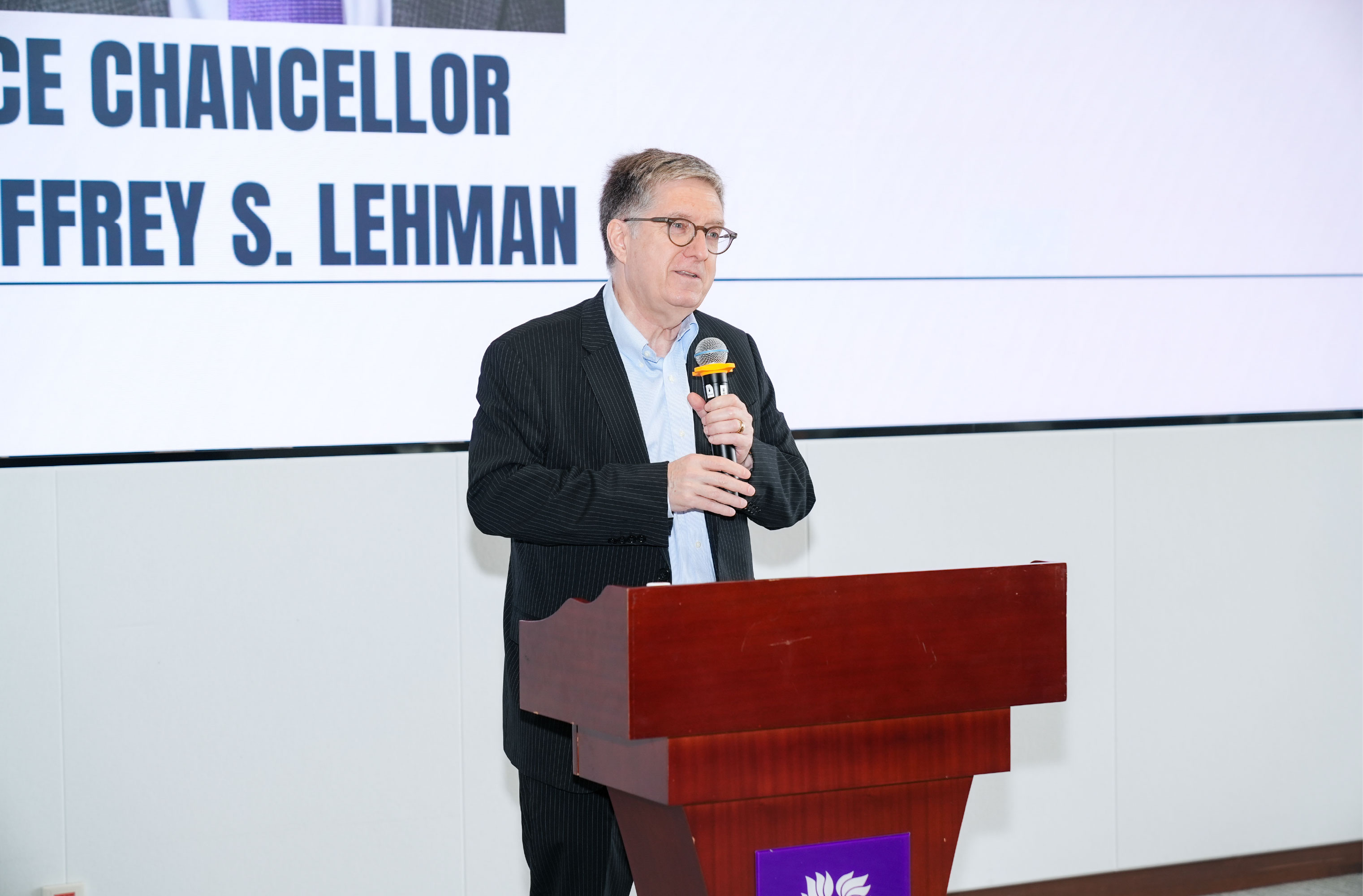
NYU Shanghai Vice Chancellor Jeffrey Lehman spoke at the final event, noting that DIC has become an important part of the NYU Shanghai student experience. “As a team-based competition, it gives students the opportunity not only to develop ideas, but also to practice essential collaboration skills—listening well, contributing responsibly, and helping a team draw the most value from every member,” he said.
Interim Dean of the Division of Computer Science, Data Science, and Engineering Nasir Memon also expressed his enthusiasm for DIC’s continued growth in its fifth year from a campus-based initiative into an increasingly international innovation platform. He expressed his hope that the competition will continue to bring together more young innovators from different disciplines and cultural backgrounds to test their ideas against real-world challenges, refine solutions through collaboration, and create innovations with meaningful social and industry impact.
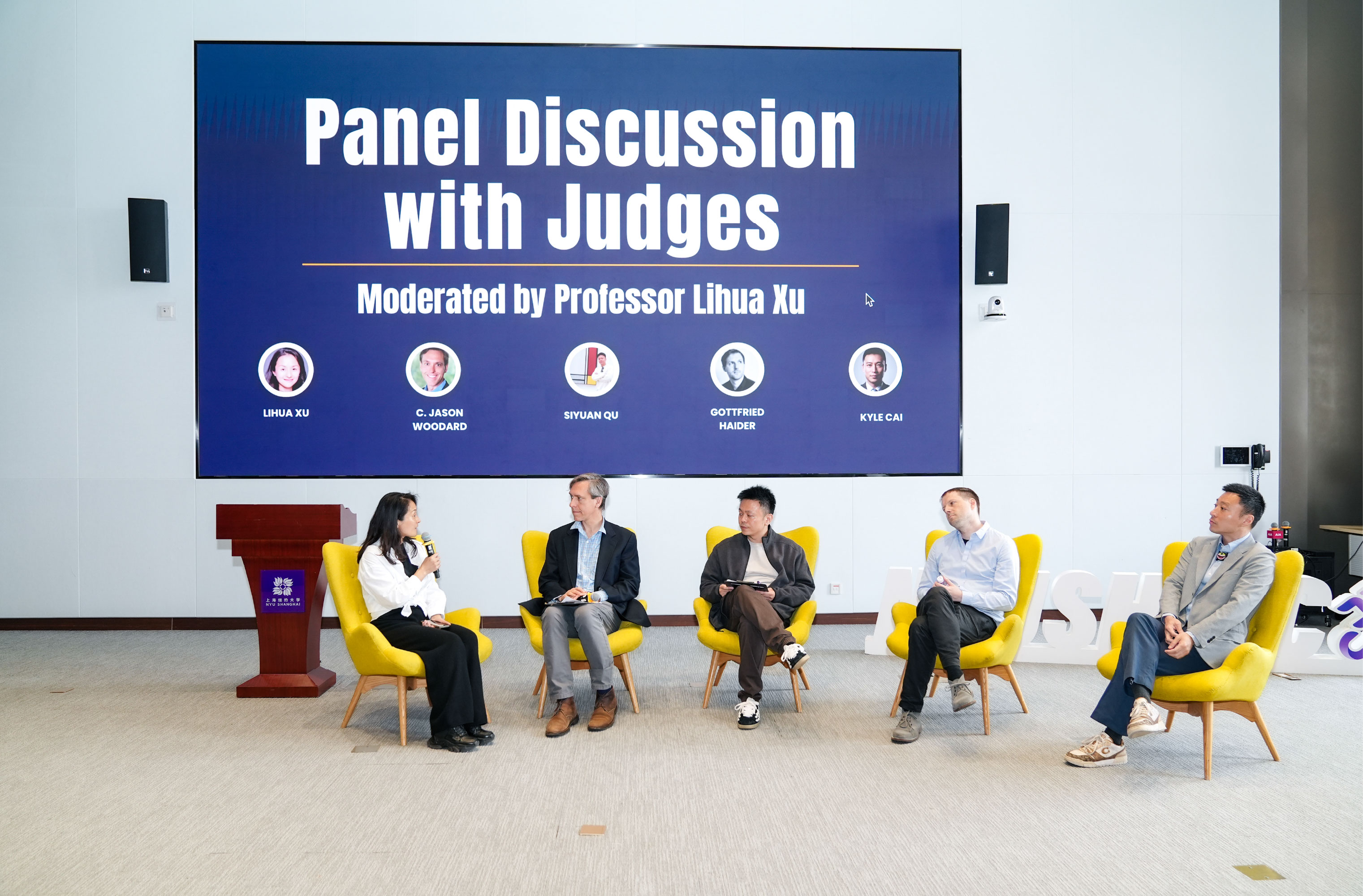
The final judging panel brought together leaders from business, art, education, and technology, including Vice President of Digital & Technology for China at Tapestry Kyle Cai; NYU Shanghai Assistant Arts Professor Gottfried Haider, Founder and CEO of Huiye Technology Qu Siyuan, Professor and Co-Director at the HKU School of Innovation C. Jason Woodard.
After the finalists gave their presentations, the judges evaluated their projects across multiple dimensions, including innovation, practical value, and overall performance. The competition ultimately gave awards for First Prize, Second Prize, Third Prize, Best Innovation, and Best Business Potential Awards.
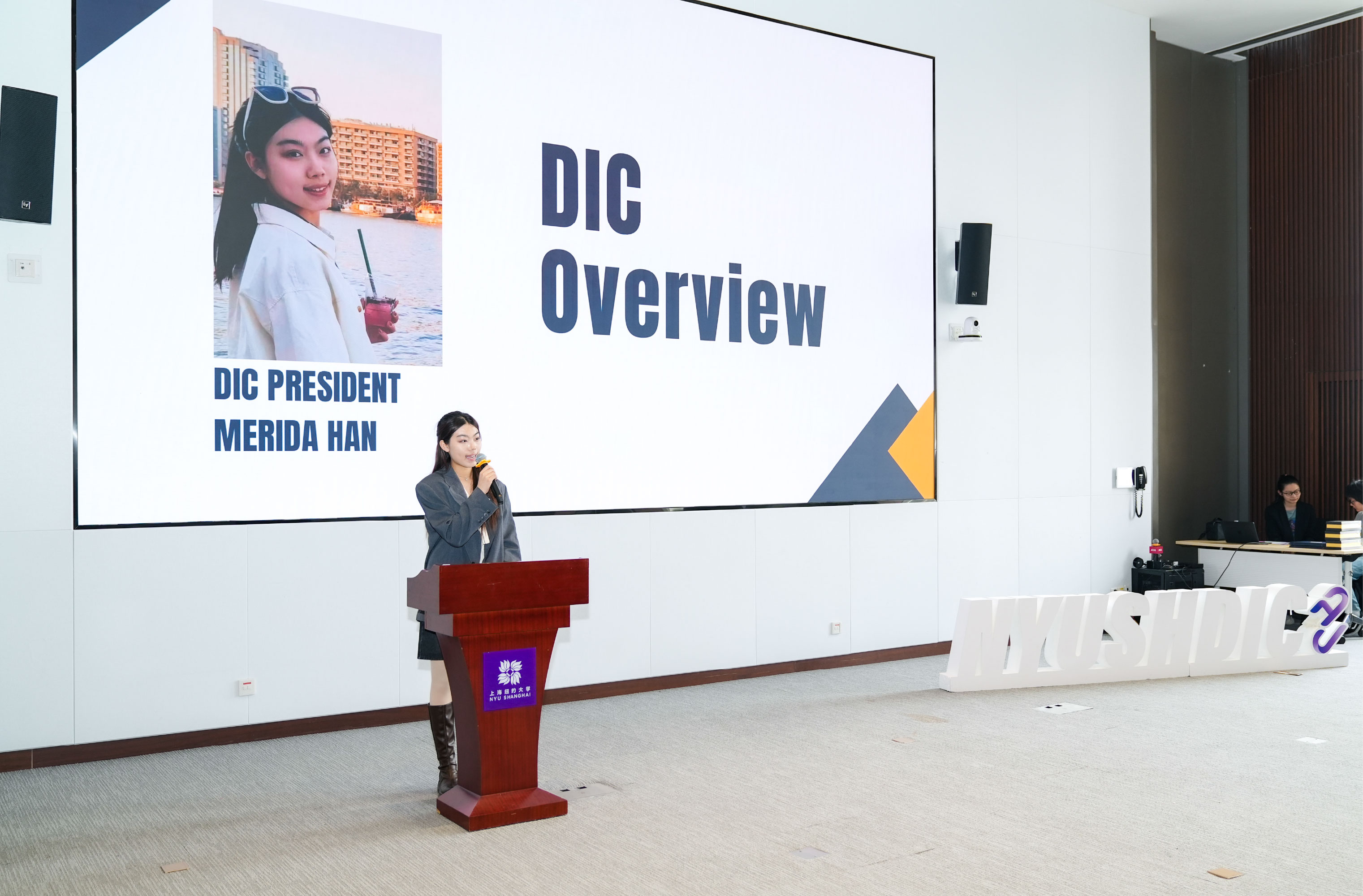
As the competition came to a close, DIC President Merida Han Yutong ’28 praised the finalists for the thoughtfulness behind their projects. “Over the past five months, you have shown that young people are not merely adapting to the age of AI, but learning to shape it, build with it, and apply it to real-world problems,” she said. “With empathy, creativity, and a strong sense of responsibility, you turned those needs into solutions with the potential to make a real impact.”
Awards
First Prize: Atlas (Healthcare Track, Duke Kunshan University)
Atlas is a local-first AI research platform built specifically for drug discovery. It runs entirely on the researcher's own machine - no cloud, no subscription, no sensitive data leaving the lab. Instead of a single chatbot, Atlas deploys a coordinated team of specialized AI agents.
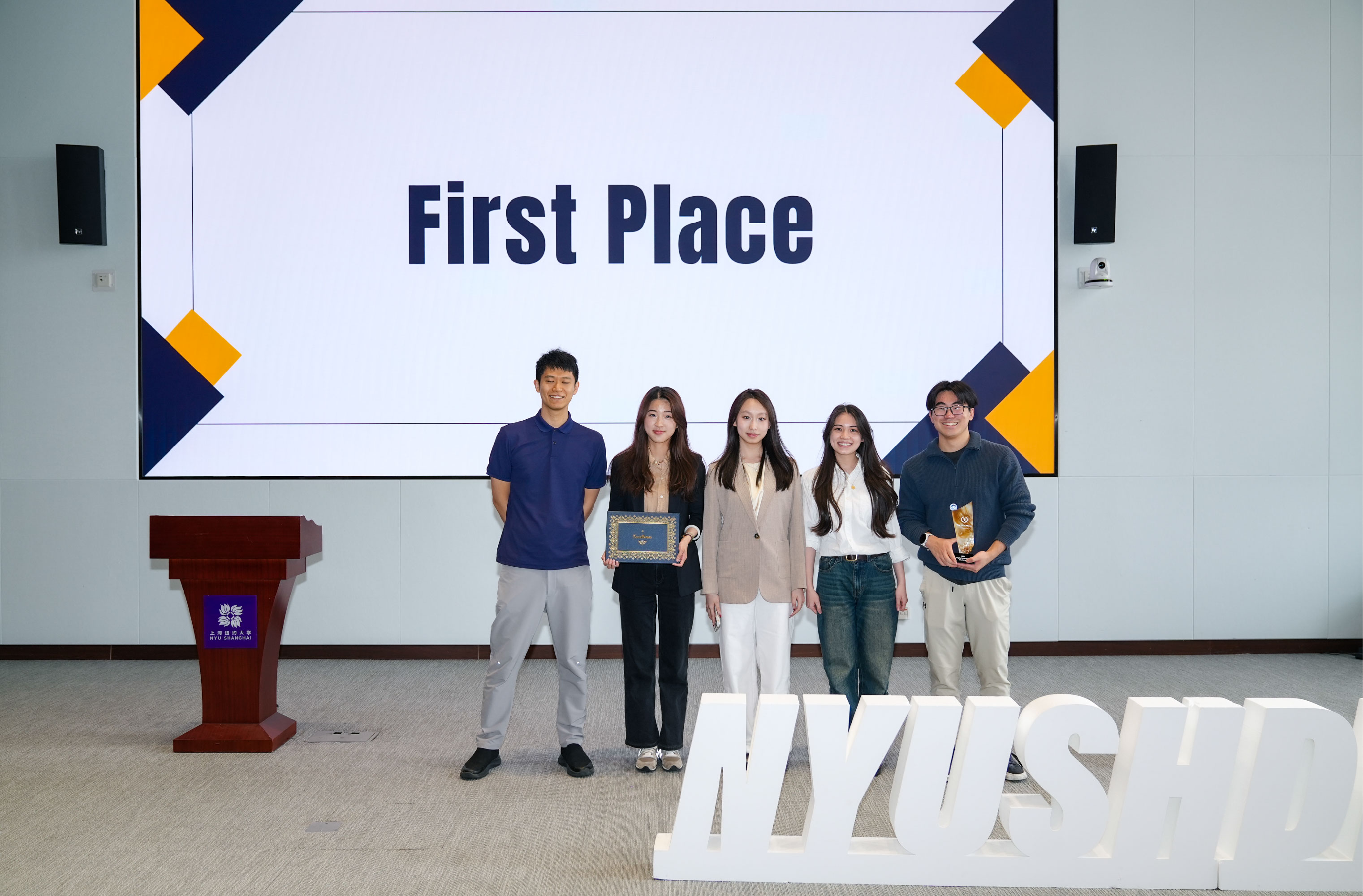
Second Prize: Tree (Healthcare Track, NYU Shanghai)
Tree is an AI Agent for Pharmaceutical Development, which is a Multi-Agent, GraphRAG-Powered Intelligence System for End-to-End Drug Development Decision Support at Henlius Biotech.
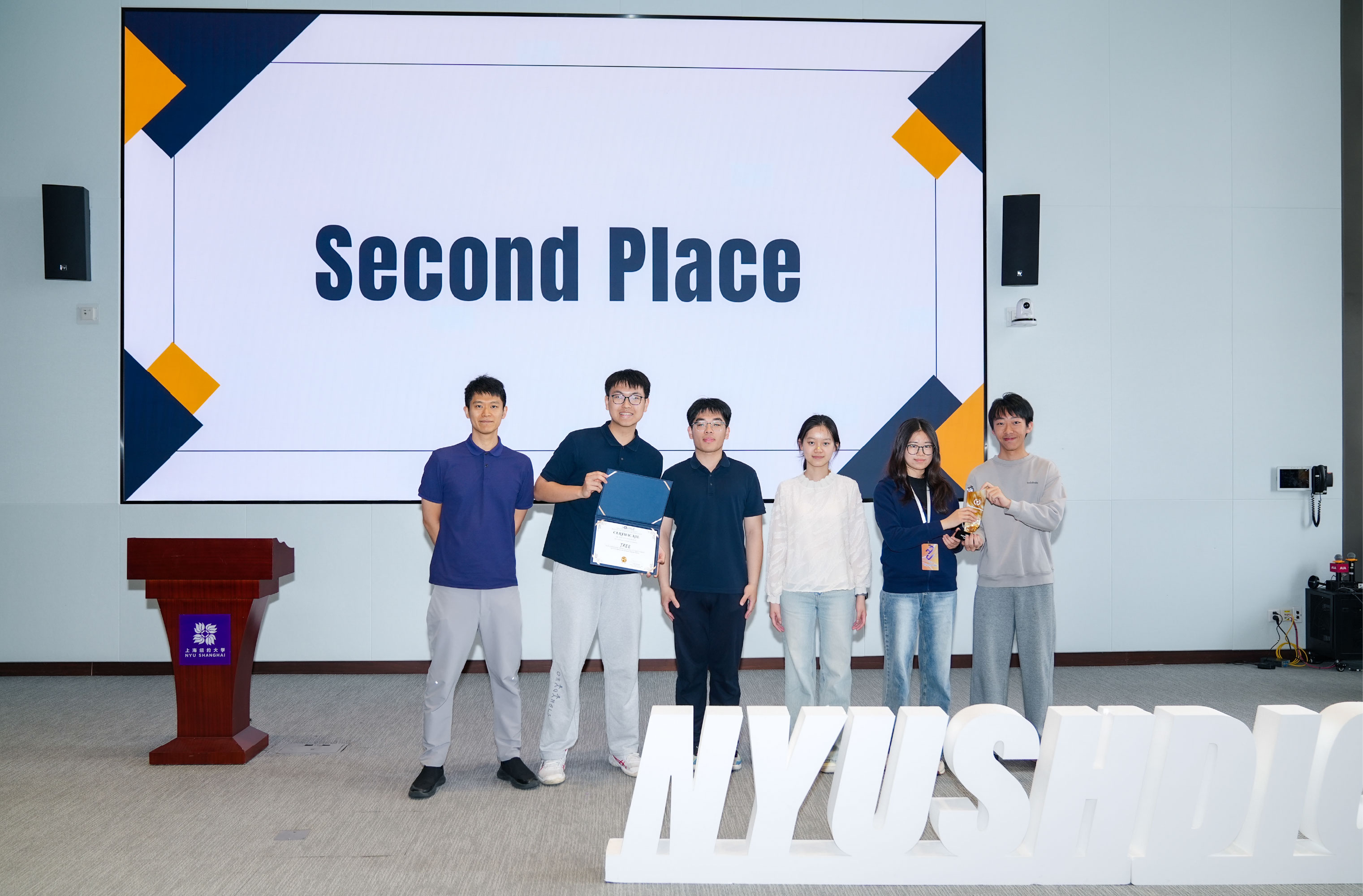
Third Prize: Gradient Gang - Causality (Finance Track, Duke Kunshan University)
Causality is a B2B verification layer designed to eliminate greenwashing by converting ESG narratives into auditable evidence. Unlike generic summary tools, our platform utilizes rubric-backed scoring and atomic claim extraction to provide compliance teams with a verifiable audit trail.
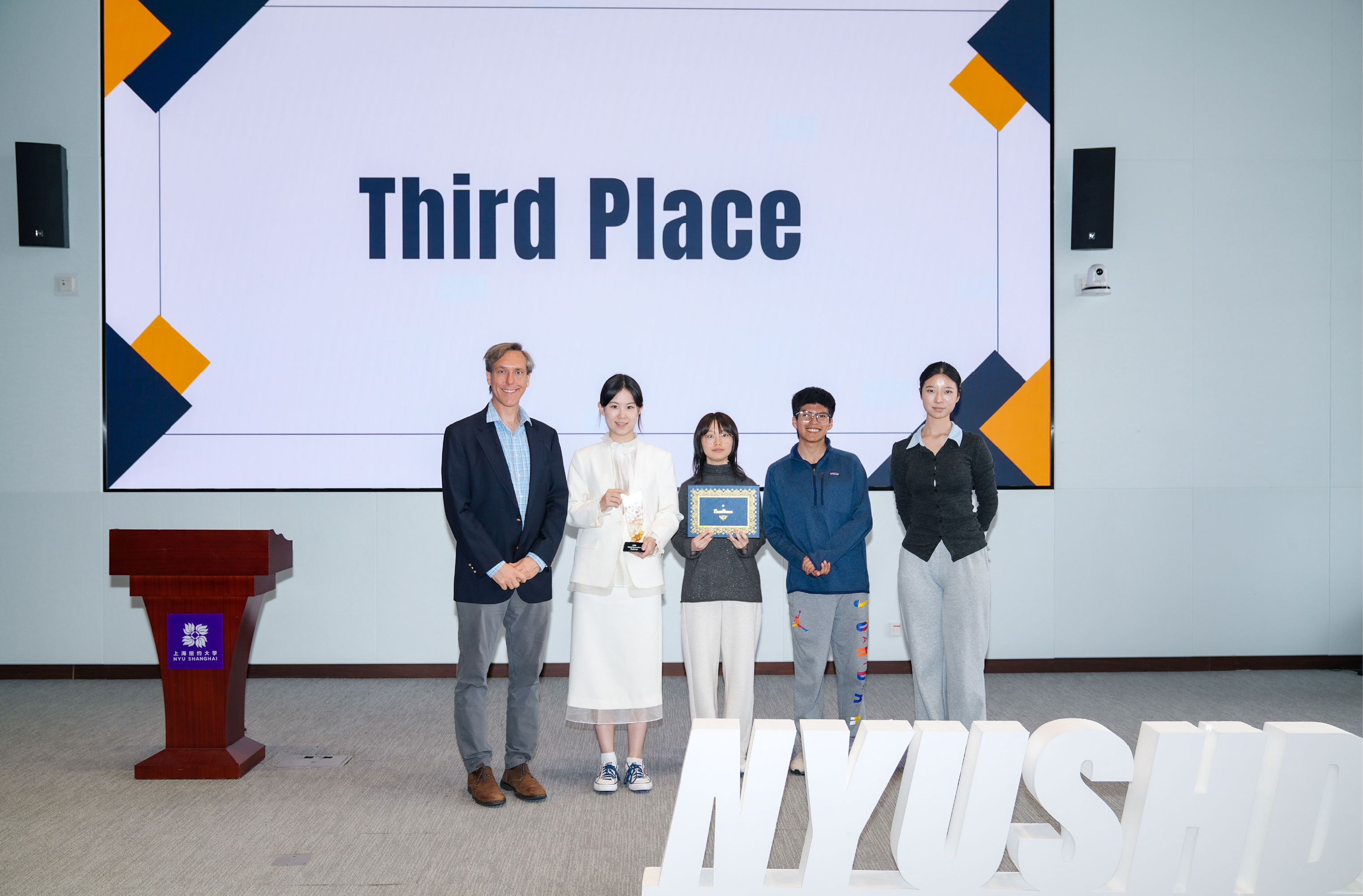
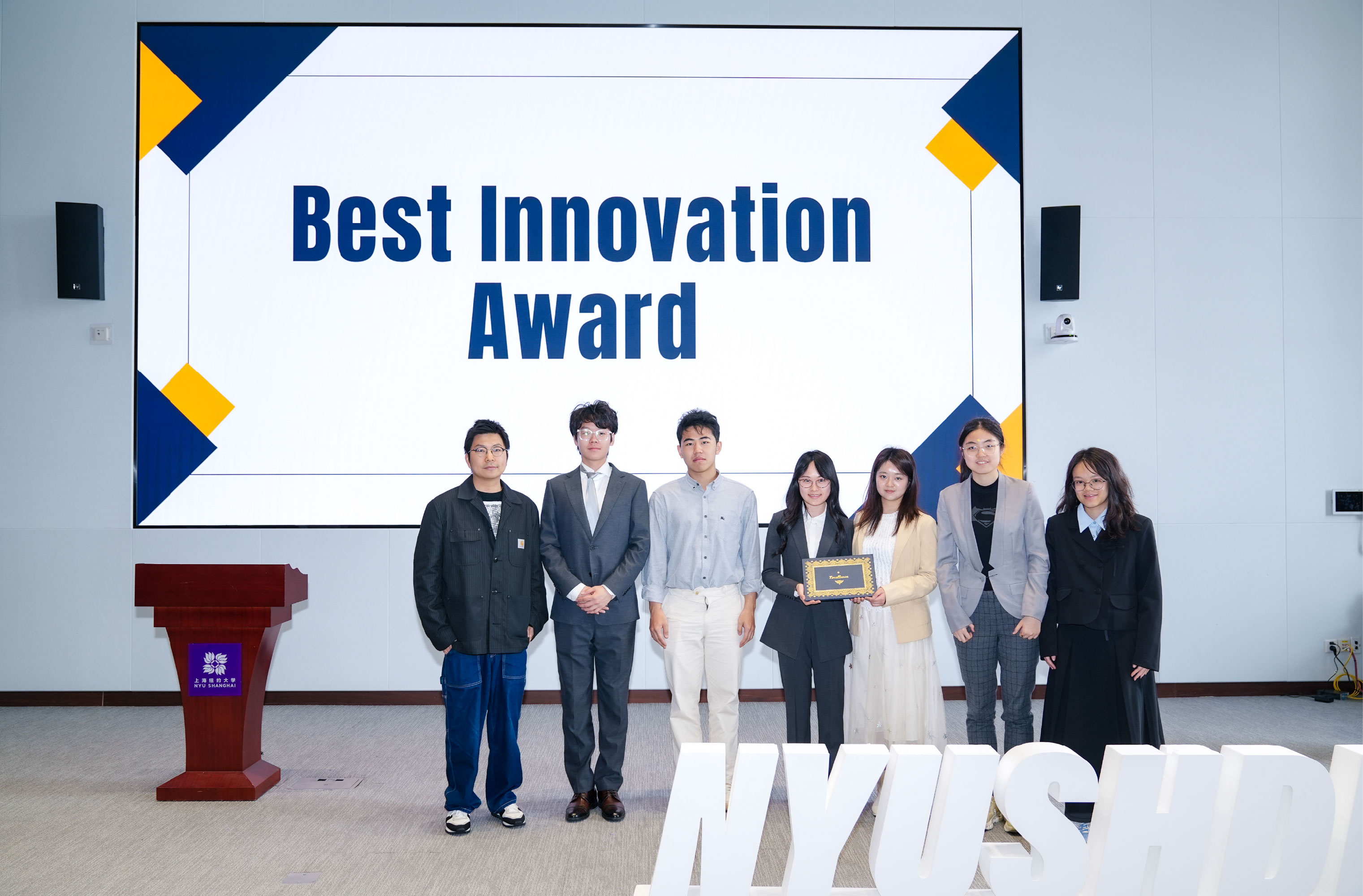
Best Innovation Award: Kiwi FeedbackLoop (Education Track, NYU Shanghai)
Kiwi FeedbackLoop is a modular analytics layer that extends the Kiwi learning environment with asynchronous intake, agent-based diagnosis, dual-lens reporting, and intervention-ready workflows. The platform combines a Collector Agent for multi-modal normalization with an Analyst Agent for pedagogical diagnosis, while preserving a governance-aware path from raw evidence to teacher-facing action.
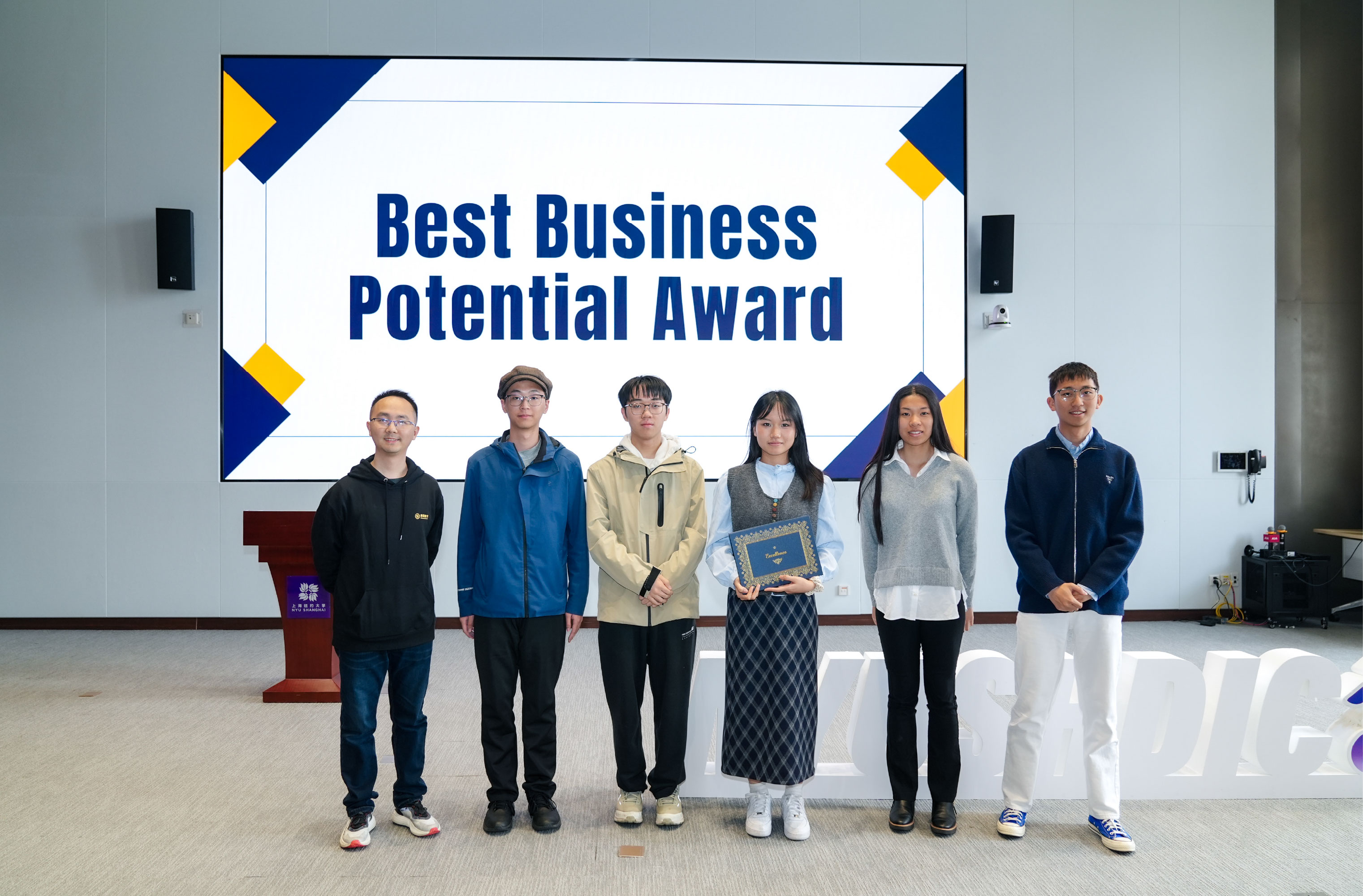
Best Business Potential Award: PocketPledge (Education Track, Duke Kunshan University)
PocketPledge is an innovative study tool designed to cure procrastination by combining virtual companionship with high-stakes accountability. Featuring an interactive Live2D avatar, low-latency voice chat, and multimodal vision AI, the system actively monitors your webcam and screen to detect distractions like smartphone usage or sleeping.