


NYU Shanghai’s Volatility Institute hosted its Summer 2026 NYU Shanghai Workshop on Research in Finance on July 3. The workshop, supported by the Yu Yu Fund, brought together scholars and industry experts to explore how climate change, biodiversity loss, and geopolitical uncertainty are reshaping financial markets and investment decisions.
The session opened with a keynote address by NYU Stern Professor of Finance Theresa Kuchler, whose talk explored how biodiversity loss creates risks for ecosystems and financial markets. She explained how this decline doesn’t just harm nature, but also creates financial risks for businesses and investors. Industries that depend on healthy ecosystems, such as agriculture, forestry, fisheries or tourism, contribute to biodiversity loss and could face lower profits, stricter regulations, or supply chain disruptions in the future. She argued that some companies aren’t currently paying attention to how severe those risks are.
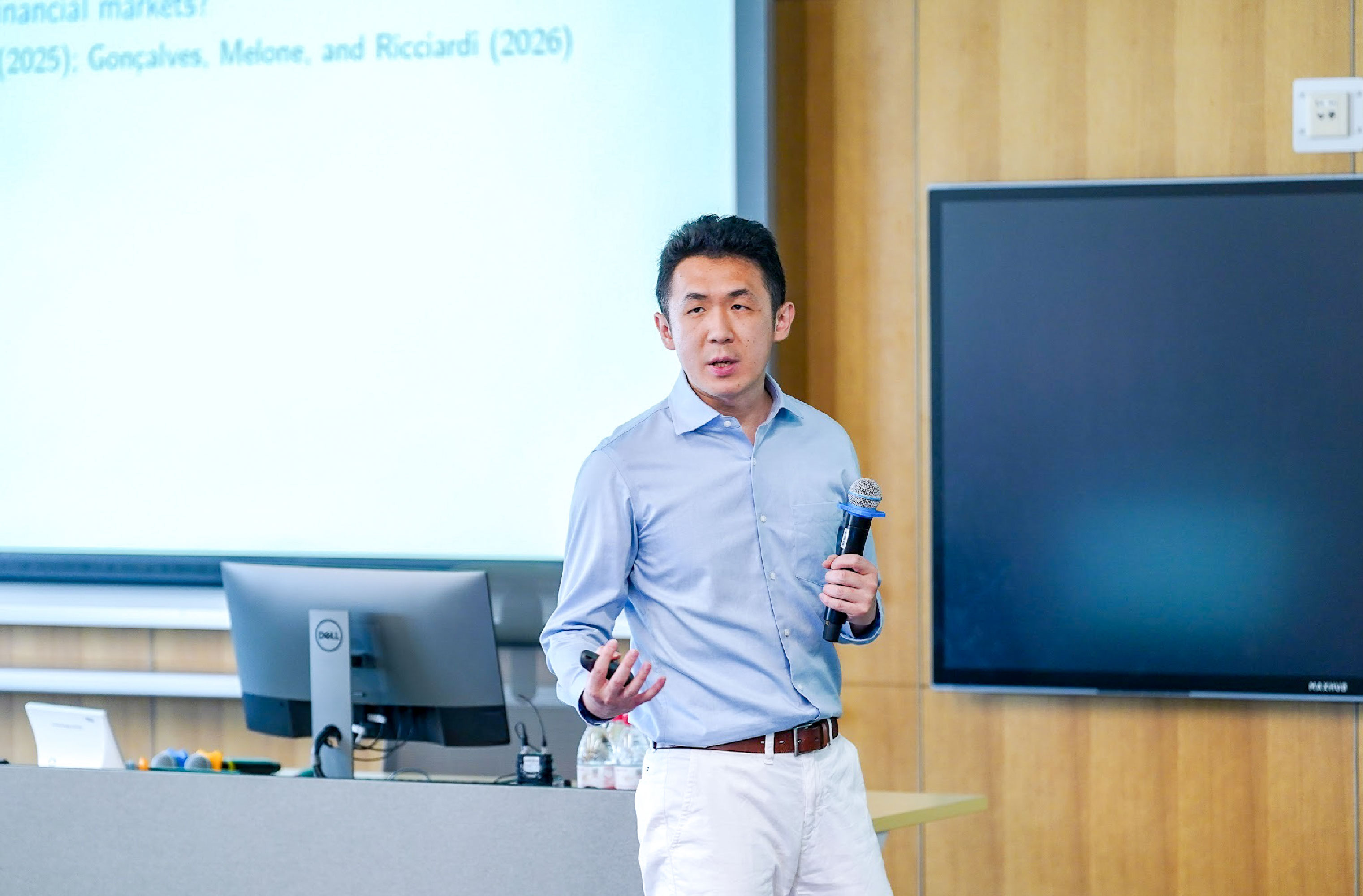
The first paper was presented by Chao Zi from Shanghai Advanced Institute of Finance, who examined how geopolitical risk has become a risk factor in financial markets. He argued that geopolitical tensions have become an increasingly important factor in financial markets.
Rather than viewing events like trade disputes or international conflicts as temporary shocks, investors now build those risks into their investment decisions, he said. His research found that since around 2016, investors have tended to pull money from companies most exposed to geopolitical uncertainty, pushing down their stock prices and increasing the returns investors expect in exchange for taking on that added risk.
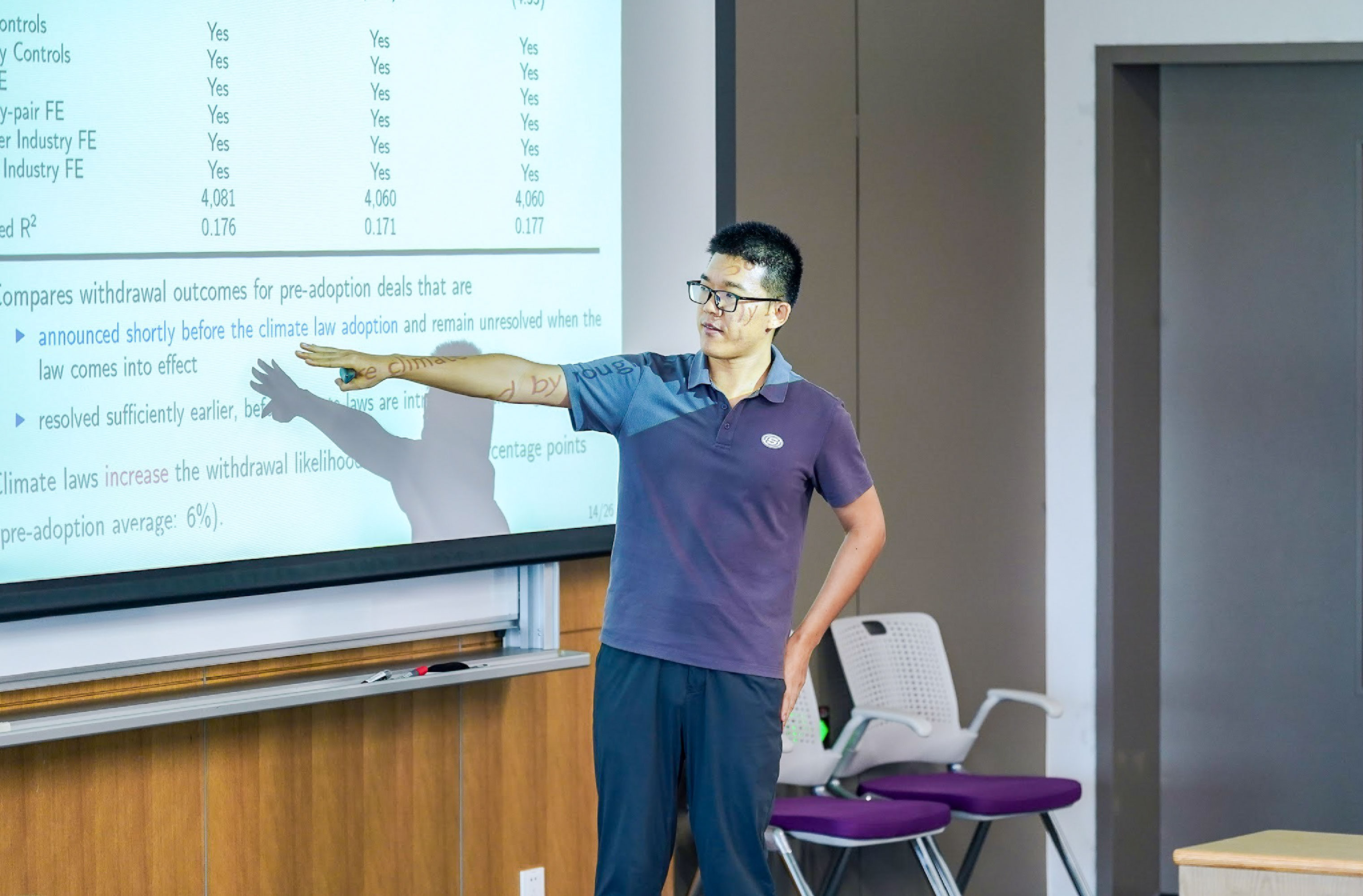
Next, Tong Li of Xiamen University presented a paper on climate laws and their impact on cross-border mergers and acquisitions. His study explored how climate regulations can unintentionally reduce foreign mergers and acquisitions by increasing compliance costs and regulatory uncertainty. He argued that thoughtful policy design, including subsidies and incentives, can lessen this effect while still advancing climate objectives.
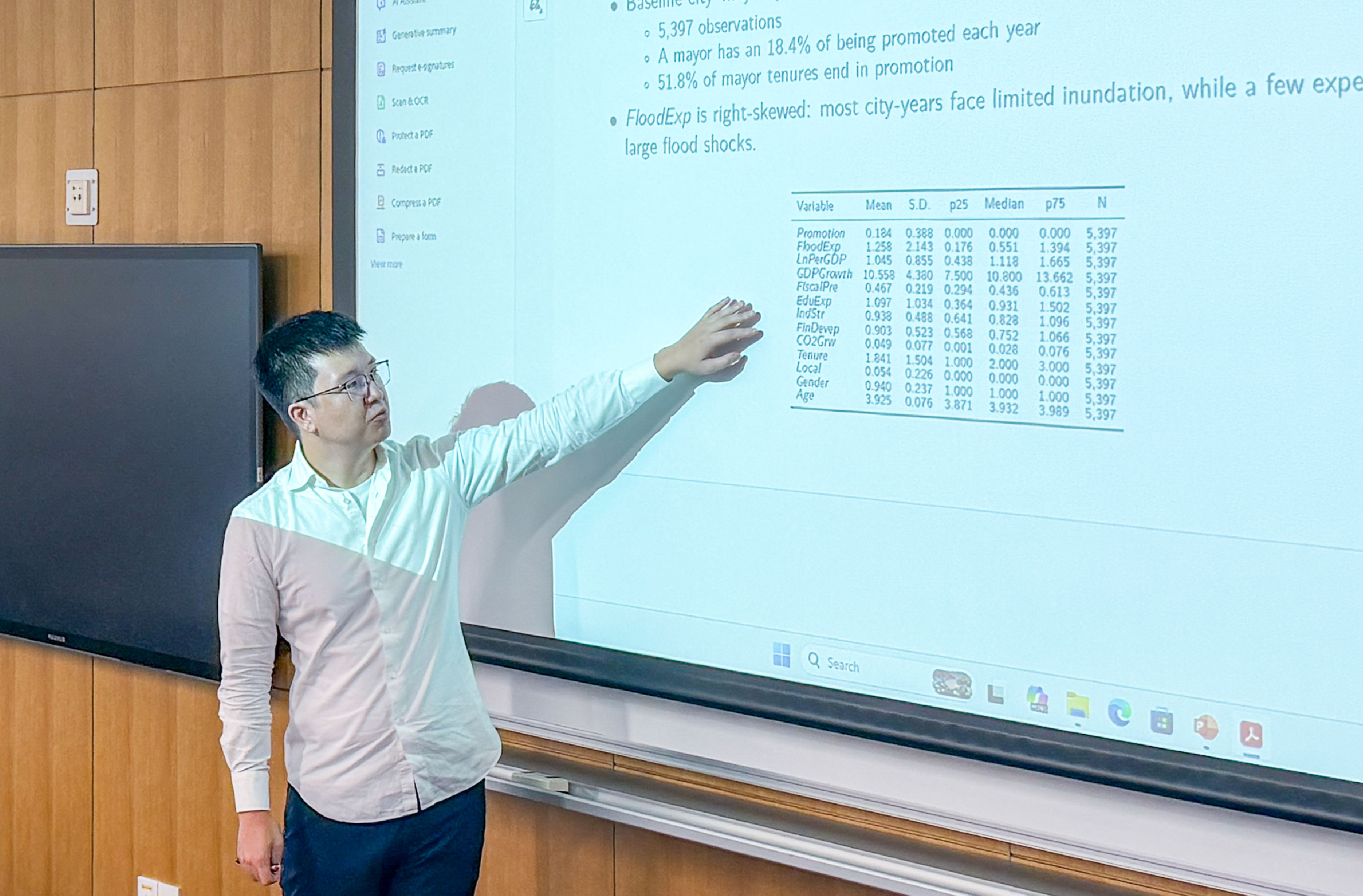
Geoffrey Zheng of NYU Shanghai presented his research examining whether China’s political system encourages local leaders to prepare for climate change. By tracking the careers of mayors alongside two decades of flood data, he found that officials whose cities experienced severe, unexpected flooding were less likely to be promoted. However, he said government investments in flood prevention, infrastructure, and faster disaster recovery reduced those career penalties. His findings suggest that promotion incentives can encourage local governments to prioritize long-term climate resilience, not just short-term economic growth.
The workshop concluded with a panel discussion on how climate change is reshaping financial markets through research, investment, and policy. Moderator and Assistant Professor of Finance Christina Dan Wang opened the discussion by asking where climate finance research and practice are headed over the next decade.

NYU Stern Professor of Finance Johannes Stroebel argued that better, more predictable climate policies will help investors and businesses respond to the increasing financial risks posed by climate change and biodiversity loss. He outlined several goals for the next decade, which include measuring how environmental risks affect asset prices, insurance markets, financial stability, and sovereign debt. He also called for new financial instruments that allow investors to better manage physical climate risks. He argued policymakers should create more predictable carbon pricing frameworks that encourage long-term investment
Hedge fund manager Dr. Tang Tao argued that companies that manage environmental, social, and governance issues well tend to be stronger businesses, making ESG an important factor for investors. He noted that artificial intelligence is becoming a more valuable tool for monitoring ESG-related news, identifying emerging risks, and incorporating real-time environmental and governance events into investment decisions.
National Carbon Market Research and Development Center Director Chang Zheng talked on the fast evolution of China's carbon market, tracing its expansion from regional pilot programs to the launch of the national emissions trading system in 2021. Zheng also explained that China is expanding not only its carbon trading market, but also the financial tools that support it. Companies that reduce emissions can earn carbon credits, creating financial incentives that support China’s goal of reaching carbon neutrality.