

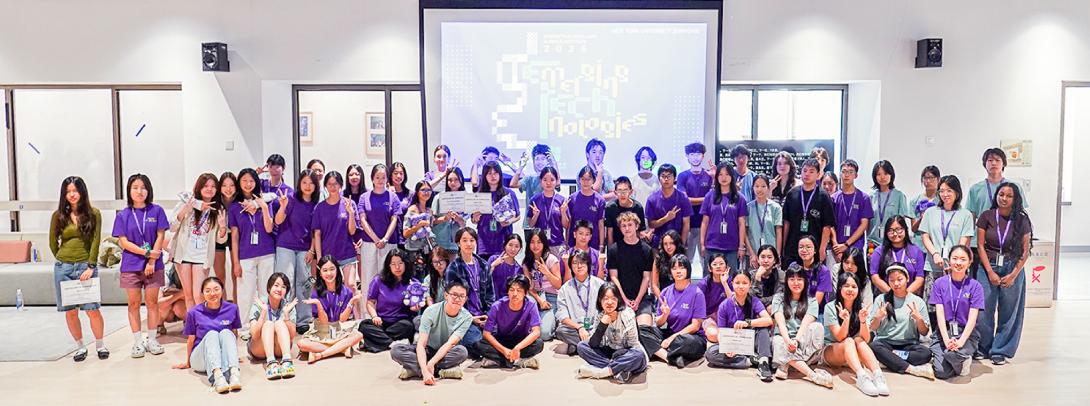
This summer, 65 high school students from 11 countries explored the intersection of creativity and technology at NYU Shanghai’s inaugural Emerging Technologies IMA Summer Institute.
Designed by Interactive Media Arts (IMA), the program introduced students to machine learning, robotics, digital fabrication, creative coding, and game design. Aiming to be playful and collaborative, the program inspired students to unleash their imaginations, explore what has recently become possible with emerging technologies, and reexamine their preconceived notions about art and technology.
Associate Arts Professor of Interactive Media Arts Marcela Godoy says today’s artists are collaborators, critical thinkers, and innovators who use emerging technologies to create work that is both engaging and socially meaningful. She and Assistant Arts Professor Gottfried Haider started the summer program, she said, to show high school students what’s possible when art and technology come together, and to encourage them to create too.
“If, by the end of the program, students leave with a greater curiosity about their future, and the confidence to see themselves as creators—not just users of technology—then we have achieved what we set out to do,” she said.
Over two weeks, the students immersed themselves in engaging project-based learning, designing and building robots, exploring game design through play, and experimenting with coding, machine learning, and AI-powered creative tools.
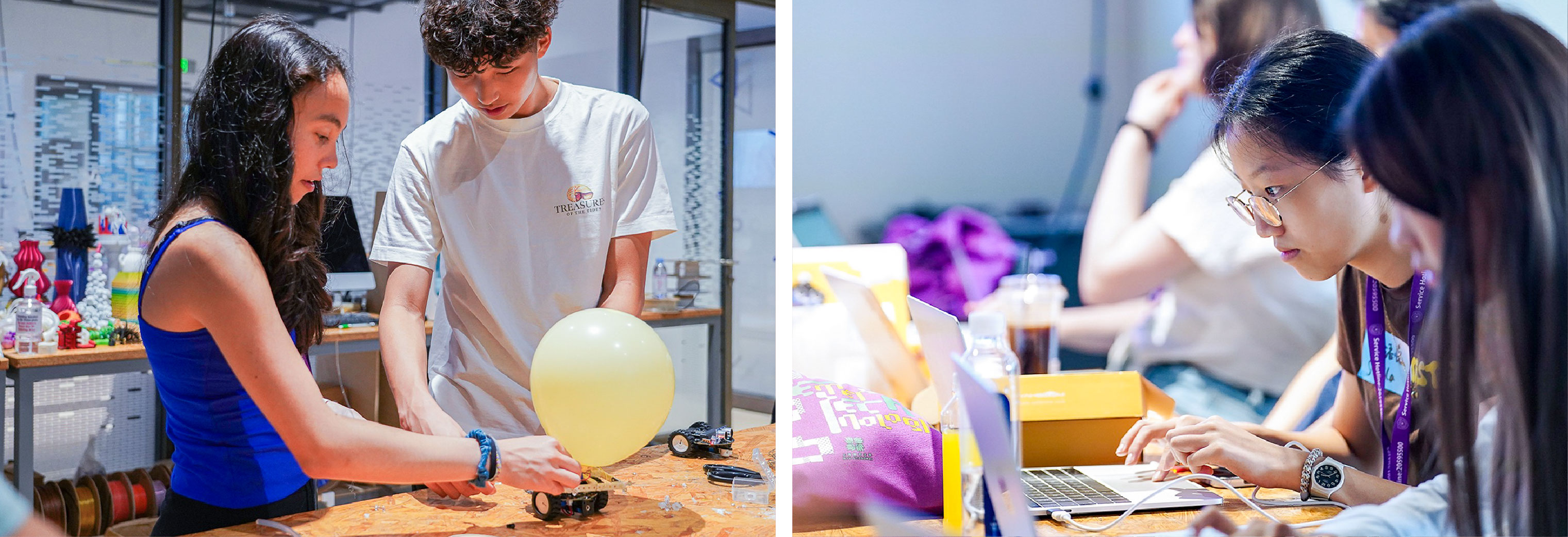
A playful twist on Professor Godoy’s Introduction to Robotics Class? A robot battle. Using a balloon and pretty simple materials for rapid prototyping, students designed and prototyped their own robots with kinetic arms that could “attack” when the robot detected something close, and controllers attached to their bodies to steer them wirelessly. The only rule was that they couldn’t control the robots with their hands.
The intense building session was followed by a moment of hilarity. “During the competition, everyone was basically waving their legs and moving their bodies around to control their robots while trying to pop each other’s balloons, said Fabrication Lab Specialist Zang Dalin. “It was really fun to watch.”
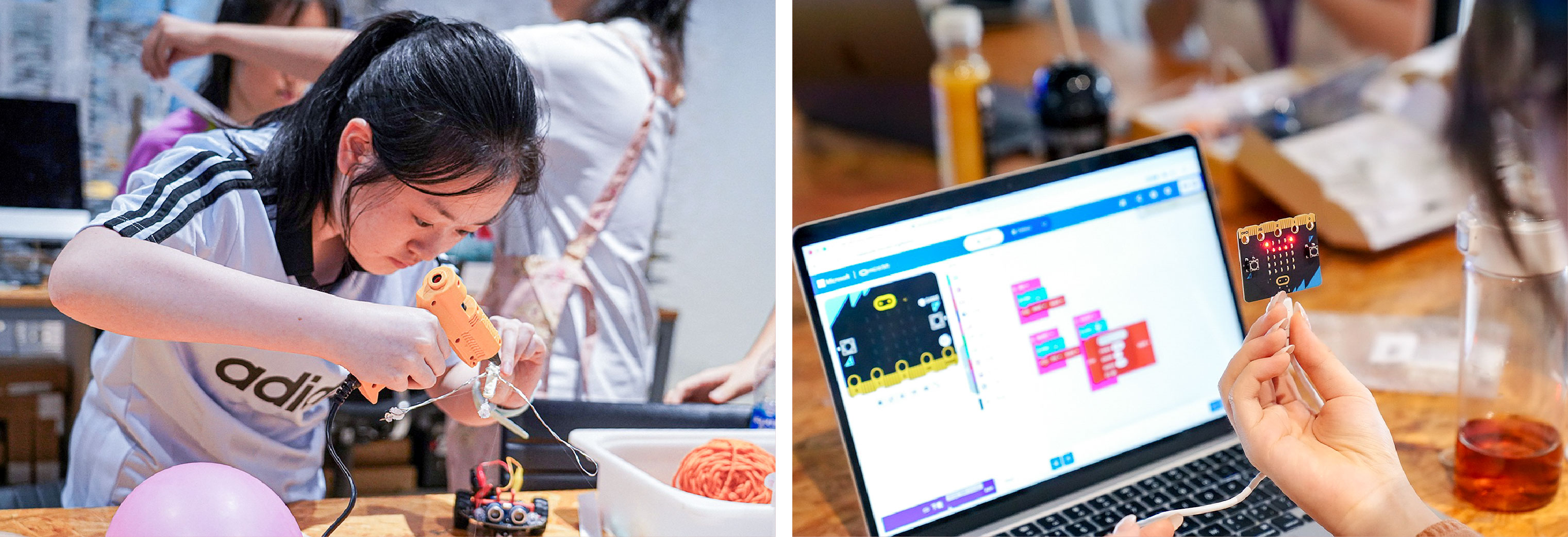
By the end of the course, students had the chance to experiment and create their own robots for different purposes, combining electronics, mechanisms, and using 3D printing and laser cutting machines in the Fabrication Lab. A ninth-grader from Huizhou, Guangdong Province said that building his own robot helped him see how technology and artistic expression are inseparable. “You can use technology to create art, and you can use art to think about the meaning of technology,” he said.
The program encouraged students to use their new skills towards experimenting with interests they already have. Rather than simply reproducing what they had learned in class, many took the initiative to begin testing out techniques in their own personal projects.
For his final project, a twelfth-grade student from Shanghai developed an educational and engaging game inspired by a communication system used by deaf and hard-of-hearing communities. He said the program taught him that storytelling and creative expression were equally as important as building on technological skills.
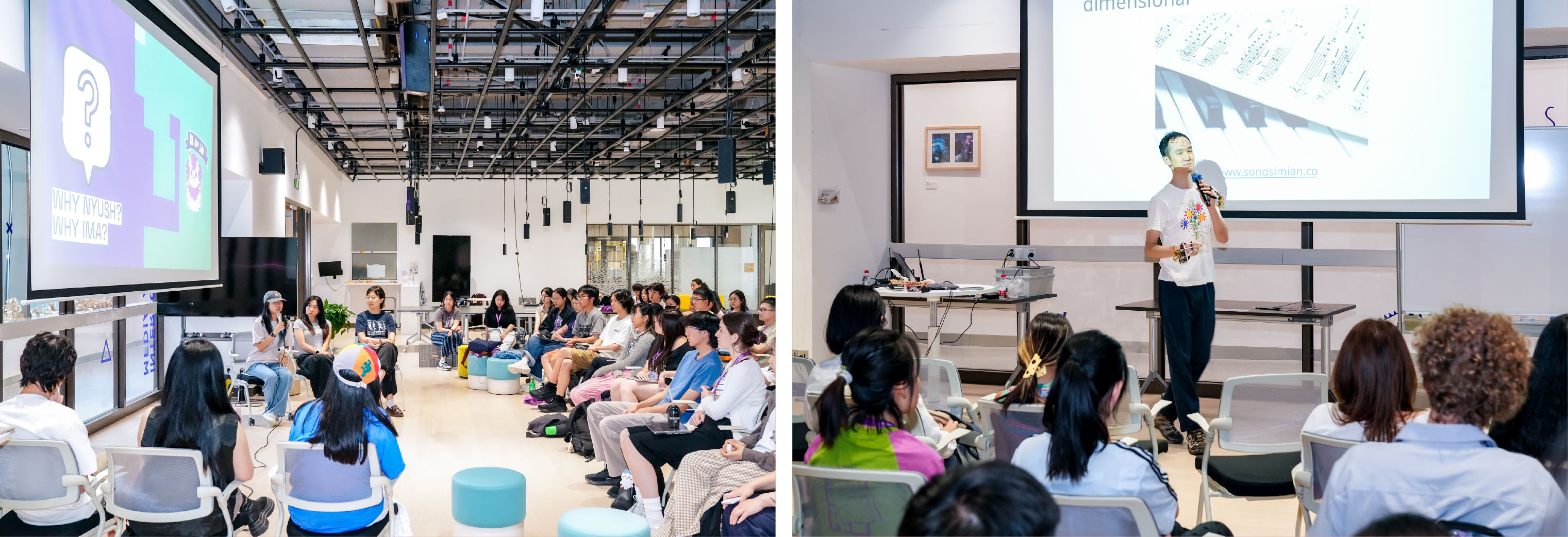
The classes taught the students to engage with AI as creative thinkers and incorporate AI into their creative process. Assistant Arts Professor Gottfried Haider noted that in his machine learning class, the students were already AI natives, in the sense that turning to a large language model had become a familiar approach for tackling a problem. But rather than focusing solely on how to use AI tools, he also introduced students to some of the underlying concepts and mechanisms that make these systems work.
“It was especially rewarding to pull back the curtain a bit on how these systems work, how they are trained, and how they can be used creatively and artistically through a series of hands-on activities and experiences,” he said.
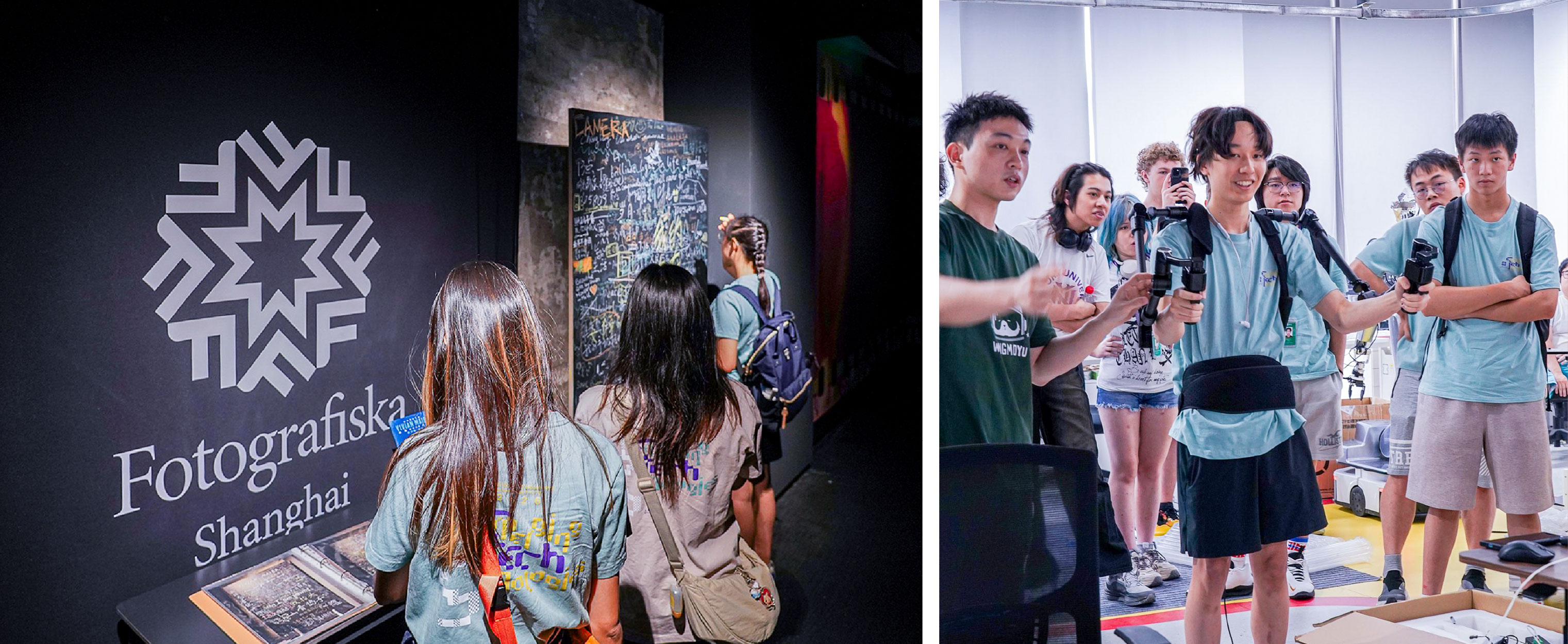
Beyond acquiring new skills, students learned how to share ideas so that they could collaborate across cultures and create together.
Working in small diverse groups of two to five in the Machine Learning course, students used image diffusion models to reimagine everyday objects in front of a webcam. They brainstormed ideas together, found or built props, experimented with prompts and parameters, and produced a final video. Another project included co-creating computer-controlled drawings through an ongoing dialogue with language models, turning the creative process itself into an exploration of both human and machine preferences.
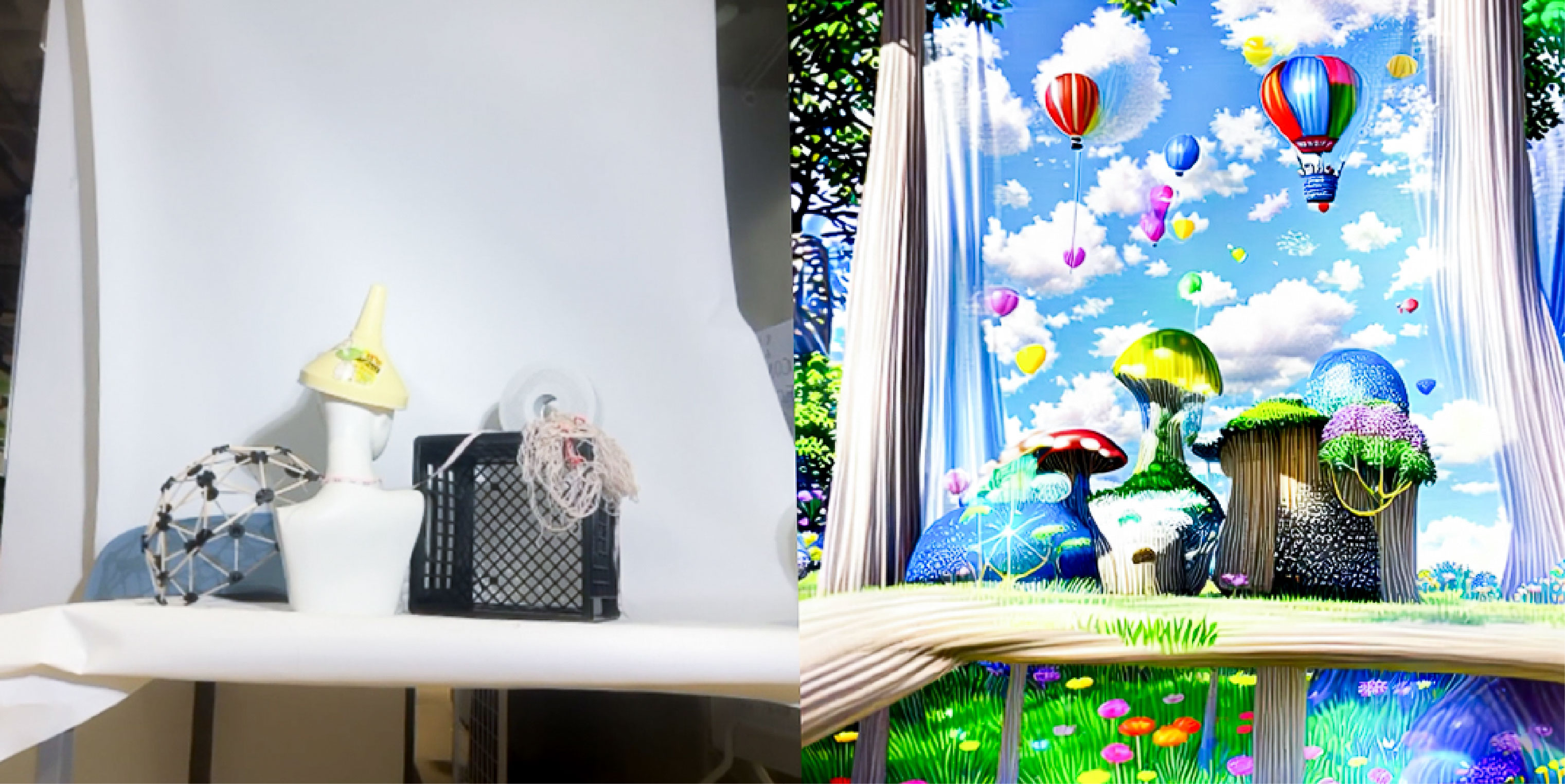
“I really like the people from this program above anything else,” said a twelfth-grader from Oregon in the US, after explaining how he and a Chinese student bonded over their shared interest in coding in javascript. “The relationships we made were invaluable.”
Teaching assistant and IMA major Lu Meilin ’26 said she hoped that the students were inspired by this introduction to interactive media arts. “My main hope is that during these two weeks, they’ll experience the joy of IMA and the wonderful process of turning their ideas into reality through hands-on creation,” she said.
Most of all, the students discovered that creativity is essential, no matter what field they may pursue in the future, and that it does not belong to any single discipline. It grows from curiosity, openness, and the courage to turn ideas into reality.