

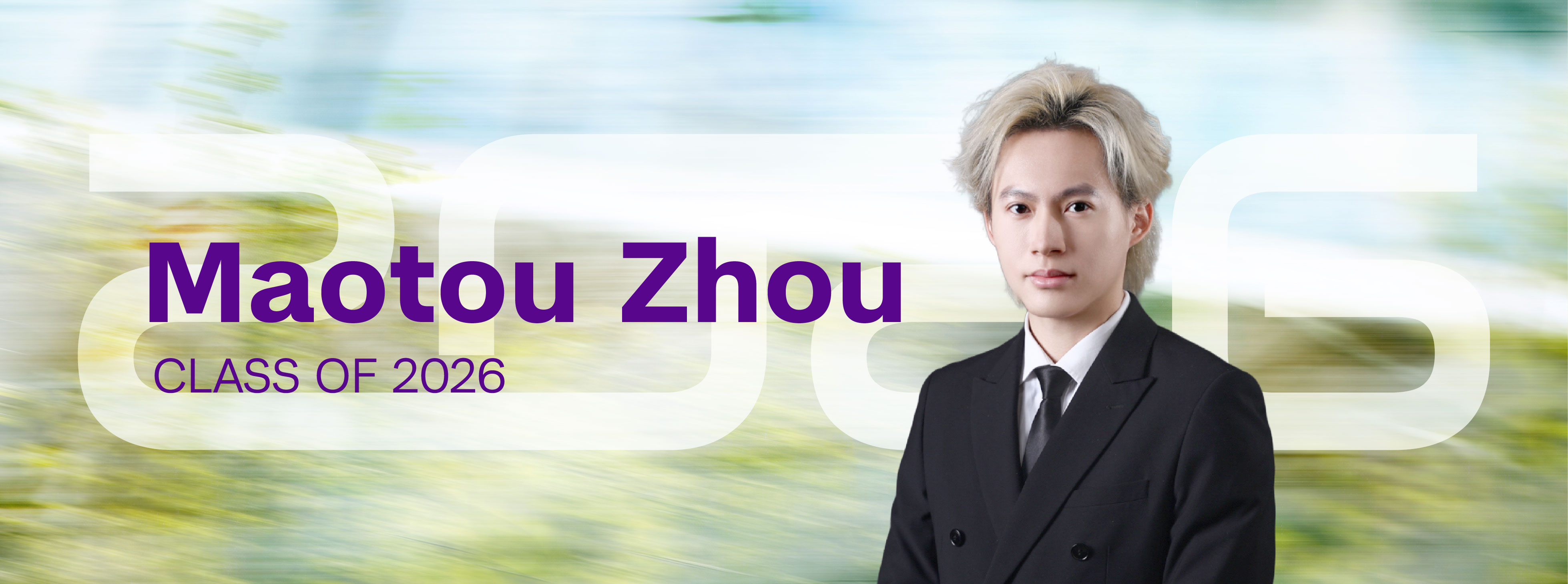
Growing up between China and the United States, Maotou Zhou, MSOMS '26 learned early not to confine his life to a single frame. He noticed patterns, made connections, and stitched experiences together, even when they seemed unrelated. After his family moved to the Philadelphia area when he was three, he moved through the rhythms of suburban American life while the scent of red-braised pork and rich beef noodles filled his home.
In his local neighborhood community, people took pride in building something of their own. Observing how his family members who ran their own businesses and worked in higher education, he started his first venture at 15 — connecting clients with custom apparel designs and managing their production. Many of his friends talked about starting their own ventures one day. He found himself wanting to understand how organizations work on a fundamental level — so that, one day, he could contribute in his own unique way.
At Drexel University’s LeBow College of Business, he studied Finance and Legal-Studies, while balancing an internship in white-collar litigation and tax-and-wealth planning at a local law firm, additionally working as a personal boxing trainer, and serving as the marketing director for the school’s first Esports student-org. Each experience was a glimpse into a different world, a piece of a puzzle he was still learning to assemble, red threads that would later come together in unexpected ways. “I’d say my career path hasn’t been linear,” he reflected. “I wanted to have my own focus and specialty, but I also wanted to go abroad and pick up a variety of new skills along the way.”
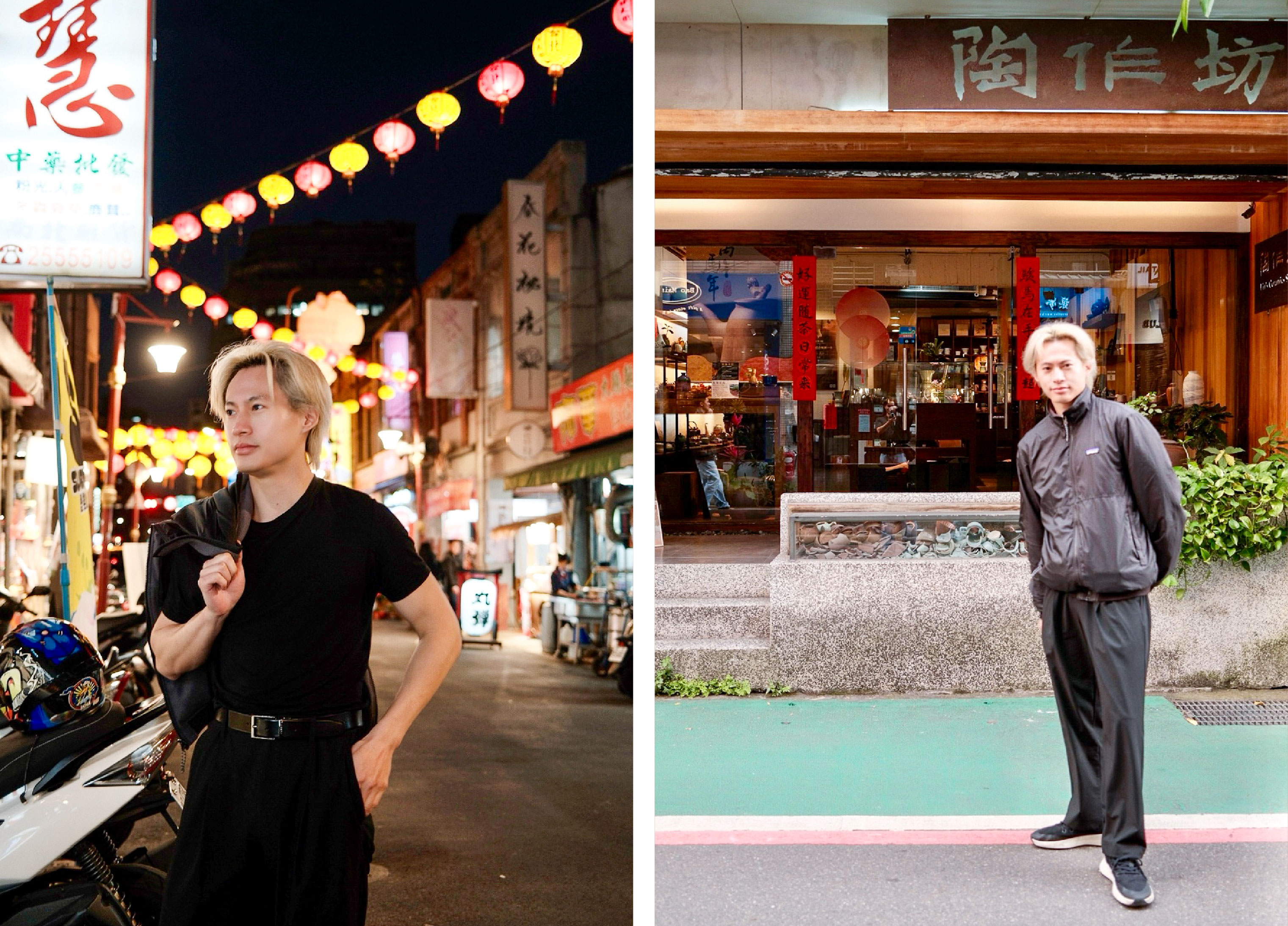
Those diverse experiences led him to graduate school. He applied to only one program: NYU Shanghai’s Master of Science in Organizational Management and Strategy (MSOMS), a joint program with NYU Stern. “I realized you can learn so much just from other people,” he said. “Books and podcasts are helpful, but seeing how someone got from where they started to where they are now, it's like you’re living multiple lives through them.”
The first three months in New York were intense and overwhelming. He felt a city that constantly pushed people to think bigger and do more — its streets alive with artists, entrepreneurs, and students all chasing something greater. In that energy, where tradition meets innovation, every challenge becomes a chance to grow. Likewise this also served as an inspiration for him to think bigger and take more risks in his own goals. “New York was truly a city that can level-up one’s self,” he said.
Then came the second part of the program, in Shanghai, and the work became less theoretical and more “real.” His team completed a six-month capstone project for Rednote (Xiaohongshu), a leading social networking and e-commerce platform in China. Their goal was to come up with a plan for building an AI agent that could detect altered personal information in screenshots, scam messages, and identify photoshopped or AI generated images.
With no formal training in computer science, Maotou armed himself with every resource he could find — online courses, LLMs, research papers, and anything that could help. The end goal consumed him, occupying his thoughts day and night, and every small discovery felt like a step closer to understanding how he could bridge theory and practice.
The challenge intensified when they began working directly with the company. He struggled to communicate his ideas clearly in a Chinese business environment. “I had to learn to speak concisely, to cut to the point,” he recalled. With guidance from Capstone Director and Professor of Practice in Management and Strategy Chen Jing, who coached the team, he learned to sift through scattered information, extract essential details, and weave it all into one coherent story.
As a student in Chen’s Advanced Strategy Analytics course, Maotou learned to approach a problem from different angles. “It’s not just about making one strategy work,” he said. “It’s about how they work together.” He began to see that a single, linear solution was rarely enough. What mattered more was how strategies could support one another, rather than stand alone.
He learned to connect with people too, observing that in his cohort of students from diverse backgrounds, each brought their unique set of experiences. Maotou realized that collaboration wasn’t about uniformity, but about aligning different paths.
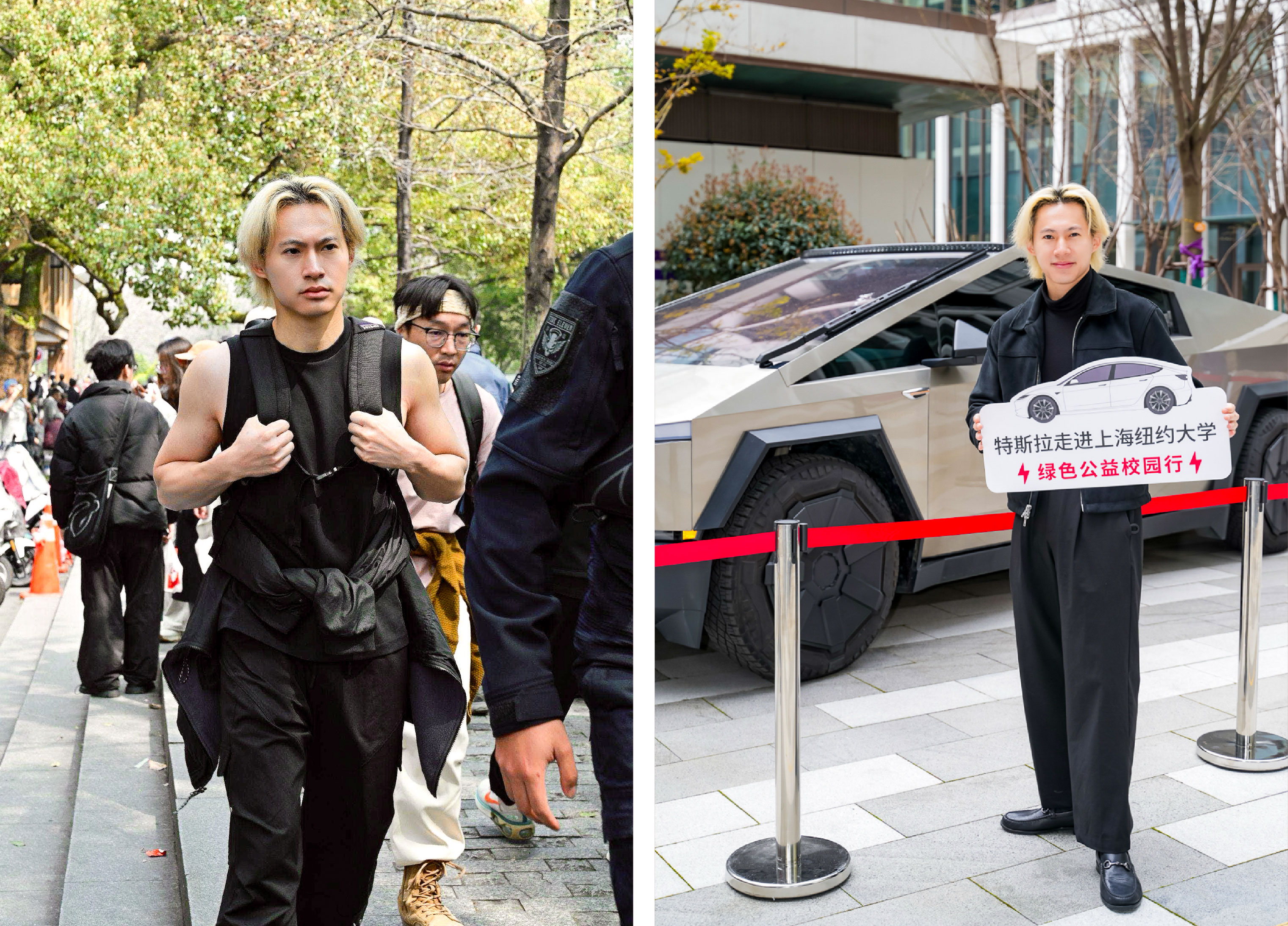
Right: NYUShanghai x Tesla Event
He brought this philosophy into practice as the OMS Cohort Leader and as a member of the NYU Shanghai’s Graduate Student Leadership Board (GSLB). In his campaign, he reached out individually: “Listening to and understanding everyone’s needs took the most time.” The experience taught him about leadership, and he came to understand that it wasn’t about giving orders or making decisions alone. “Leadership is more like the ability to connect people,” he reflected.
Being part of the leadership board helped him build those connections and reach the broader master’s and PhD community. He helped organize events, facilitated peer learning, and fostered collaboration across programs, translating his values into concrete action benefiting the entire community.
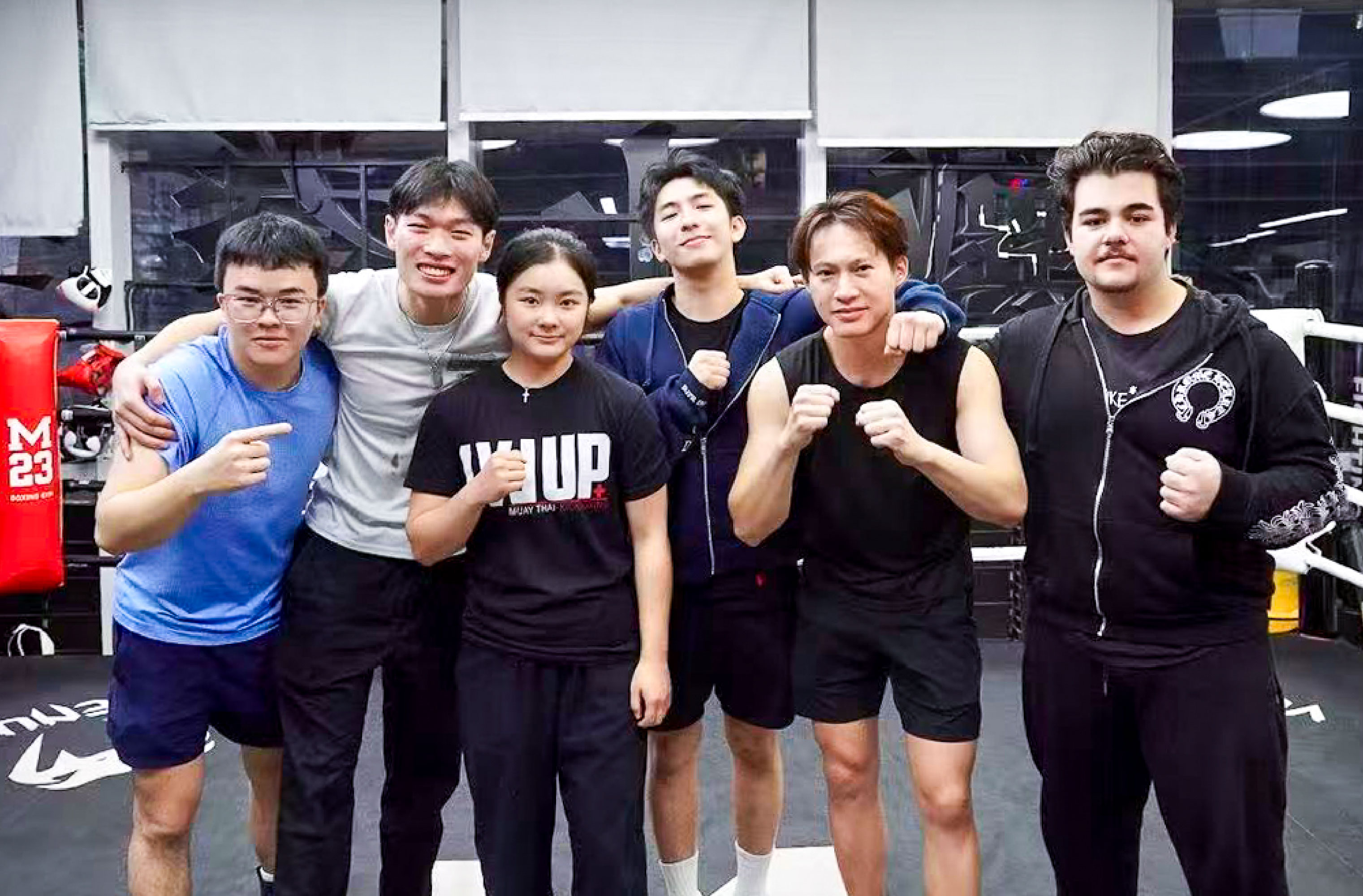
Maotou discovered a new dimension of connection in his longtime hobby of boxing, which he had competed professionally in for years. At NYU Shanghai, he found a new role as coach of the Qilin Boxing Club. For him, coaching was more than teaching technique. It was building lasting relationships. “That connection is what makes it unique,” he said. “You’re not just a trainer. You’re also a mentor they can rely on, someone they can talk to when they need advice.”
Making those connections seems more important than ever, said Maotou, especially as technology evolves. “People are deep into AI technology… but further from each other,” he observed. Interactions can feel isolated. “You can talk to your chatbot all day,” he said, “but it still feels hollow, because you’re interacting with a machine that will always give the ideal response.” True connection, he realized, arises from unpredictability and vulnerability and requires presence, openness, and patience.
Looking ahead, Maotou sees a path unfolding ahead of him. He is currently exploring AI-related business projects and plans to step into the workforce, and may one day consider a PhD. Yet beyond anything else, he has cultivated a steady way of moving through life: connecting across differences, learning from each encounter, and threading together experience, judgment, and connections. His growth isn’t about following a single line — it’s about moving thoughtfully, steadily, and authentically, no matter what obstacles the world may bring.