

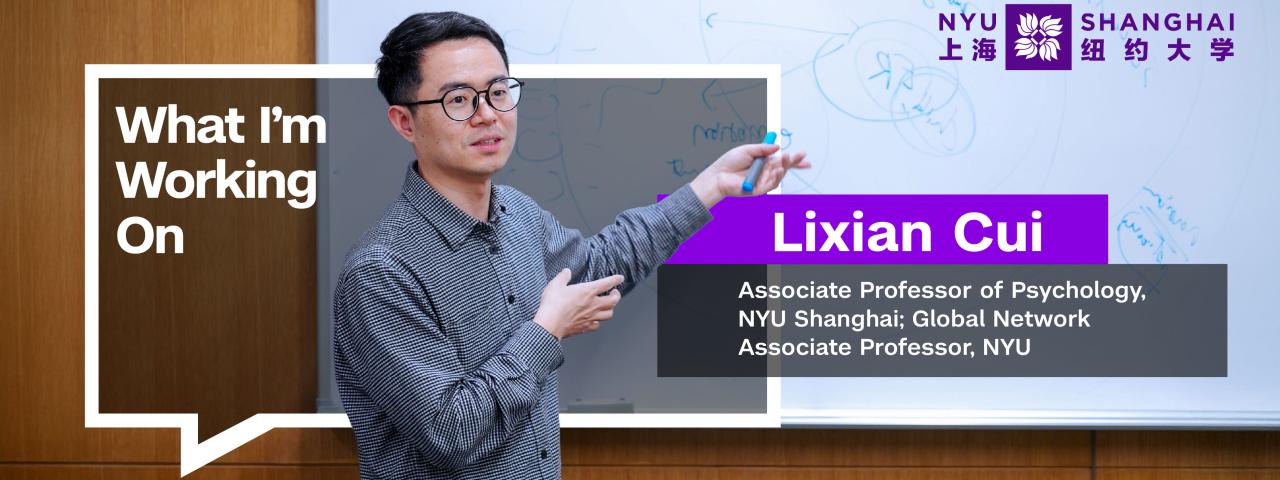
At a time when cognitive psychology was trending, Associate Professor of Psychology Lixian Cui took the road less traveled during his graduate studies, choosing to pour his energy into a lesser-known field that resonated with him—the psychology of emotion and the development of emotion.
Over the years, Cui has designed and implemented programming to serve Chinese communities, from helping migrant children regulate their emotions to teaching parents how to cultivate a better emotional environment for their children.
His goal? Combine research and practice to positively impact families while broadening the academic scope of how social and emotional development is understood in a Chinese context.
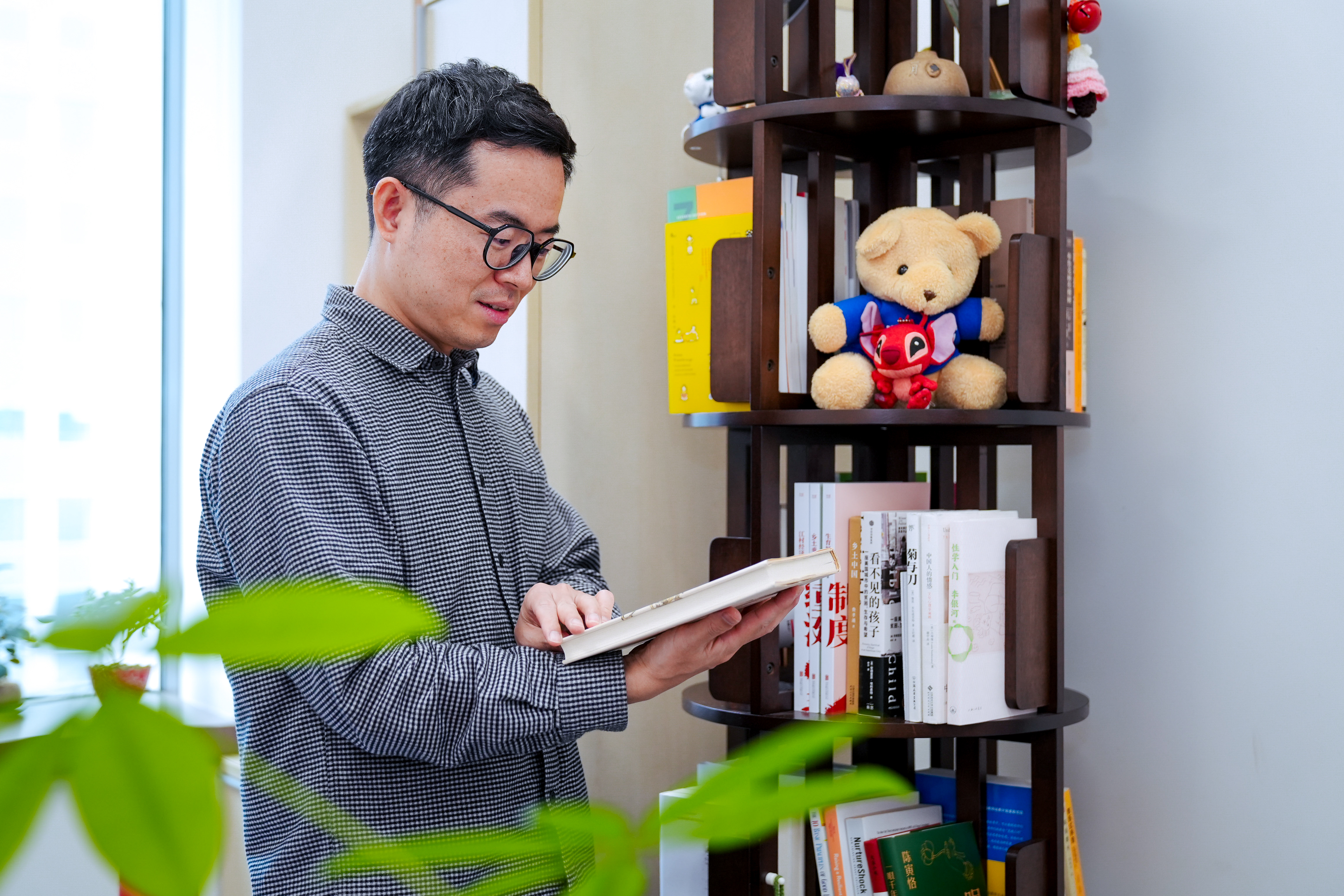
What drew you to developmental psychology and emotional development?
It was believed that cognition is more closely linked to academic learning—like your academic grades are because of your cognitive process, how you can memorize things, your language skills, etc. But it turns out that your social-emotional skills, [and] how you maintain relationships with your teachers, your parents, and classmates are also very important. How we manage our emotions sometimes proves to be more important than our cognitive skills.
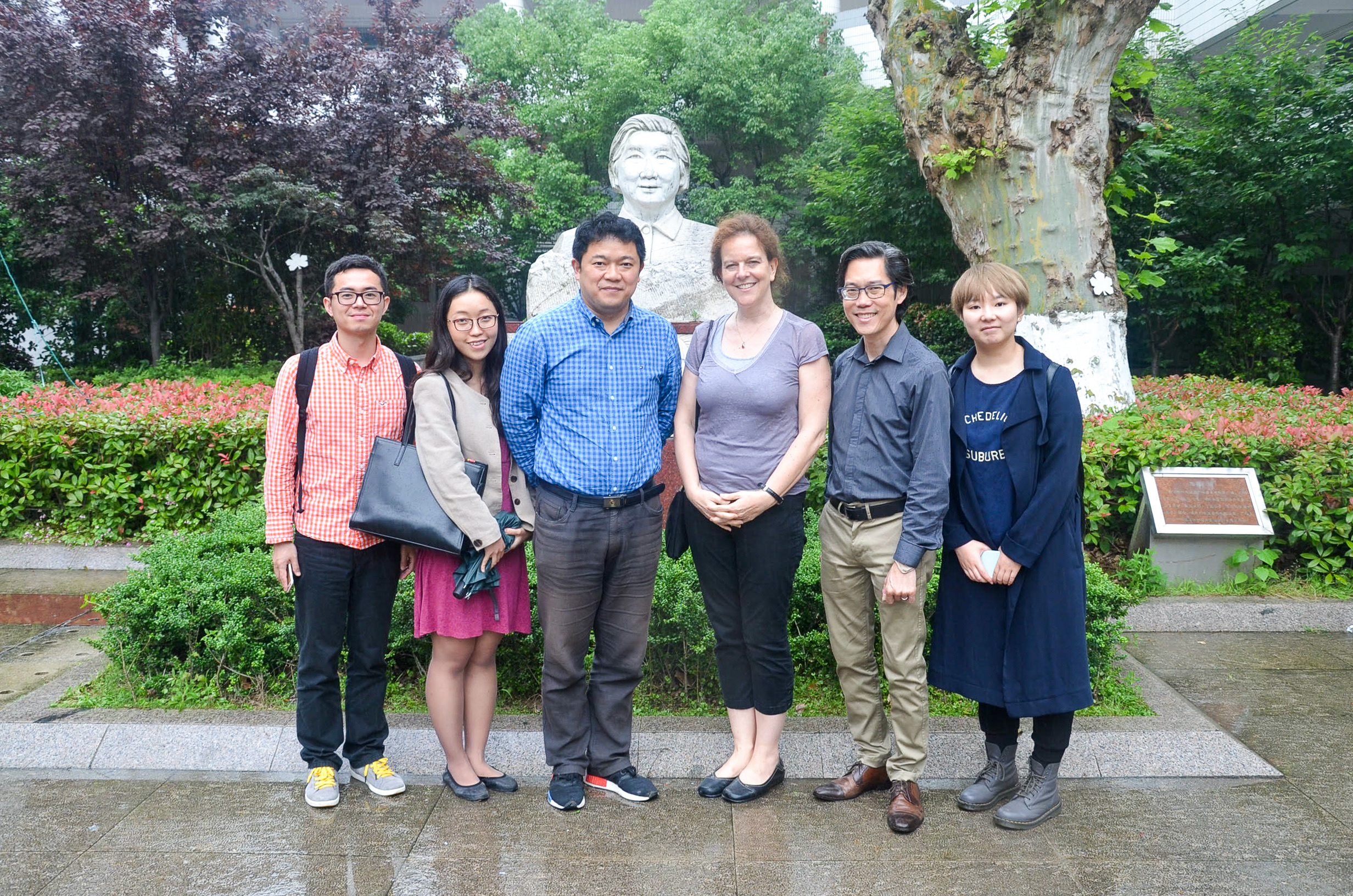
For over 20 years, you’ve been involved in the Nanjing Families Project, following groups of children over time. The children you observed are now adults. What have you learned by following children over such a long period of time?
These projects document China’s rapid contextual changes in terms of economics and in terms of social policies. We see how new requirements of society play a role in shaping parents’ relationships with their children and their parenting skills and practices. We definitely see a change to parents giving more autonomy to the child, listening to the child’s needs, and encouraging children to voice their opinions and express their emotions.
If we dig back to the early years of the 21st century and then the 80s, and then the 1950s—Chinese people are typically described as not emotionally expressive. We are also described as tending to suppress negative emotions in public places, or during social interactions in order to maintain social harmony and to maintain better relationships with other people. But because of the economic opening up, and new development, now we're shifting to actually also value emotional expression. This reflects a broader cultural change that influences parents, their values, their beliefs, and their behavior when bringing up their own children.
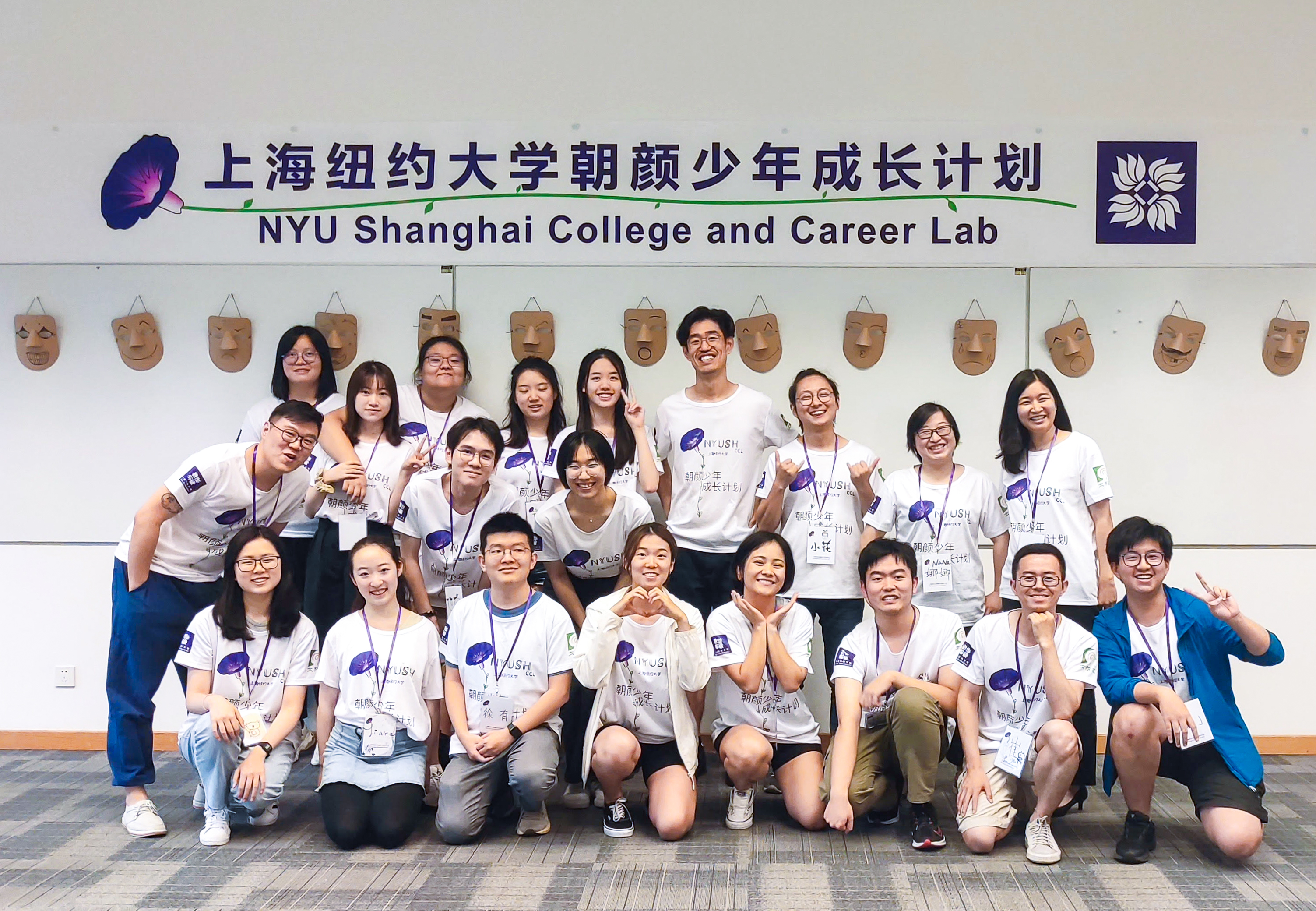
At NYU Shanghai, you’re well known for your work with migrant children and the College and Career Lab summer camp, which is connected to a service-learning course you teach on social and emotional learning and intervention. What can you learn from field work like this?
A lot of migrant children actually are born in Shanghai and get sent back to a place they'd never been to. They are away from their parents, and have to learn to be independent while under the care of grandparents or other relatives—it’s difficult for a teenager to adjust to a new environment and make new friends. The goal of the summer camp is to prepare them before they go back.
I want to combine research with practice. Research oftentimes is so limited in a way, but what's happening in the field always triggers new ideas. I always want to see what really can be beneficial and helpful for families, for parents, and children.
You’re currently working on a parenting program to help parents create a better environment for their kids to grow in. What have your studies shown?
Me and my collaborator from Xi'an Jiaotong Liverpool in Suzhou are working on a parenting intervention project. It's basically about how parents could use emotional coaching ideas to show empathy and respect to their kids while listening to them and encouraging them to express their emotions.
In this supportive type of approach you initiate a conversation: How are you doing in school? Are you feeling good? How are you today? It’s a type of emotional talking and sharing.
And in our studies of Chinese parents, we also added another component, which is: do you, as a parent, share your emotions with your child? This typically has not been studied before.
In my recent study, actually, we observe this type of supportive behavior reduces children’s depressive symptoms from ages 10 to 15 years old, while also increasing their self-esteem.
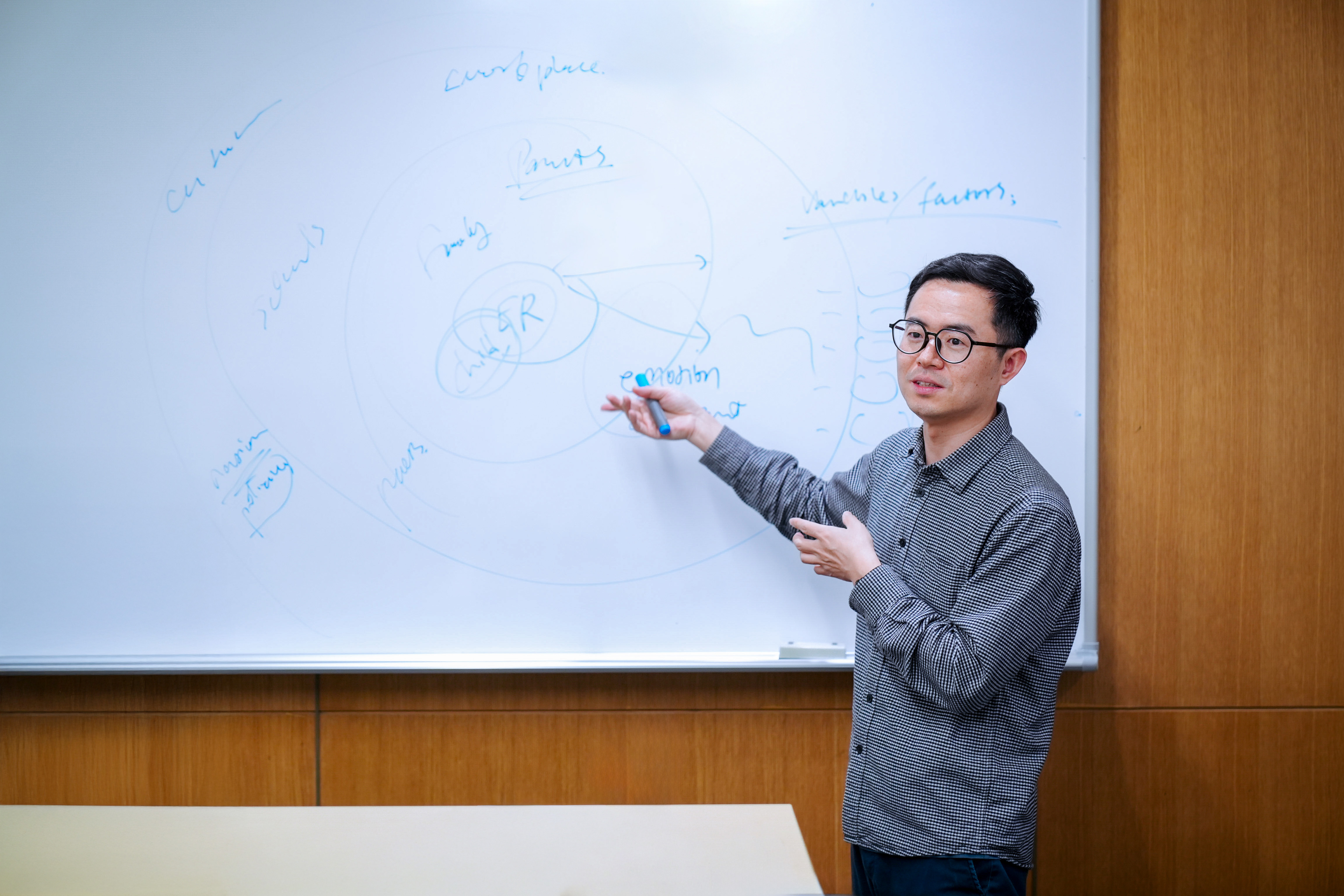
You’ve also been working on introducing some Chinese philosophical concepts—including the Zhongyong practice—that call into question the negative effects of emotional suppression. What has western academia perhaps gotten wrong about emotional suppression?
The Zhongyong way of practice or thinking is about striking a balance. It's a very context-based practice for social interactions—being flexible, avoiding extremes, and then you reconcile the extremes, the conflicting opinions that happen in daily life. It reflects your cognitive flexibility and influences how you deal with emotions.
In Western populations, suppression usually leads to negative outcomes; if you suppress your emotions more, it leads to higher physiological reactivity, which likely leads to more depression. But in China, it's actually less so.
Suppressing emotions to maintain social relationships and social harmony has been thought to be a common cultural practice that doesn't necessarily cause negative effects. Sometimes there's no link between suppression and negative outcomes, or it's sometimes even positive—where suppression helps you maintain relationships better, leading to positive outcomes and better well-being.
My study suggests that emotion suppression has become increasingly negative for Chinese young adults as we now may value emotion expression more. Interestingly, when you adopt Zhongyong thinking and practice, the negative influences of emotion suppression actually decrease.
I won't say Western theories do not explain our phenomena at all—it explains to some degree, but it does not fully capture what we have been experiencing. I’m working to articulate this better and connect this with concepts that Western scholars can understand.