

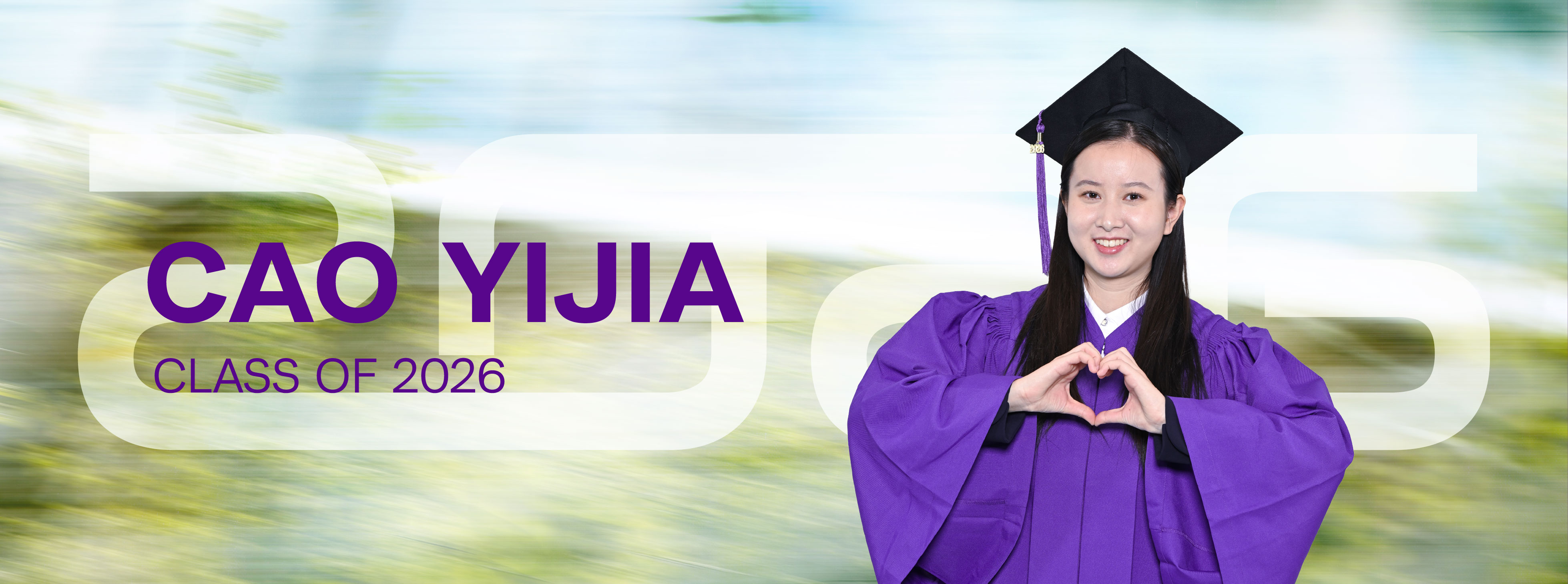
When Cao Yijia received the email accepting her into the prestigious Schwarzman Scholars program, she knew it was the right next step. Not everyone around her did. After years of training in computer science, the move toward global affairs felt, to many, unexpected.
It wasn’t the first time that Yijia had chosen curiosity over a more predictable path. In fifth grade, she began training for the National Olympiad in Informatics (OI), one of China’s most demanding computer science competitions for young students. Her efforts paid off—soon, she was placing at the top of provincial and city-level competitions, and by seventh grade, she had won a national first prize in the Olympiad’s junior division.
To those around her, the path seemed clear: she was destined to stay in STEM.
But in high school, she chose differently—instead of continuing with STEM, she chose the humanities track for her gaokao, the Chinese college entrance exam. She proved just as capable, ranking at the top of her class in history, geography, and politics, while serving as the president of the student union.
At NYU Shanghai, after exploring other majors, such as Business and Math, she switched back to Computer Science, her most familiar subject area.
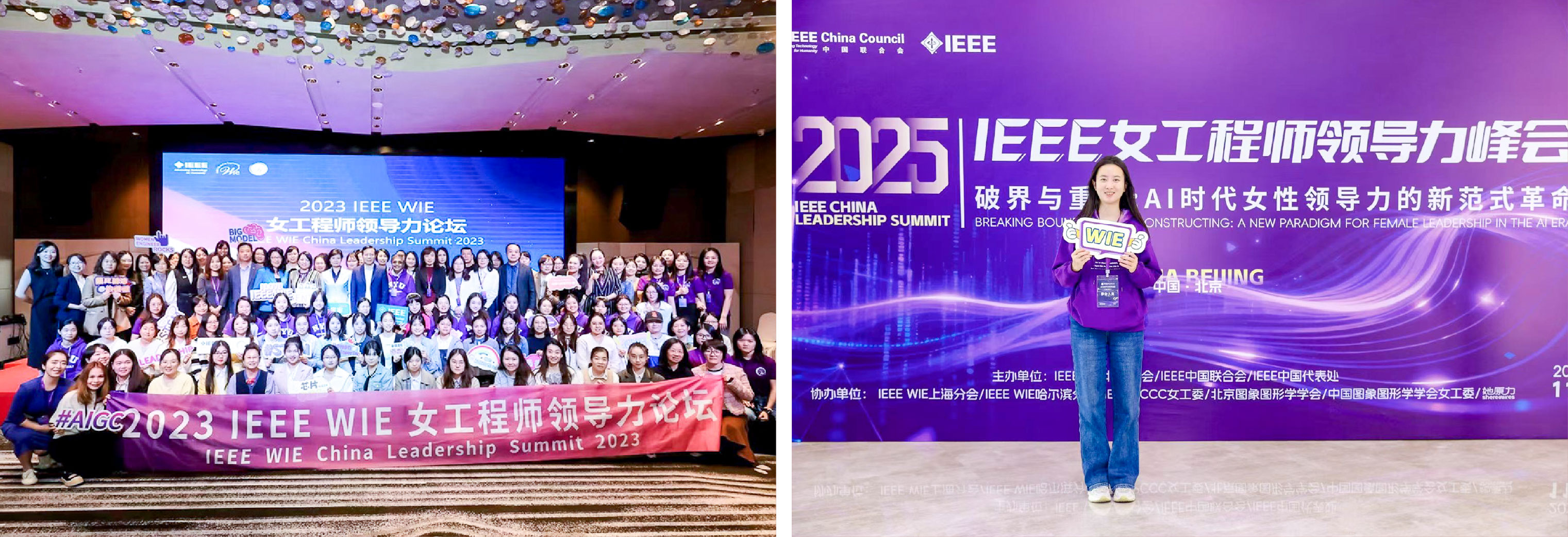
Her early years of training had prepared her for the coursework, allowing her to combine a major in Computer Science with minors in Mathematics and Cybersecurity. Alongside rigorous coursework, she took on leadership roles across campus. She founded the Women-in-Computing Committee, helped organize activities across the CSDSE department, and served as president of the University’s Literature Club.
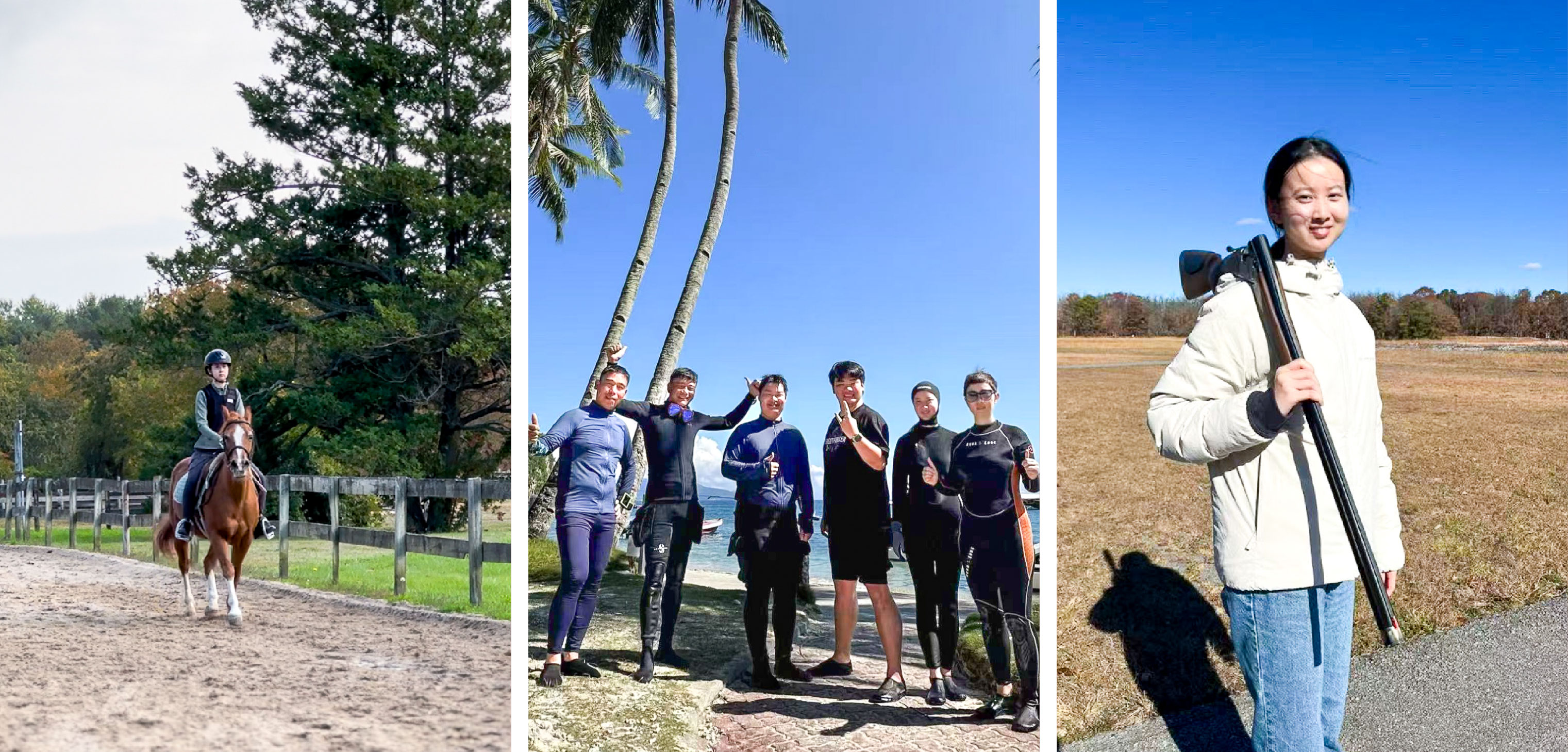
Years of intense early training had created something unexpected: time—and the freedom to explore widely. She began reclaiming interests she had set aside years earlier: music, art, horseback riding, and tennis. Among them, music became one of the most meaningful parts of that exploration.
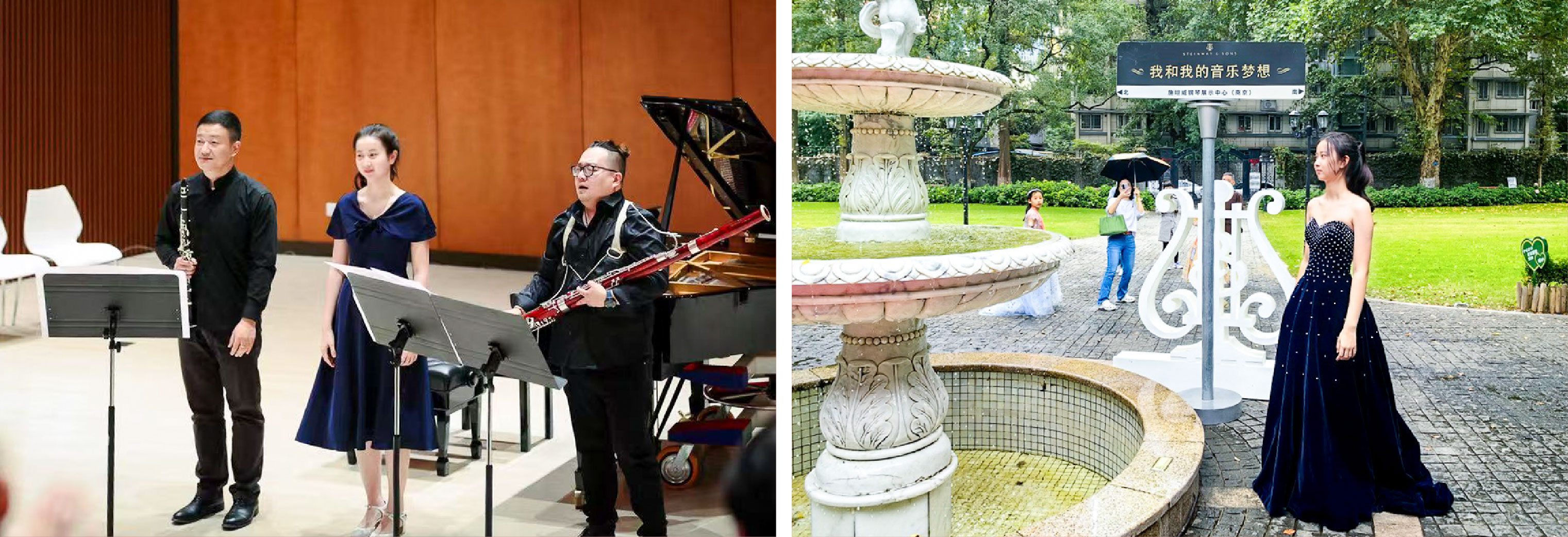
At NYU Shanghai, she returned to music with remarkable dedication. Over the four years, she took nine music courses, including music history, songwriting, piano, and singing, spanning both Western and Chinese classical and contemporary music.
In a composition class taught by MacArthur Grant recipient Bright Sheng, she wrote a wind ensemble duet titled The Friday Afternoon. The work was later selected by musicians from the Shanghai Philharmonic Orchestra and performed at the opening concert of two international clarinet festivals. That earned her recognition as a Specially Recommended Young Artist by the Jinggangshan Asia Clarinet Art Festival.
Music gave her more than artistic achievement. It changed how she saw the world and herself. In her classes, she encountered modern compositions filled with dissonant harmonies and unusual intervals. At first, they sounded strange compared to the classical music she was used to. Gradually, she began to hear their beauty and the logic within.
That shift in perspective stayed with her.
She began to see that not everything needed to be resolved cleanly to be meaningful. The same was true outside of music. Drawn to activities that forced her to confront her fears, she learned scuba diving and horseback riding. Over time, she improved in both. The fear never fully disappeared; what changed instead was her relationship to it.
She realized that just as dissonant notes do not need to be erased to create meaningful music, fear does not need to be conquered to live a full life.
Sometimes learning to coexist with it is enough.
But even as she grew more comfortable with uncertainty in art and life, one question remained: how to make decisions about the future in a world that was constantly changing.
Among her peers in computer science, she saw a shared unease—fields evolving rapidly, directions multiplying, and no clear consensus on what would matter in the long run.
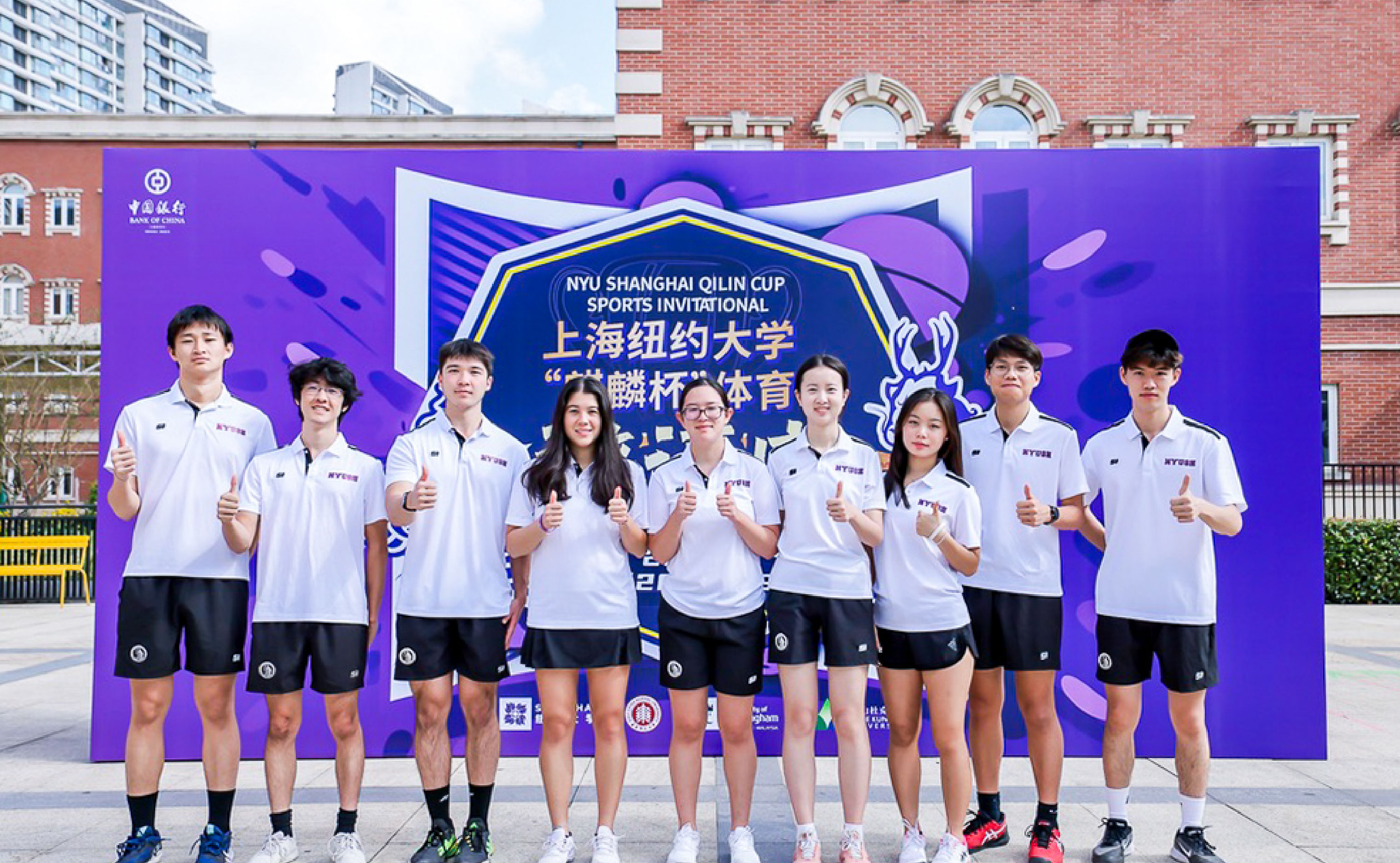
For Yijia, that uncertainty became personal. She had built strength across multiple areas, yet didn’t see herself as a specialist. She could do many things well—but that also made it harder to justify committing years to just one. “If I choose one path now,” she said, “I’m also giving up others.”
She tried to resolve that question in the most straightforward way she knew: by doing.
She took on research, coursework, and internships across different fields. But over time, she ran into a limit. No matter how much she explored, each experience remained partial. There was simply no way to try everything.
A shift came in her junior year.
At NYU’s New York Campus, she enrolled in two graduate-level cybersecurity courses from Cyber Fellows, an online master’s program designed mainly for working professionals. Many of her classmates had already spent years in the industry. Being in the same classroom with them felt different. Their diverse perspectives offered what she couldn’t gain through isolated experiences. That moment reshaped how she thought about graduate school.
“When choosing a program, for me, who you learn with may matter even more than what you learn,” she said.
That was the reasoning behind her latest surprise move: the Schwarzman Scholars program. One of the world’s most competitive fellowships, the program selects up to 150 exceptional candidates under 28 each year for a fully funded one-year master’s degree at Tsinghua University focused on global affairs and leadership.
Making the move from STEM towards global affairs might seem unusual to some, but Yijia feels comfortable moving between disciplines. The program, which brings together outstanding young people from diverse fields across the globe, offered exactly what she was looking for: not a fixed direction, but a richer set of perspectives.
People often expect Schwarzman Scholars to “change the world.” The goal may seem ambitious, but it can be achieved one step at a time. She plans to gain real experience, meet people with ideas, and learn from those working in different fields.
Looking back on her college career, Yijia doesn’t hesitate with her rating: a perfect 10. “Because if I could travel back in time,” she says, “I would still make the same choices.”
As graduation approaches, she hopes to slow down a little—enjoy the final stretch of university life and spend more time on the interests she loves.
She’s looking forward to heading to Beijing for the Schwarzman Scholars program. As for the future, she is comfortable letting her curiosity unfold at its own pace.