


Every nation has a narrative. Like the United States, Canada, or Australia, France has long seen itself as a “melting pot,” a republic where immigrants fold into a shared national identity, coming from different places, but over time identifying as French and enjoying equal opportunity under the law regardless of their origins. It is a powerful self-understanding, shaped by the country’s long history of migration and its republican ideal of equality.
A new line of research co-authored by NYU Shanghai Assistant Professor of Sociology Lucas G. Drouhot examines how the narrative story holds up in reality. “What we wanted to know was whether that narrative is actually borne out across generations—or whether, over time, an ethnic hierarchy emerges instead,” he explained
Drouhot looked not only at immigrants and their children, but, more pointedly, at their grandchildren. The two studies, published in European Sociological Review and American Sociological Review, grew out of a broader project funded by the French National Research Agency on the “third generation,” or the grandchildren of immigrants.
France has received migrants since at least the late nineteenth century, first from elsewhere in Europe and later, especially after World War II, from places including Algeria, Morocco, and Portugal as the country rebuilt and industrialized. Earlier work on immigration in Western Europe and the United States had generally suggested a relatively optimistic picture for second generation immigrant families: once the pre-migration background of immigrant families was statistically accounted for, much of the apparent inequality between immigrant and native families narrowed. However, assimilation theories have long held that if full incorporation is going to happen, it should be most visible by the third generation. As Drouhot put it, looking at grandchildren of immigrants offers a much clearer test of whether equality has truly taken root over the long run.
Both studies rely on the Trajectories and Origins 2 survey, a large-scale national dataset of roughly 27,000 respondents that includes migrants, their descendants, and people without a migration background. “This survey is unusually valuable because it records not only respondents’ own backgrounds, but also the birthplaces of their parents and grandparents, making it possible to study third-generation outcomes with unusual precision in a country that historically avoided ethnic statistics,” Drouhot said.
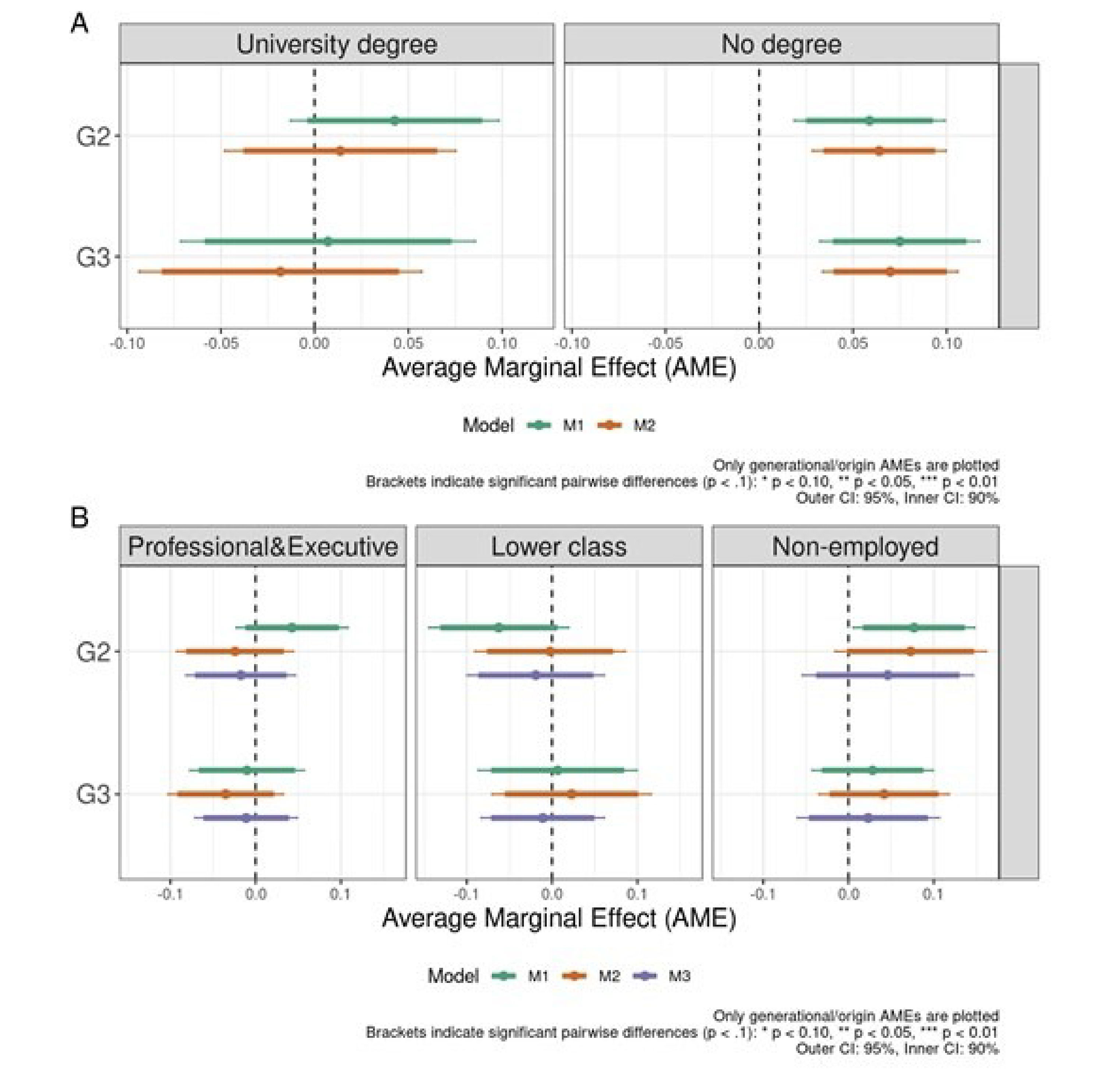
The first paper, published in European Sociological Review, offers a broad snapshot of adult attainment. Looking across education and labor-market outcomes, the researchers ask whether the grandchildren of immigrants have reached parity with French citizens without a migration background. The overall picture is encouraging: across many indicators, third-generation descendants largely resemble non-immigrant origin citizens, and in some cases that convergence is already visible by the second generation.
But the pattern is not uniform, Drouhot and his collaborators determined. The study finds that third generation men of North African-origin remain significantly more likely to leave school without a credential, while descendants of immigrants from Southern European-origin are more likely to be incorporated into lower-class jobs. It also finds that mixed ancestry no longer consistently predicts better socioeconomic outcomes by the third generation as it did among the second generation.
The second paper, published in American Sociological Review, shifts from present-day outcomes to mobility within families across three generations. Instead of asking only where people end up, it asks how educational destinies unfold throughout generations, from grandparents to parents to children. Using a three-generation within-family design, the researchers compare educational mobility between non-immigrant origin families with Southern European-origins, and those with North African-origins. They find substantial catching up overall, especially because many immigrant grandparents started from very low levels of schooling. But the long view again reveals uneven convergence—by the third generation, families with Southern European origins look broadly similar to natives in their mobility patterns, while families with North African origins still show distinct mobility trajectories and face an educational disadvantage.
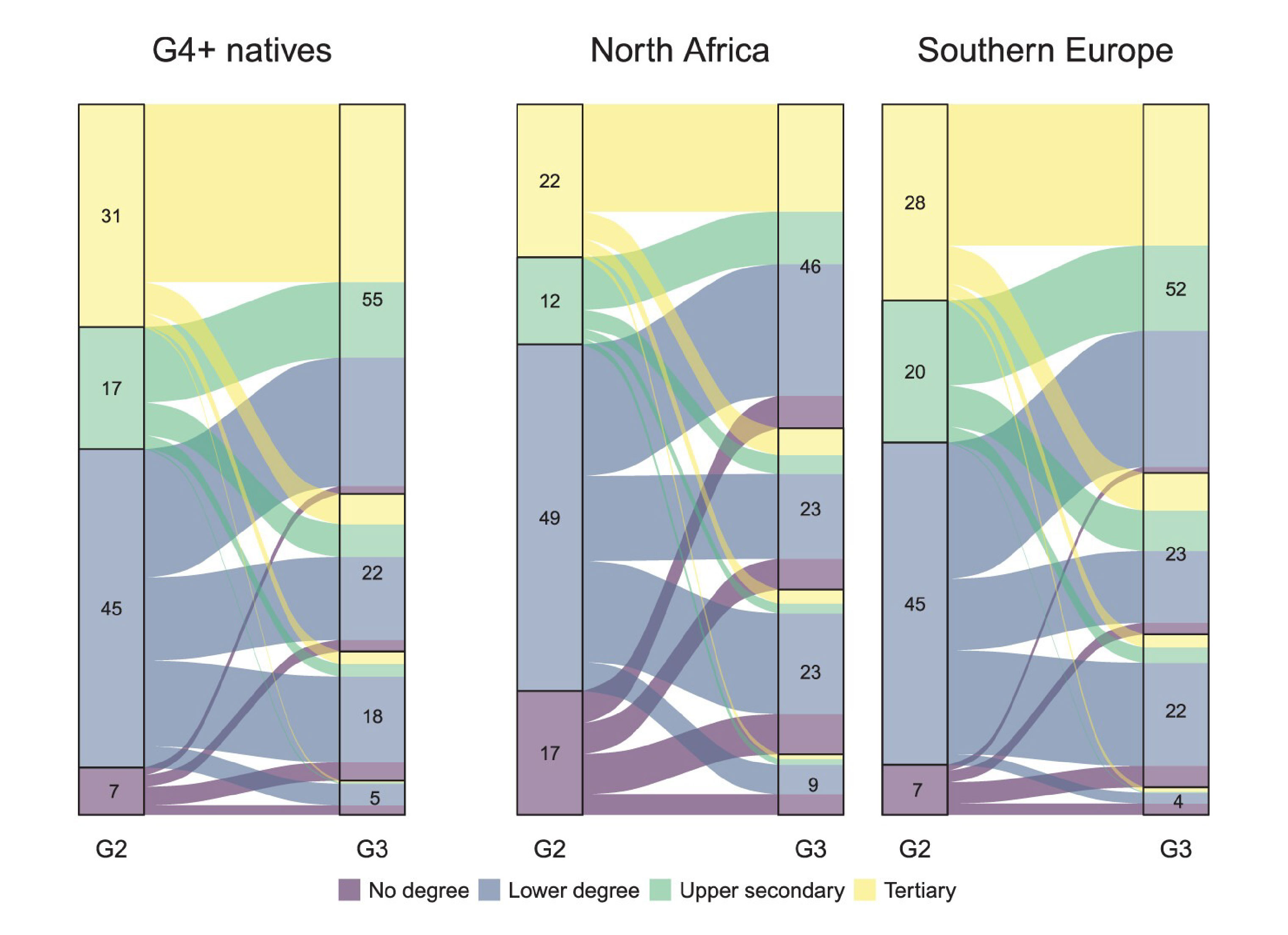
Taken together, the two studies point to a more layered conclusion. “The master trend is convergence,” Drouhot said. “There is real progress over generations in education and jobs. But it is only partial convergence, and some lasting inequalities remain.” Those lingering gaps, he noted, are particularly visible among some French families of North African-origin, reminding researchers that incorporation can be substantial without being complete.
That is exactly why the third generation matters, says Drouhot. Looking across three generations makes it possible to move beyond slogans and ask whether societies that promise equality are actually delivering it over time. He hopes the same research design can be adapted to other national and cultural settings as well. “A durable diagnosis of equality demands a long view,” he said.