


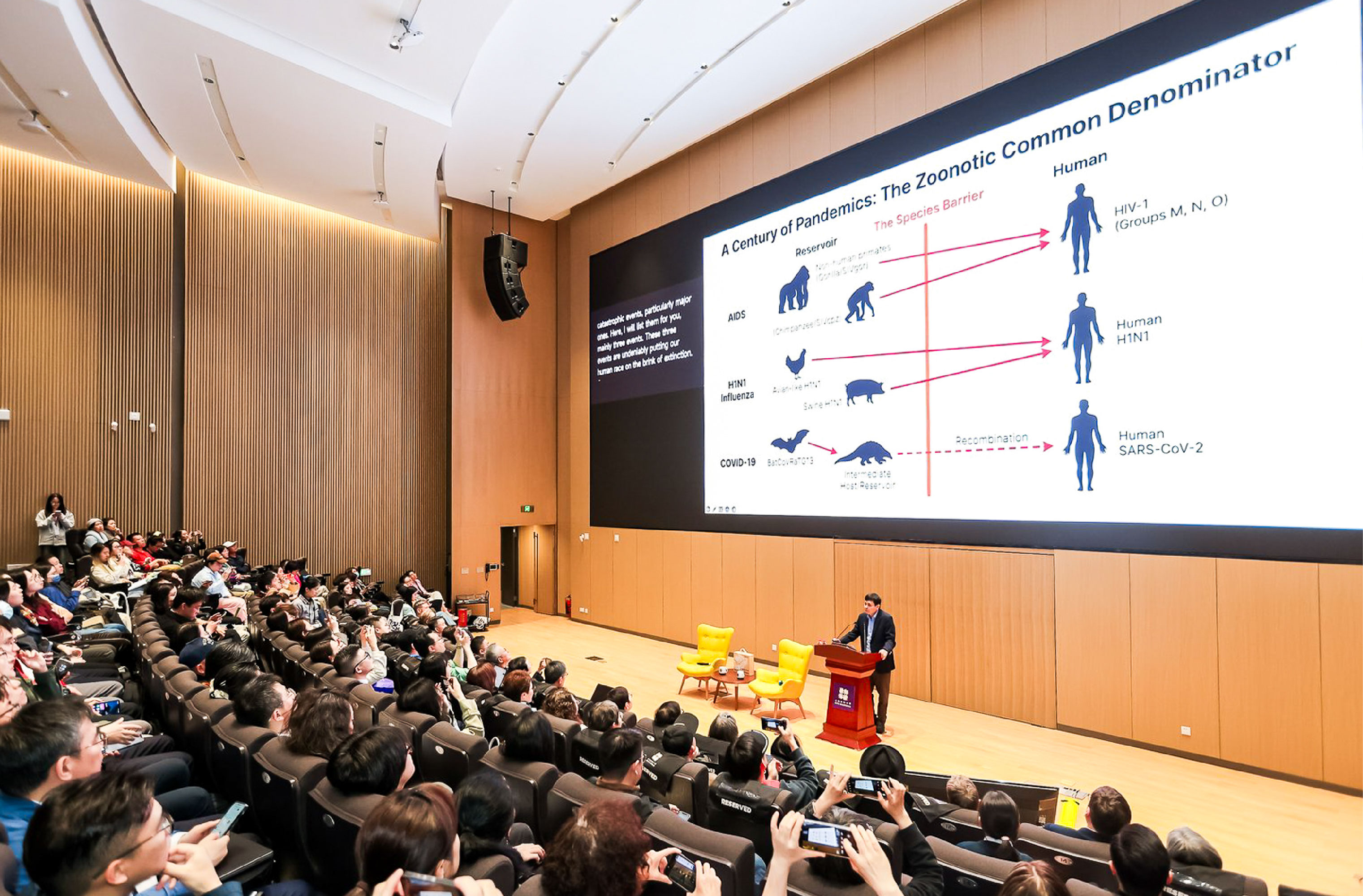
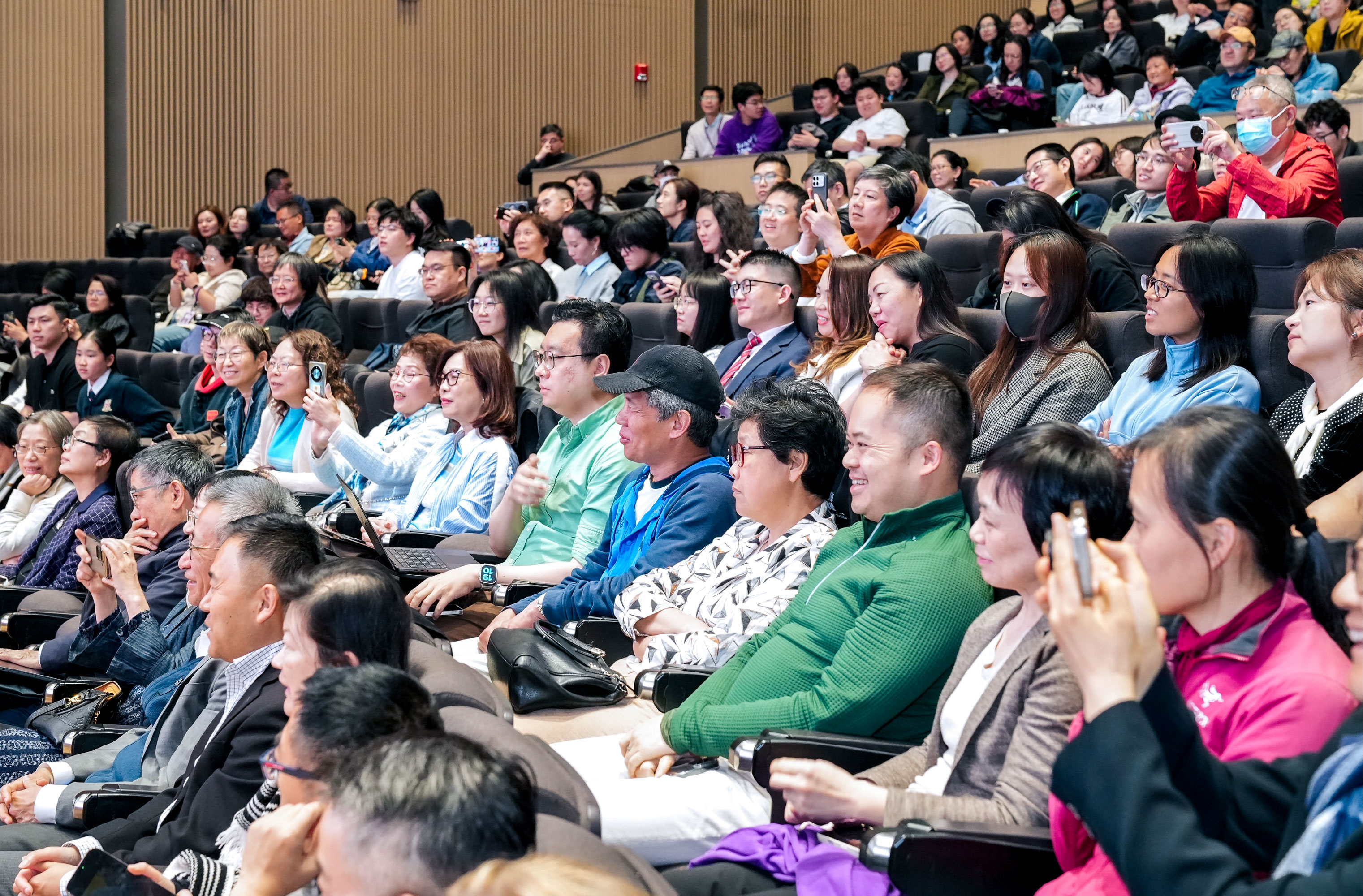
On April 20, NYU Shanghai welcomed Zhang Wenhong, dean of the Institute of Infection and Health at Fudan University, for a talk on climate change and public health. The lecture drew a full house at the Dangdang Auditorium, where around 600 students, faculty, staff, and the general public gathered to hear his remarks.
The talk was the second installment of the NYU Distinguished Lecture on US-China Cooperation on Climate and Health, a series jointly launched by NYU School of Global Public Health and NYU Shanghai. The event was moderated by NYU Shanghai Provost and Distinguished Global Professor of Public Health Bei Wu, and was sponsored by the Green Court Foundation. Sun Liang, partner at Green Court Capital Management, delivered welcome remarks at the event.
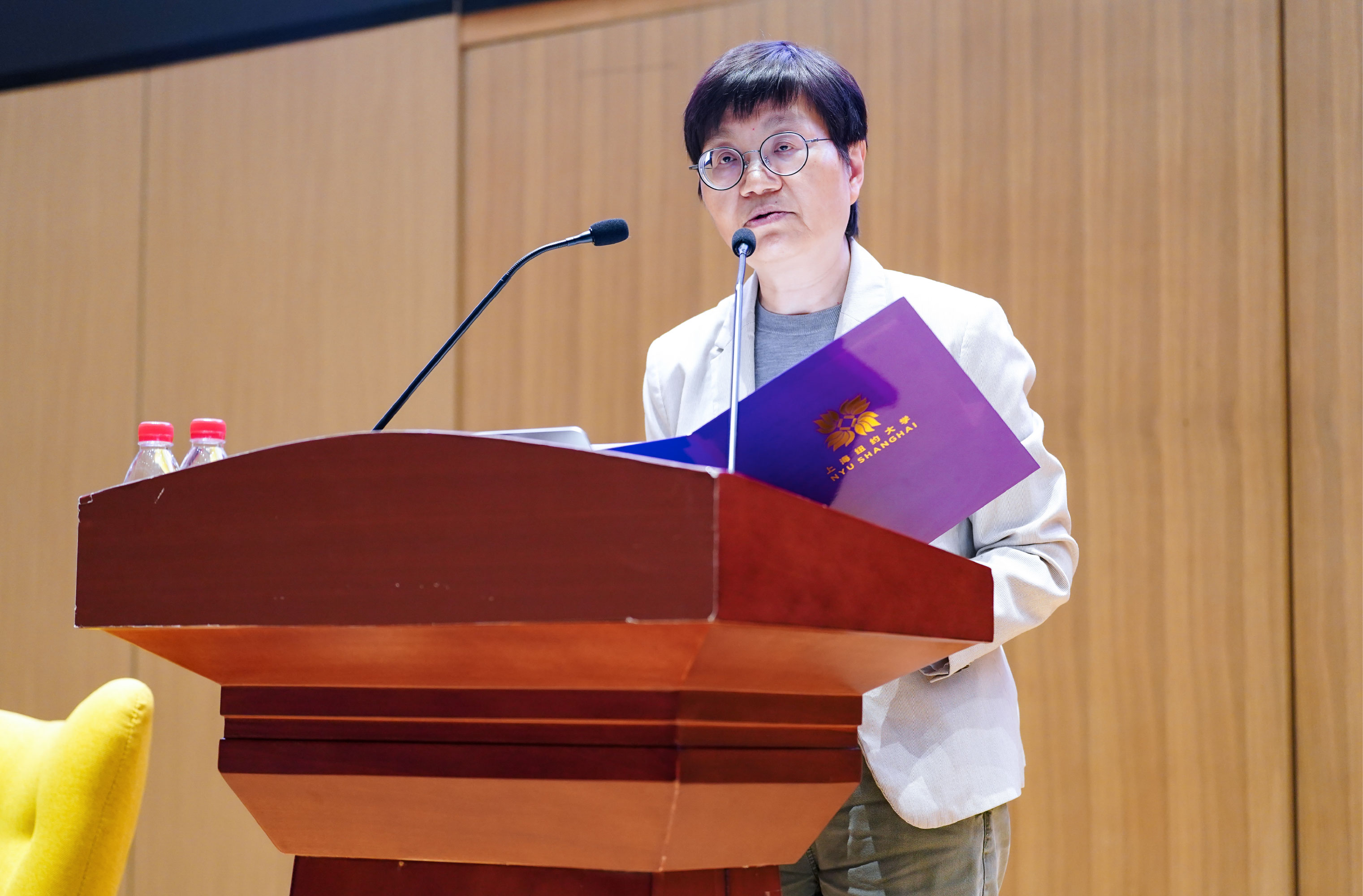
In her opening remarks, Provost Wu emphasized that against the backdrop of an increasingly urgent climate crisis, dialogue on climate and health is especially timely and important. She described the lecture series as a platform that transcends borders and connects academic inquiry with real-world practice, fostering exchange and collaboration around shared challenges such as climate change and global health. As global problems grow more complex, she added, cross-disciplinary, cross-cultural, and cross-national collaboration is more important than ever.
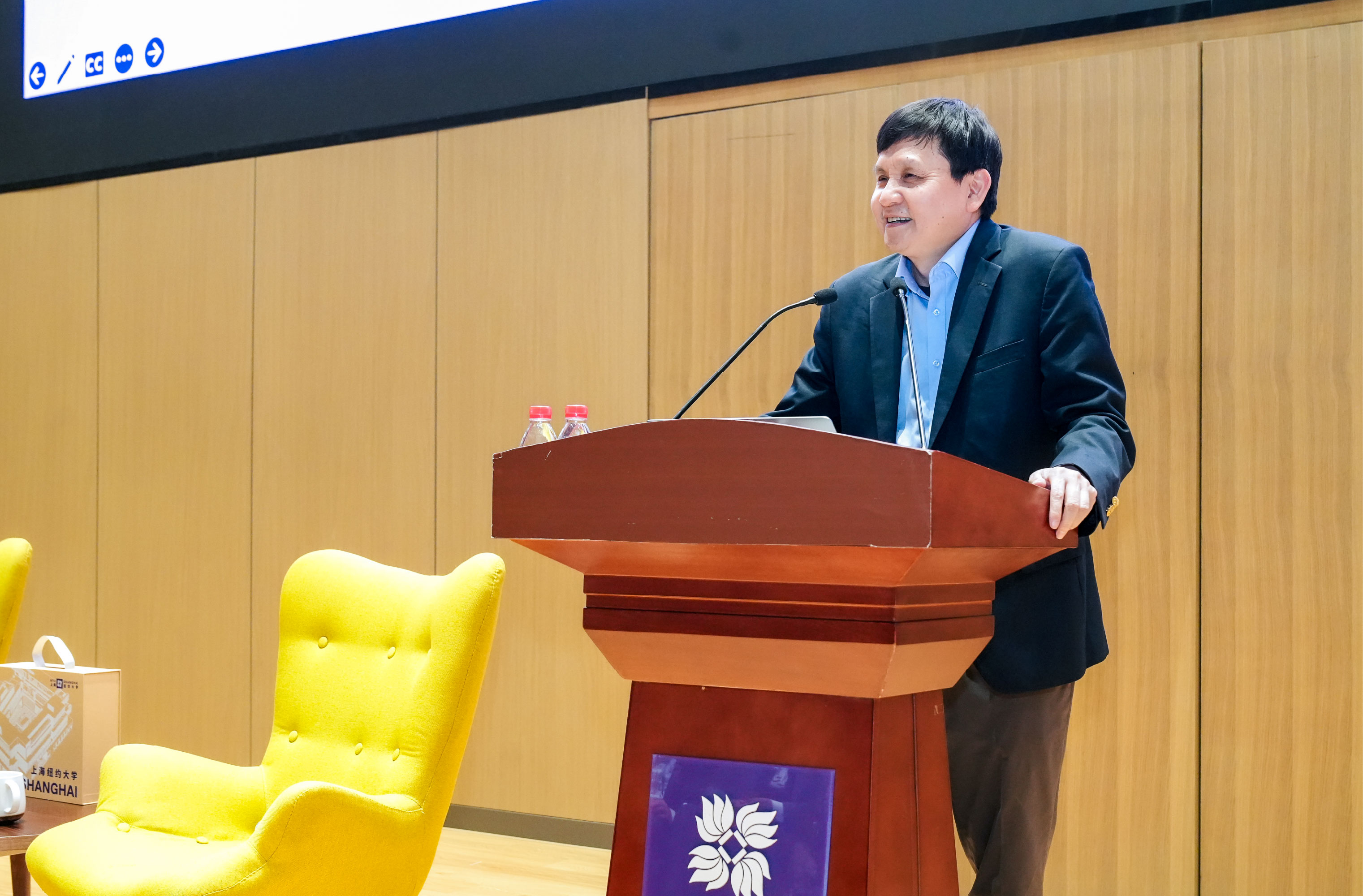
In his lecture, titled “The Evolution of Climate-Sensitive Infectious Diseases: Shaping a Scientific Horizon through Global Collaboration,” Zhang drew on his extensive clinical and public health experience to unpack a highly complex subject in a clear and accessible way. He began by telling the audience that climate change is no longer a distant or abstract environmental issue, but a public health crisis that is already reshaping the world. Beyond its obvious ecological consequences, climate change is already reconfiguring the risk landscape of infectious disease in subtler and more systemic ways, he said. Yet the global response has failed to match the scale of the threat, he cautioned.
Zhang revisited major infectious disease crises in human history – HIV/AIDS, the Great Influenza epidemic of 1918, SARS, and COVID-19 – stressing that many such disasters share a common mechanism: pathogens in the natural world repeatedly attempt to cross species barriers and enter human society. These outbreaks, he said, are often closely tied to human activity, environmental change, and globalization. There is an invisible boundary between the natural world and humanity, but pathogens, he warned, never stop “knocking at the door.”
Zhang urged the audience to look beyond any single outbreak and pay attention to the accumulation of seemingly isolated warning signals that the boundary between humanity and nature is becoming increasingly fragile.
A key concept he introduced was the “ecological threshold.” Once climate, environmental change, and human activity together push an ecosystem beyond a tipping point, he said, pathogens that were once confined to a particular host, region, or vector can suddenly rapidly spread. Drawing on examples such as Zika virus, dengue virus, and chikungunya virus, Zhang explained how rising temperatures, changing rainfall patterns, mosquito habitat expansion, urbanization, and population mobility can combine to drive diseases once concentrated in tropical regions into new geographies, including places not previously considered high-risk. Even in colder regions, he noted, diseases such as dengue are now appearing – evidence that climate change is redrawing the map of infectious disease transmission.
Looking ahead, Zhang warned that climate change-related risks extend beyond newly emerging viruses. They also include longer-term and, in some ways, more predictable health threats. As populations age, immune function declines, and exposure to antimicrobial drugs and resistant pathogens accumulates, drug-resistant bacterial infections may become one of the most difficult public health challenges of the coming decades. The future threat, he said, is not the next pandemic, but a complex web of risk shaped by viruses, bacteria, ecological change, demographic shifts, and pressure on healthcare systems.
Zhang returned again and again to his key point: the importance of global cooperation. Whether in pathogen surveillance, early warning, diagnostic capacity, treatment, vaccine development, or information sharing, he said, no single country, discipline, or institution can respond to future risks alone. What is needed is coordinated capacity across disciplines, borders, and systems – along with well-established preparedness, early warning, and response mechanisms put in place before the next crisis arrives. In the face of a future pandemic, he argued, the international community must be able to develop diagnostics, treatments, and vaccines within a 100-day window, while also establishing a truly global monitoring and early warning system.
“If we still refuse global cooperation and refuse to stand together,” he concluded, “then one day the crisis will come.”
Zhang closed his talk on an optimistic note, saying he was hopeful for humanity’s ability to live in a constantly changing relationship with the natural world. The ability to identify risks quickly, work together, and respond in time, he said, will determine who is best positioned to survive in an uncertain future.
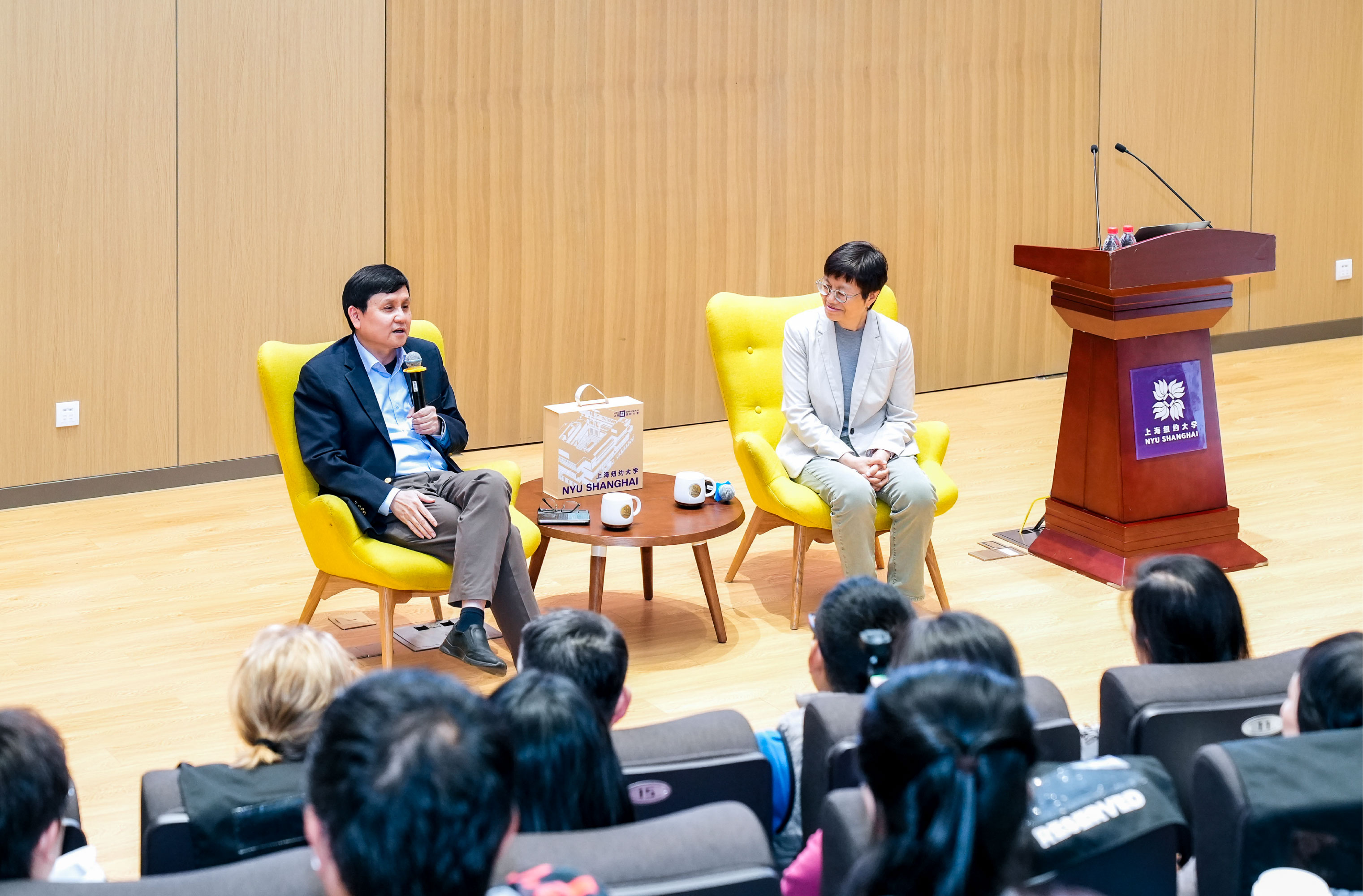
After his lecture, Zhang responded to audience questions in his characteristically candid and humorous style. He encouraged young people to remain hopeful and forward-looking.
“Never be pessimistic,” he told the audience. “That is the most important conviction if humanity is to endure and live long.”