

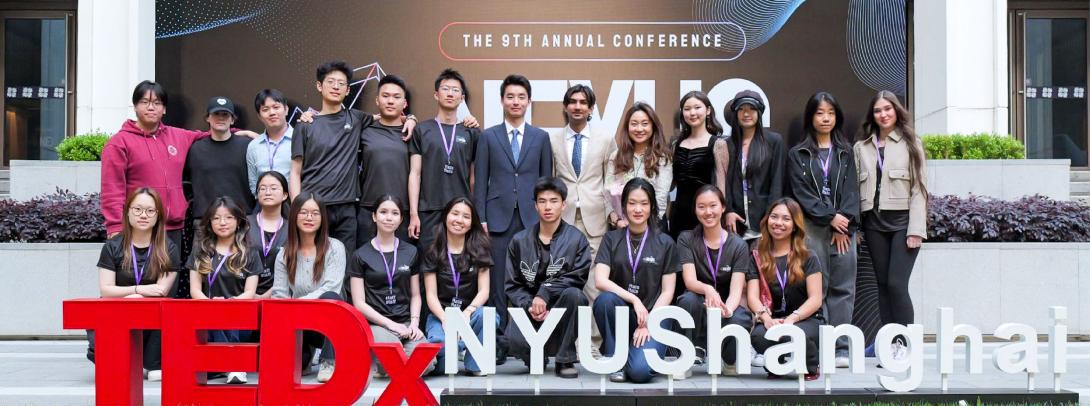
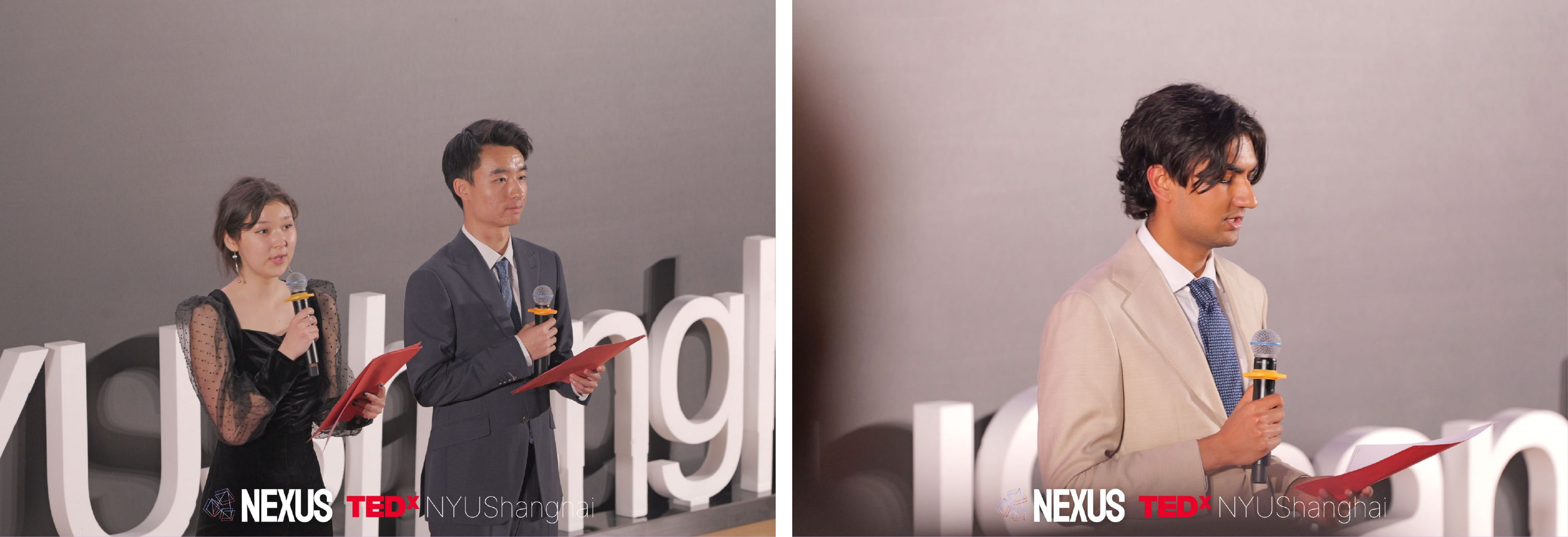
The student-led TEDxNYUShanghai club hosted its 9th annual conference over the weekend, centered on the theme of NEXUS, exploring the space where ideas, disciplines, and lived experiences intersect.
Featuring five speakers and four panelists, the conference brought together voices from a range of fields to explore how connection takes shape through collaboration, dialogue, and shared experience.
Sharing personal stories and broader social perspectives, the speakers invited audience members to reflect on how individual experiences connect to larger systems and how these intersections shape the way we understand and engage with the world around us.
The experience extended beyond the auditorium, with a concert on NYU Shanghai’s grassy quad featuring music by student band Century Avocado adding energy to the day.
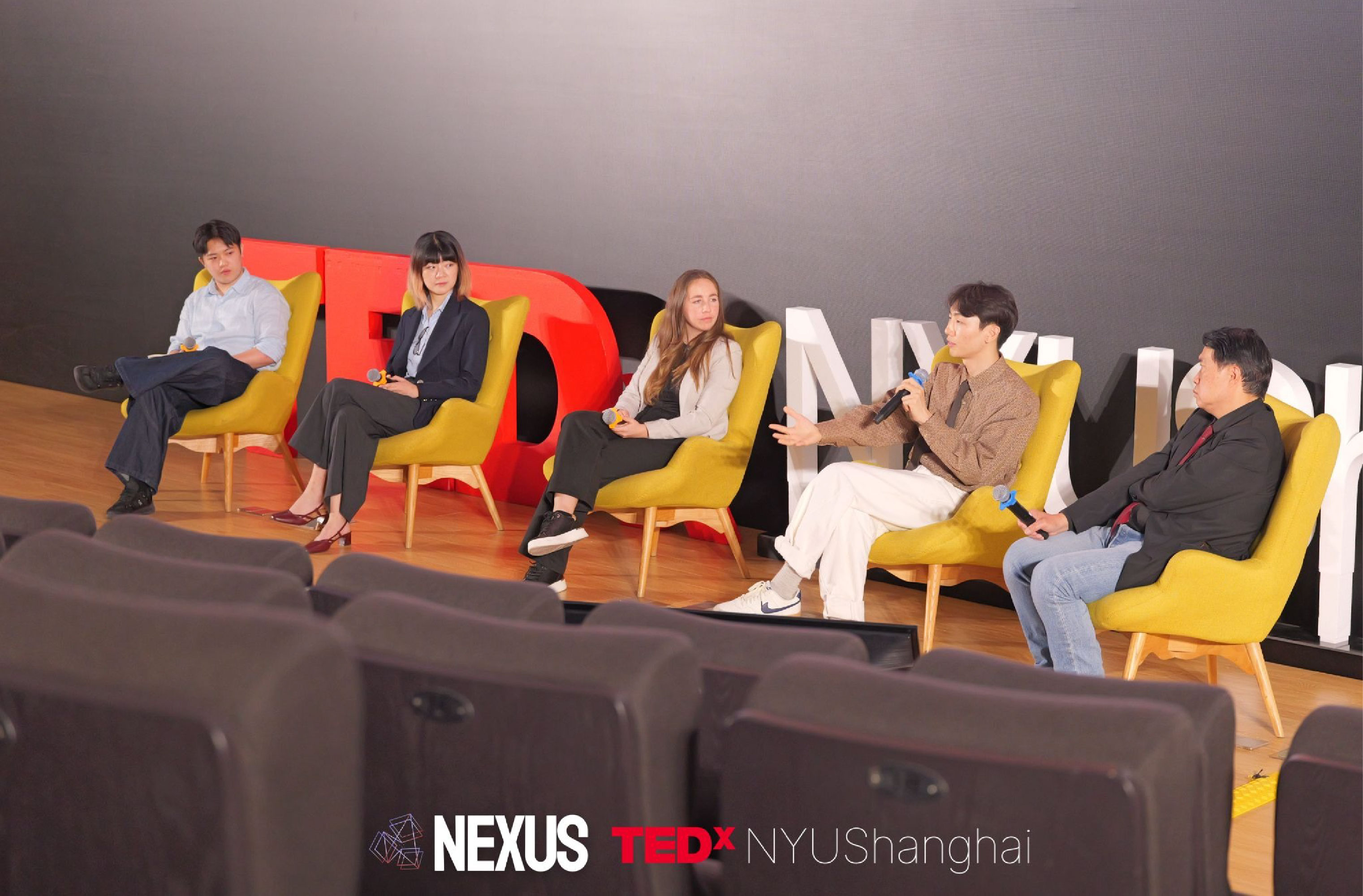
A panel discussion, moderated by Jaymos Wang ’28, brought together Vice-Coordinator at the China-Italy Chamber of Commerce Giulia Baldi, content creator Martin Su, journalist Allen Wan, and entrepreneur Amanda Zhuang Liu to reflect on navigating cross-cultural lives, career transitions, and evolving ideas of legacy.
From culinary entrepreneurship and social media content creation to leadership in international commerce and international media, their stories of their diverse paths highlighted how meaningful work often emerges at the intersection of tradition and change.
Their message was simple yet resonant: stay open, stay grounded, and take ownership of your own story.
Thomas Derksen: How a German Kid Got Famous in China and Lost Everything
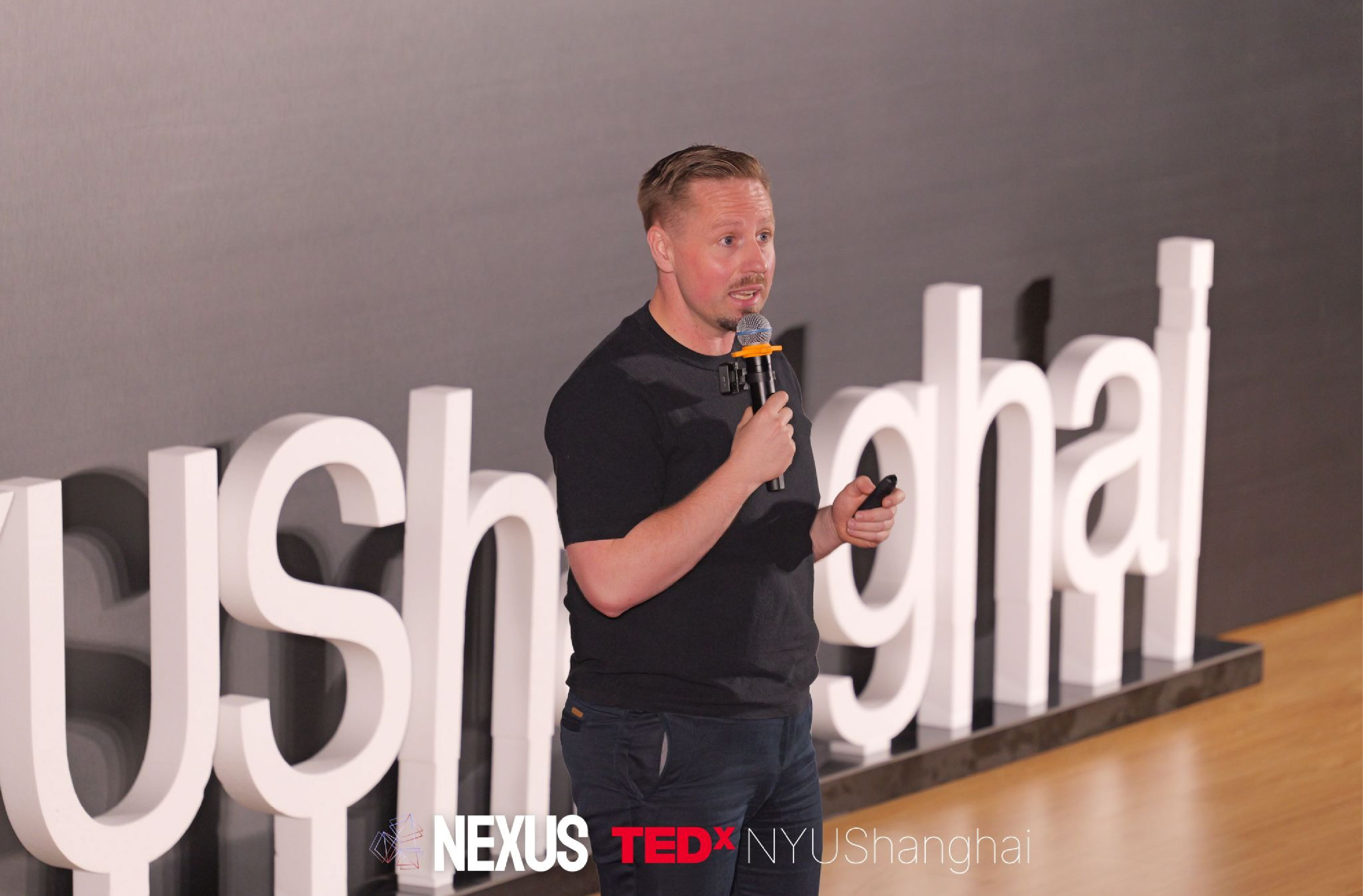
Thomas Derksen opened his talk with a question that has followed him for years: Where do I actually belong? His mother, he said, framed that question differently, asking him with every phone call, “Why are you still in China?”
Derksen reflected on the “nexus” of his own life and how we are all shaped by the collision of different worlds and the intersection of cultures. Born in Germany into a Russian-German family, he grew up feeling like he never fully fit in. “I tried everything to change, but I still didn’t fit in,” he recalled.
As an adult that same sense of difference became the foundation of his success. After moving to China, Derksen began creating videos about cross-cultural life, eventually building an audience of over 10 million followers. “The exact things I was ashamed of became the reason people followed me,” he said.
However, his journey was not without setbacks. After a public divorce disrupted both his personal life and online career, Derksen found himself starting over. Reflecting on this turning point, he shared a mindset that helped him move forward: “Everything negative is a positive… that means you can’t do anything to hurt me.”
From this, Derksen offered three reflections: stop hiding what makes you different, embrace moments of disruption, and actively seek out new challenges. Whether stepping onto stand-up comedy stages to tell jokes in Chinese or rebuilding his career through entrepreneurship, he emphasized growth through discomfort.
“If my story can give even one person the courage to walk into a room where they don’t belong,” he said, “then this collision was worth it.”
Stephanie Sam: In the Age of AI, Who is Responsible?
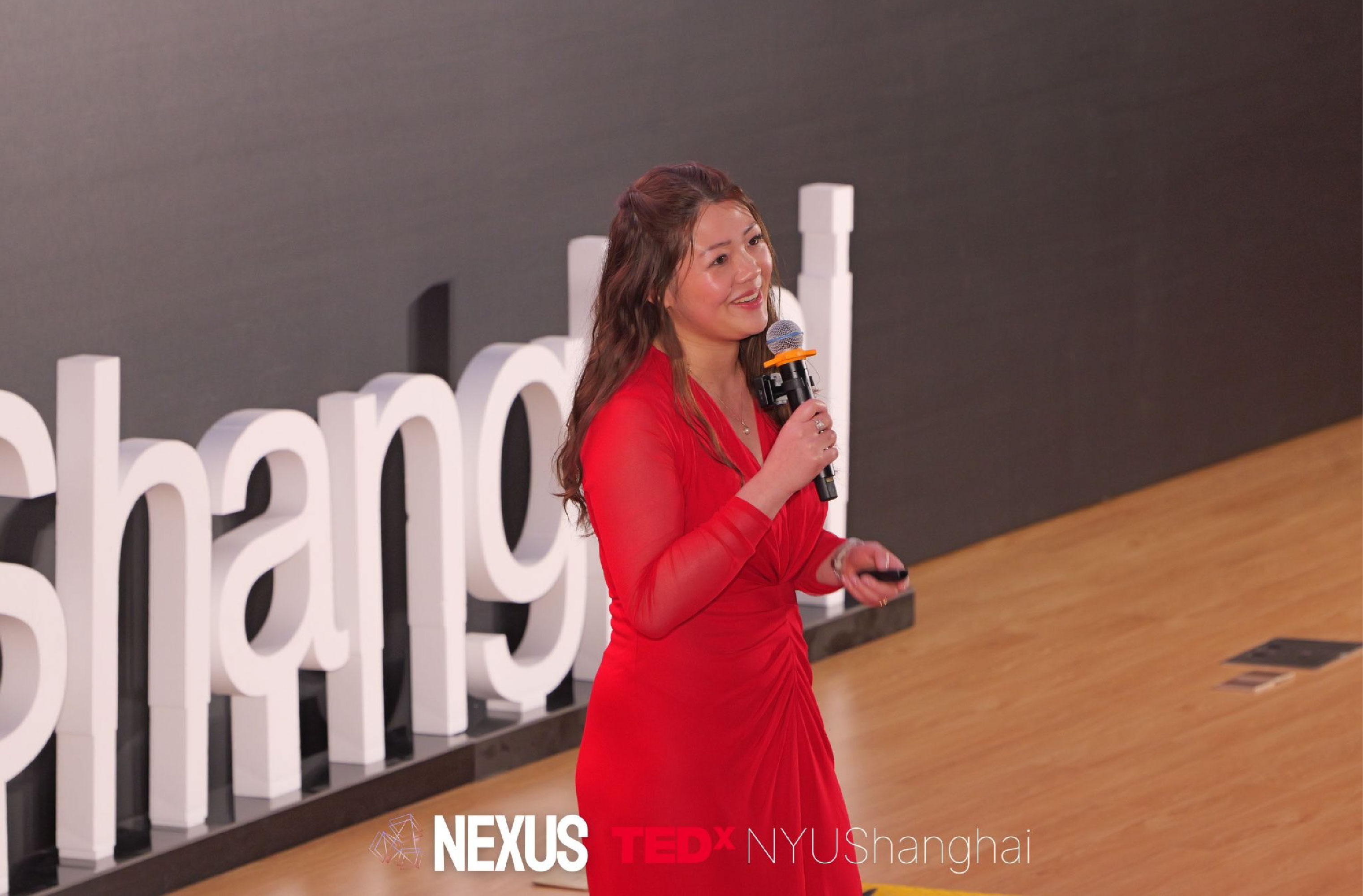
Stephanie Sam began her talk by recalling a moment that shifted her understanding of technology and its role in everyday life. “My first real encounter with AI left me feeling like I had been playing life in hard mode… without even realizing it,” she said.
What started as a simple anecdote quickly opened into a larger question: as AI becomes increasingly embedded in how decisions are made, who is actually responsible for its outcomes?
Sam challenged the common perception of AI as just software or automation. “The real story of AI is not just software,” she said. “It’s infrastructure—systems that shape decisions which shape our lives.”
Drawing from her experience working in government policy, technology startups, and international business, she described AI as a deeply interconnected system spanning technology, capital, energy, and geopolitics. These overlapping layers, she argued, create a world where influence is widespread but accountability is often unclear.
She introduced the concept of “distributed irresponsibility,” where “everyone plays a role… but no one owns the outcome,” highlighting a growing gap between the rapid pace of technological development and the slower evolution of governance.
From algorithmic bias in healthcare to the global implications of AI-driven decision-making, Sam emphasized that these systems are already shaping lives in ways that cross borders and institutions. “An algorithm trained in one place can shape decisions in another,” she noted, underscoring the global reach of these technologies.
As AI systems become more autonomous, she raised pressing ethical questions about control, responsibility, and unintended consequences particularly in high-stakes areas such as warfare and governance.
Closing her talk, Sam turned directly to the audience members, many of whom are entering careers that will require them to use AI. The question, she emphasized, is no longer whether we can build more powerful technologies, but whether responsibility can keep pace with them.
“The future of AI,” she said, “will not be determined by how intelligent our systems become, but by whether responsibility can keep pace with power.”
Danni Zhao: The Bridge of Beauty: From Reclamation to Collective Rebellion
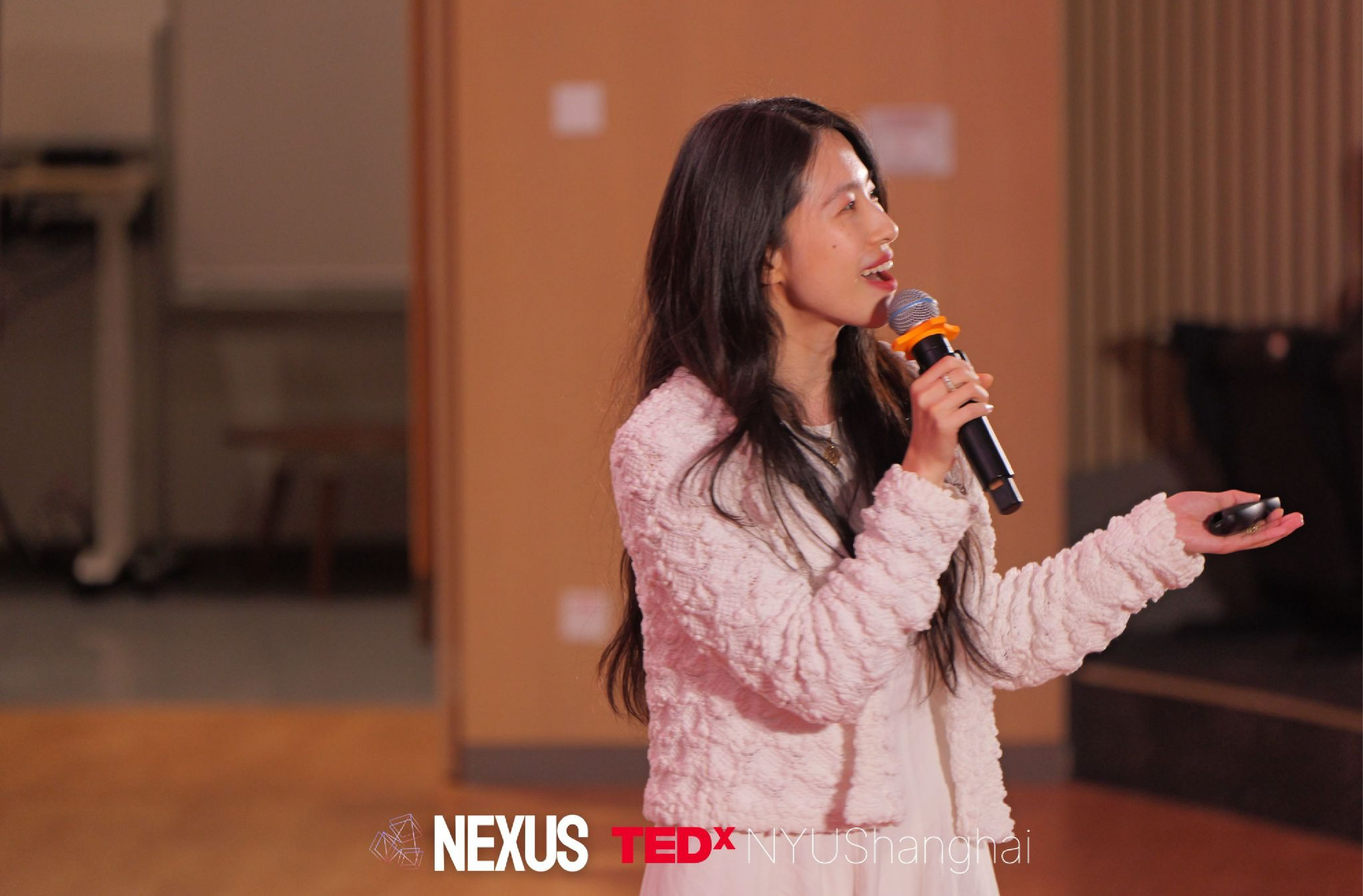
Danni Zhao opened her talk with a brave confession. “For twenty years, I believed that a single, tiny mark on my face made me unworthy of being seen,” she said.
What followed was a reflection on identity, visibility, and the pressures of fitting into a narrow definition of beauty. Growing up, she saw the mole on her face not as a defining feature, but as something to erase, cover, or wish away.
The shame she felt lifted with a simple encounter. “That’s not you,” a classmate told her, calling the mole her “signature.” From that moment, she said, her perspective began to shift. It wasn’t immediate self-love, she confessed, but the beginnings of a deeper realization: she had been trying to erase the very thing that made her distinct.
Zhao introduced the idea of reclamation, not merely accepting your “flaws,” but redefining them as markers of identity and presence. “Acceptance says: I tolerate my mole. Reclamation says: it’s proof that I wasn’t mass-produced,” she explained.
Through moments both small and profound, she illustrated how visibility extends beyond the self. “Beauty is not a private feeling. It’s a public signal,” she said, emphasizing how one person’s act of showing up can quietly give others a sense of what is possible.Each visible difference, she suggested, can create pathways for others to feel seen.
Zhao left the audience with a question: what part of yourself have you been hiding—not because it is wrong, but because it doesn’t fit? And what might change if you simply let it be seen? “That thing is not a mistake,” she said. “It’s your signature.”
Susan Huang: When Lifetime Employment Disappears, What Holds Us Together?
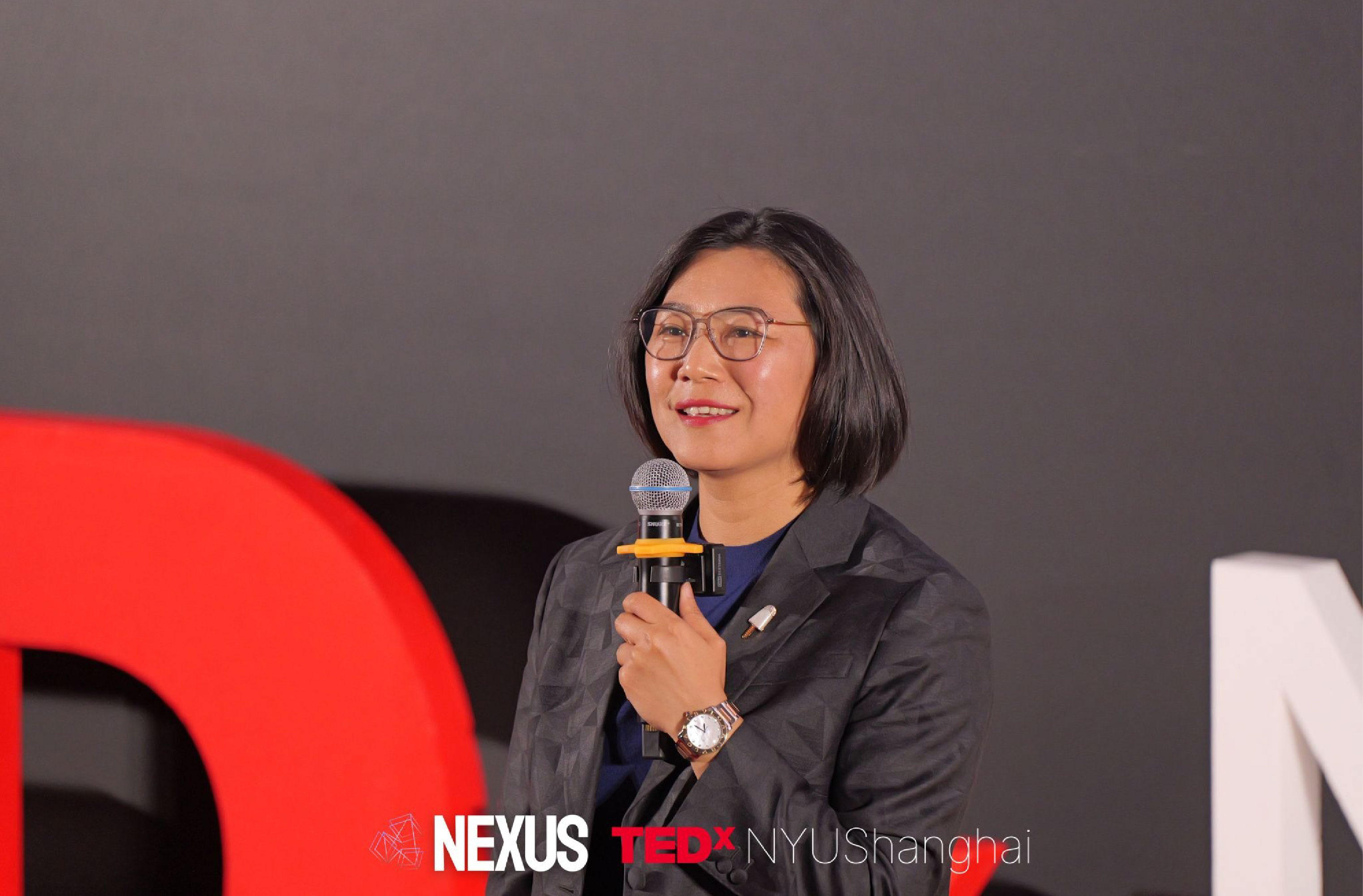
Susan Huang began her talk with a reflection on how the meaning of work is shifting. “Over the past decade, I’ve interviewed thousands of candidates…and I’ve noticed a quiet but fundamental fracture in how different generations think about work,” she said.
Drawing from her experience in luxury, real estate, and education, Huang described the breakdown of the traditional “exchange logic” between employees and employers, a system once built on stability, loyalty, and long-term reward.
That contract no longer holds for younger generations. Instead, a new framework has emerged: what she calls “experience exchange.” Rather than asking how long they can stay at a company, many now ask a different question: Is this experience worth my time?
In this new model, value is no longer defined by stability or even compensation, but by growth, connection, and meaning, a new foundation for how individuals evaluate their work and their future. “The future is no longer reliable,” she noted. “So the present becomes the only currency that matters.”
Moving from insight to action, Huang offered practical guidance for students navigating this changing landscape—from redefining internships as spaces for exploration, to building meaningful networks, and learning to translate everyday experiences into transferable skills.
She also addressed a common anxiety among students: making the “right” career choice. In her view, the decision itself matters less than what follows. “The choice matters less than what you do after you make it,” she said, emphasizing the importance of learning, adapting, and carrying experience forward.
Closing her talk, Huang returned to the central question of the importance of connection in the changing world of work. “When lifetime employment disappears, what holds us together,” she asked. “Growth. Connection. Meaning.”
Amir Hampel: Languages of Belonging
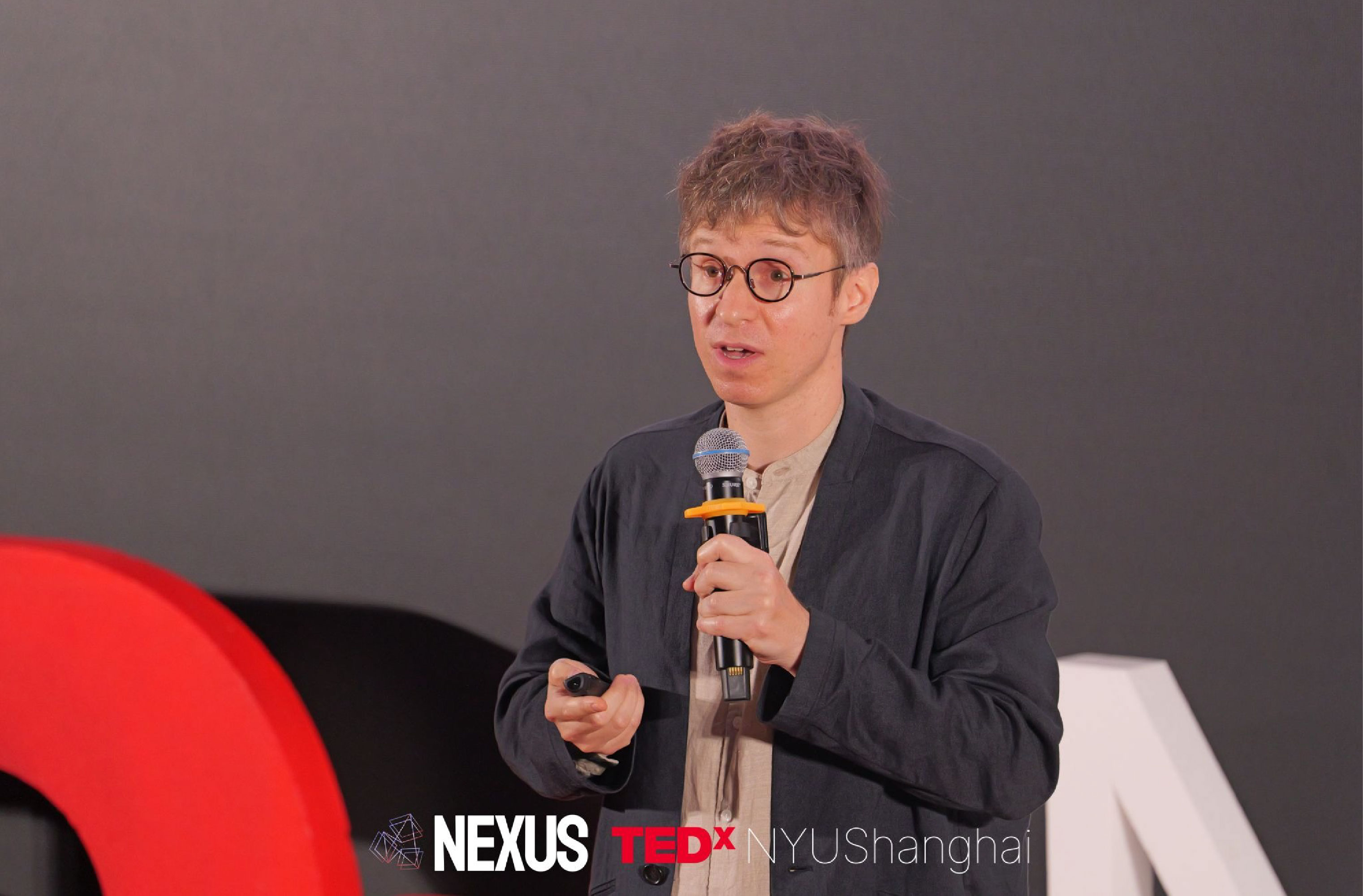
Amir Hampel began his talk with a question. “Do you know that feeling—that sense that everyone else knows how to be a person, and only you are confused?” he asked the audience.
As an anthropologist studying how culture shapes mental health, Hampel challenged the common belief that anxiety comes solely from within. Instead, he suggested, it often emerges from a disconnect between people and the social environments they are trying to navigate.
“We often think of mental health issues as something inside us,” he said, “but what happens inside us isn’t separate from what’s going on around us.”
Drawing from his research with young people, Hampel explored how everyday interactions are shaped by unspoken “cultural languages”: shared norms, behaviors, and expectations that guide how we connect with others. When people struggle to understand or speak these languages, he explained, it can feel like something is wrong with them personally.
But that sense of uncertainty, he argued, should not be mistaken for failure. Rather it is a sign that connection takes time, practice, and perspective.
Giving examples ranging from navigating conversations to interpreting social cues, Hampel reframed both confidence and anxiety as products of shared understanding rather than fixed personal traits. “In order to learn a language,” he noted, “you don’t need to understand its grammar, but you do need to use it.”
Hampel encouraged the audience to approach uncertainty not with self-doubt, but with curiosity, to reach outward rather than inward, and to see connection as something built through interaction.
“When you feel like something is wrong with you,” he said, “there’s a good chance it’s not you, it’s the language you’re still learning.”
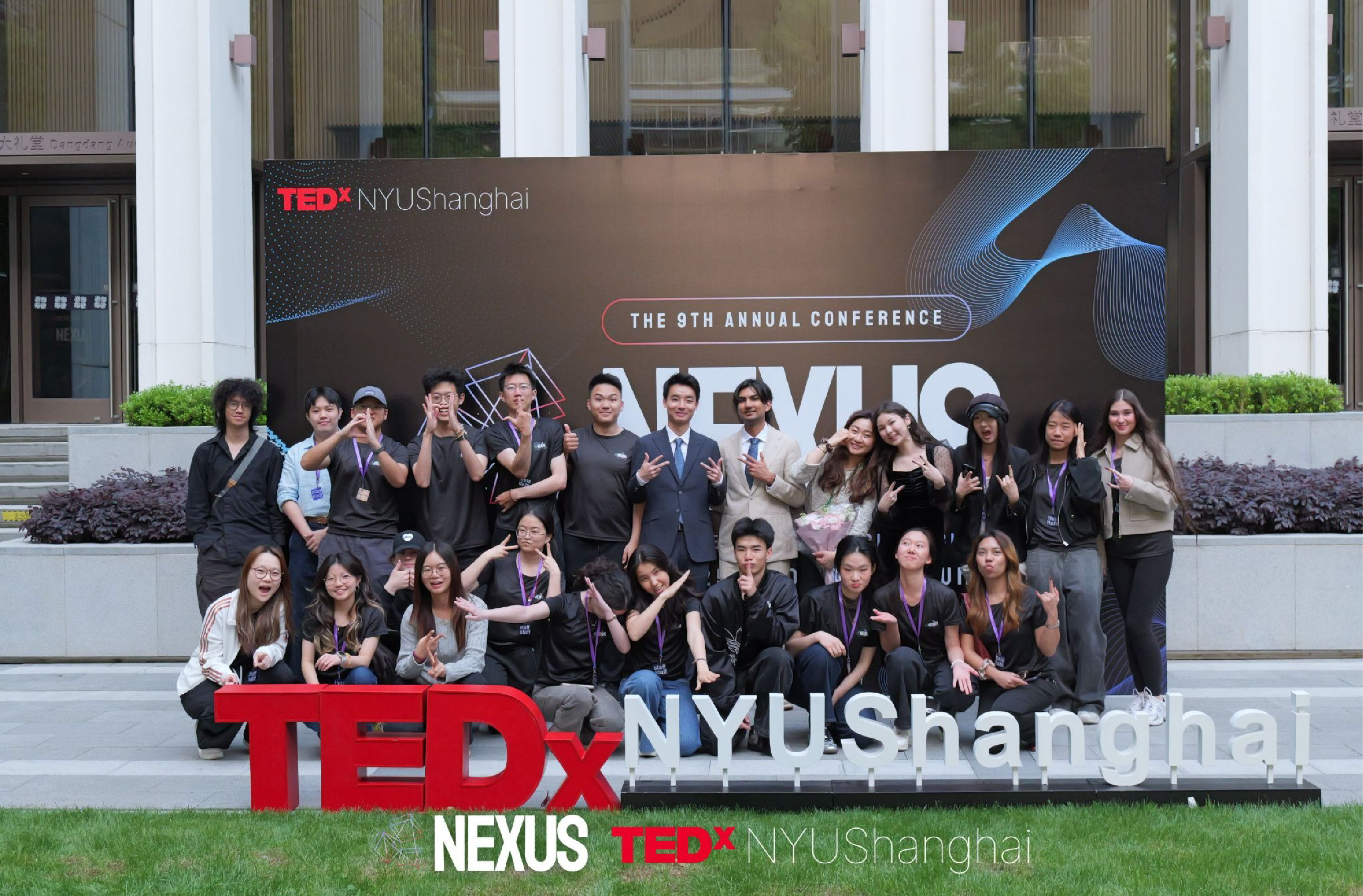
This year’s TEDxNYUShanghai conference was organized by:
E-Board
- Ewan Peng—President
- Yerkezhan Zhunusova—Vice President; Director of Speakers’ Affairs
- Jacob Zhang—Finance Director
- Rey Shi—Activity Director
- David Xia—Activity Assistant Director
- Adeline Gu—Associate Director of Speakers’ Affairs
- Jianing Zhang—Associate Director of Marketing
- Lucy Lu—Marketing Director
Members
Activity Team
- Amina Issabek
- Hongxin Liu
- Leyao Dong
- Bangyuan He
- Hanyue Jing
- Tamila Ilyassova
Finance Team
- Sam Shi
- Bochen Zhang
- Ruohan Zhao
- Zitong Fu
Speakers’ Affairs Team
- Jaymos Wang
- Aining Ren
- Nomu Amarsanaa
- Keqin Zhang
- Anna Cherviakova
Marketing Team
- Kexin An
- Christanne Jorge Avellano
- Chloe Kim
- Anastasiia Ivanova
- Herbein Wang
- Natsumi Zhang
Special Thanks
- Caleb Cruz Valdriz—Student Organizations Director
- Becky Chen—Student Organizations Assistant Director
- Enerel Sandagdorj—Student Organizations Assistant Director
- Sydney Zhang—Student Organizations Assistant Director
- Henry Frazier—Equipment Support
- Isaac Cheaz—Financial Assistant, Student Government
- Richard Xiang—Vice President, Student Government