

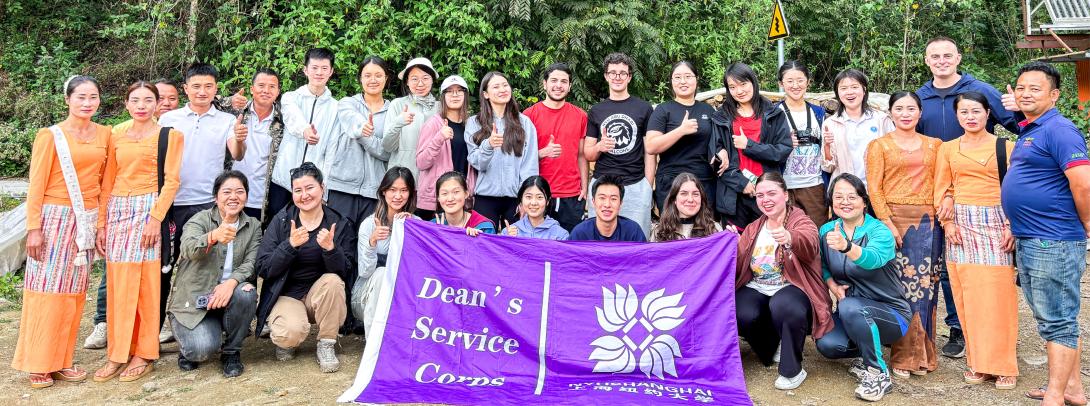
While spring break brings to mind travel and relaxation, this year a group of NYU Shanghai students embarked on two very different trips over the break, combining service work with real world learning in remote parts of China. The trips were organized by the Dean’s Service Corps (DSC), a central hub on campus for community service, and allowed students to learn about different regions of China and the issues facing people there.
One group of 11 students traveled to southwestern Guizhou Province to learn about healthcare equity with an emphasis on ocular health. Another 18 students traveled to southwestern Yunnan Province to learn about animal protection and environmental conservation.
“Through firsthand experiences, students gain a deeper, more comprehensive understanding of these issues,” said DSC Advisor Zoe Zhang. Mutual learning, she added, is at the core of the program. “It's not just learning and observing; it's exchange. Students leave an impact, but they also carry back insights that reshape their understanding of society, environment, and themselves,” she said.
New Visions
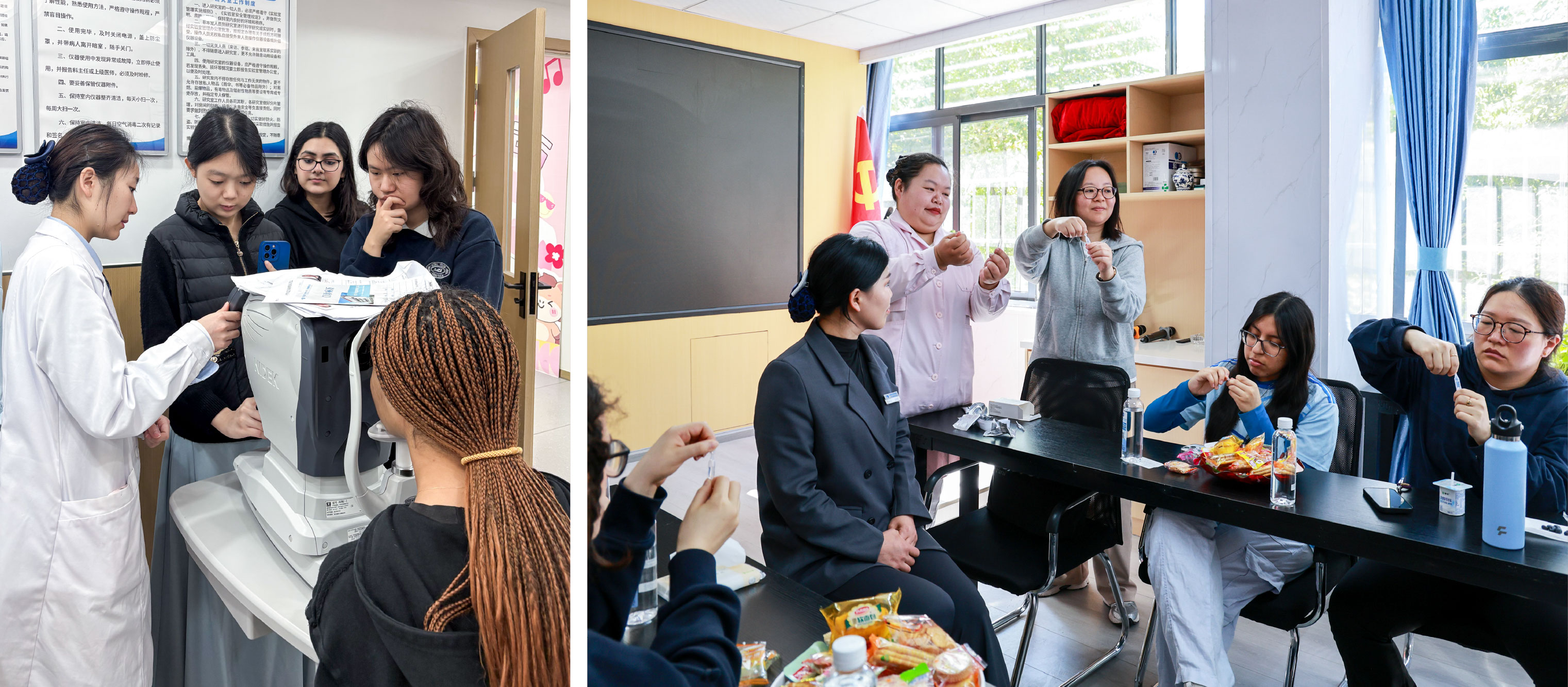
In Guizhou, students observed eye surgeries, learned to operate ophthalmic equipment, and conducted field research on public health initiatives. Gao Jingwei ’29, a data science and math major from Shanghai, said watching a patient remove their eye patch after cataract surgery helped her understand the transformative power of eye care. “At first, the patient was a little nervous, but as their vision gradually cleared, a bright smile appeared on their face,” she recalled.
For Maïlys Oka ’29, a data science major from France, it was her first time to visit rural China What impressed her most, she said, was the dedication of local healthcare providers “and the deep care China shows for its elderly population. ”
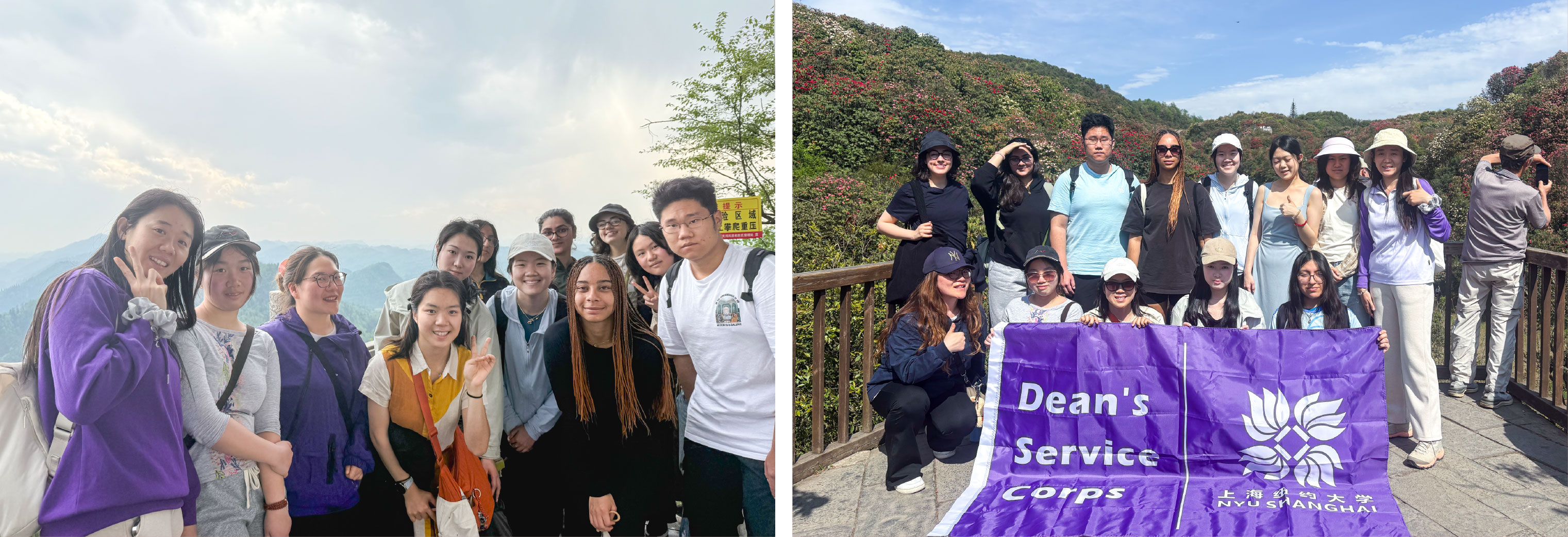
Aside from service work, there was time for sightseeing too.
The trip gave them a firsthand look at how cultural attitudes and systemic challenges inform healthcare delivery in rural China. Through interviews with patients and medical staff, the students also gained insight into how public health projects are designed and implemented.
Wildlife Conservation in Yunnan
The trip to Yunnan Province gave students access to forest rangers and conservationists working with Chinese gray langur, a species of monkey native to the region. They learned how to set up infrared cameras to record animal behavior, removed invasive plants, and planted Yanzhiguo, a non-invasive plant and food source for the monkeys.
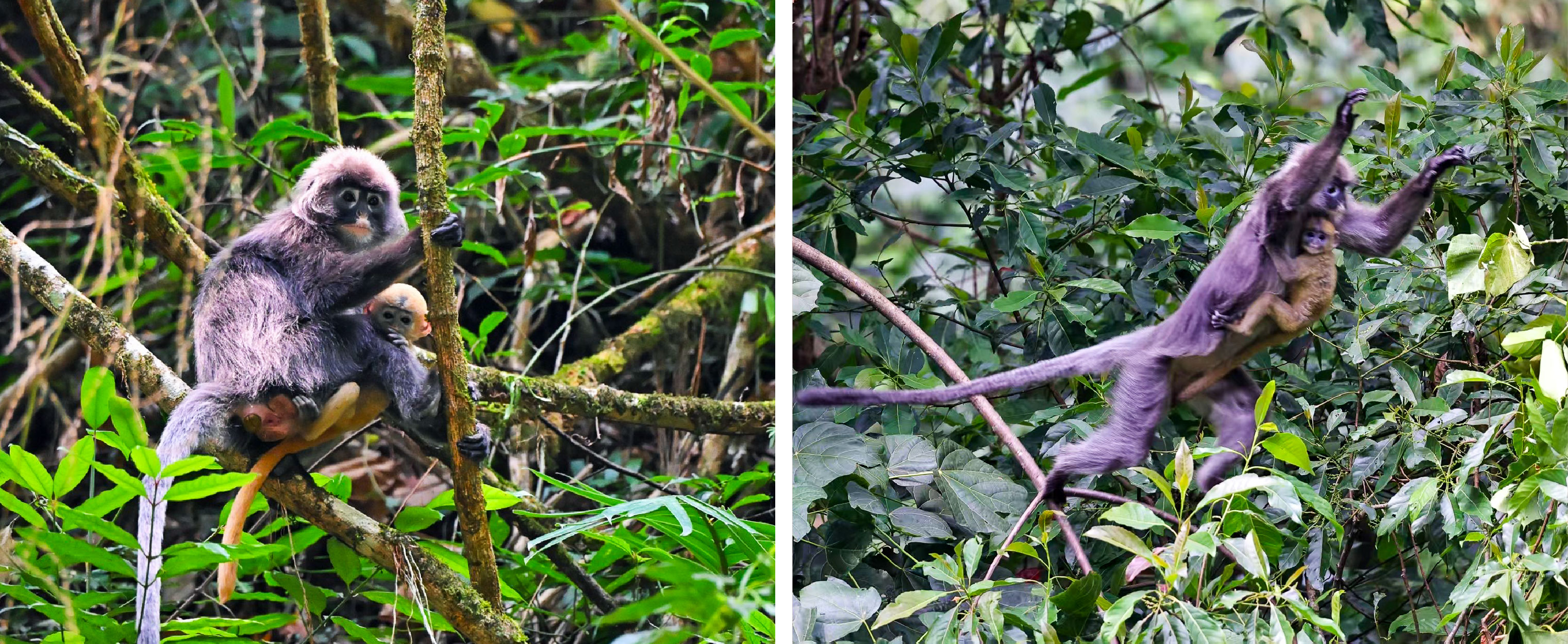
Slovenian study away student Črt Čučko, NYUAD ’28, said he was impressed to see the tangible results of sustained conservation efforts. “Before the Yunnan Green Development Foundation started protecting these monkeys, fewer than fifty remained,” he said. “I personally saw several dozen—this was a living testament to how effective sustained, dedicated conservation work can be.”
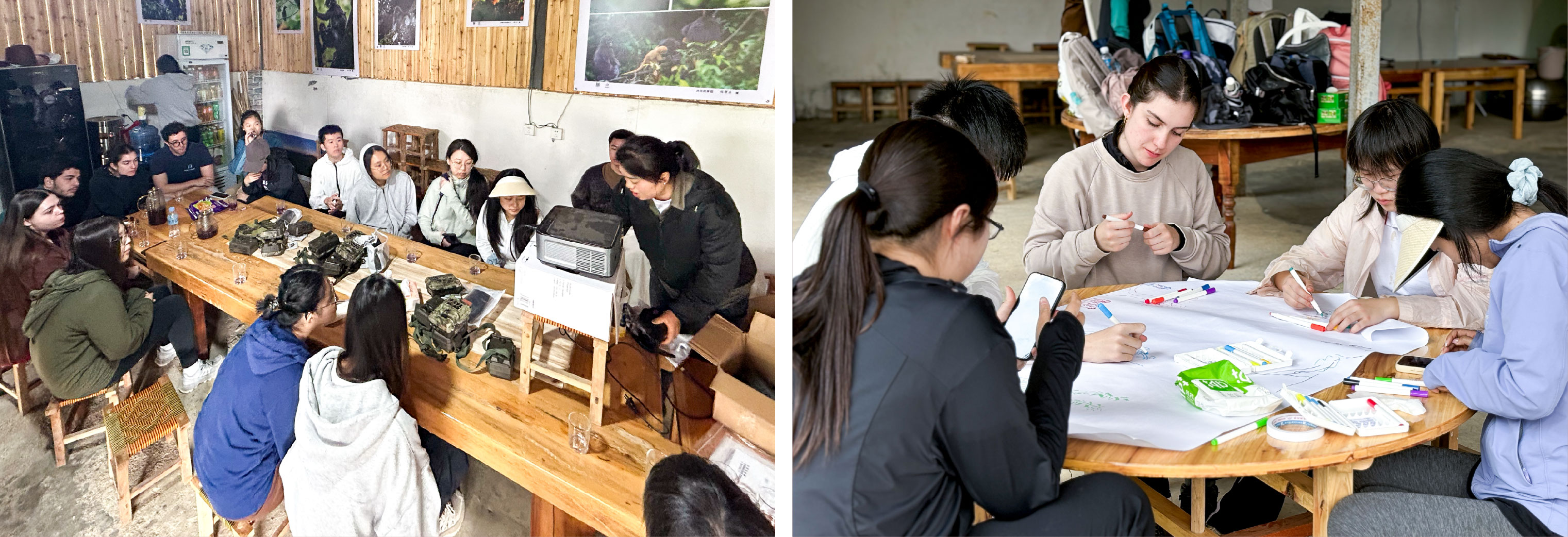
The trip allowed students to reflect on their role in the ecosystem. Yin Liushan ’29, a neural science major from Beijing, said the experience showed him the importance of respecting nature. “Humans are just a part of the huge system, and living in cities where we have control of the piece of land doesn’t mean we know our planet well enough to control it entirely,” he said.
Assistant Dean of Students Mark Eels, who went on the trip to Yunnan, said facilitating exchange was an important part of the trips. “Spending so much time with local residents deepens that connection further,” he said, “making clear that the work matters not only for an endangered species, but for the community that shares its home on the mountain.”