

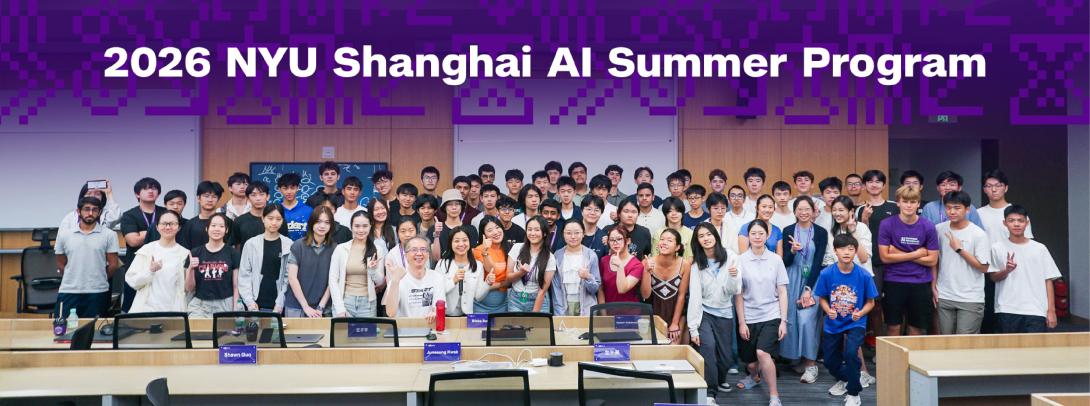
In July, NYU Shanghai welcomed 70 high school students from 16 countries to its second AI Summer Program. Over the ten day program, students moved between learning a tool, building something with it, and explaining what they had made. They attended lectures, collaborated on team projects, worked on labs, and visited local companies, all under the guidance of NYU Shanghai faculty.The curriculum moved from linear regression, classification, and neural networks to computer vision, natural language processing, and large language models. Concepts introduced in morning lectures were put into practice in afternoon labs, where students used Python to train models and apply what they had learned.
The program was designed to give students a structured view of the major methods behind AI: what different algorithms are designed to do, how they relate to one another, and which questions students might explore further.
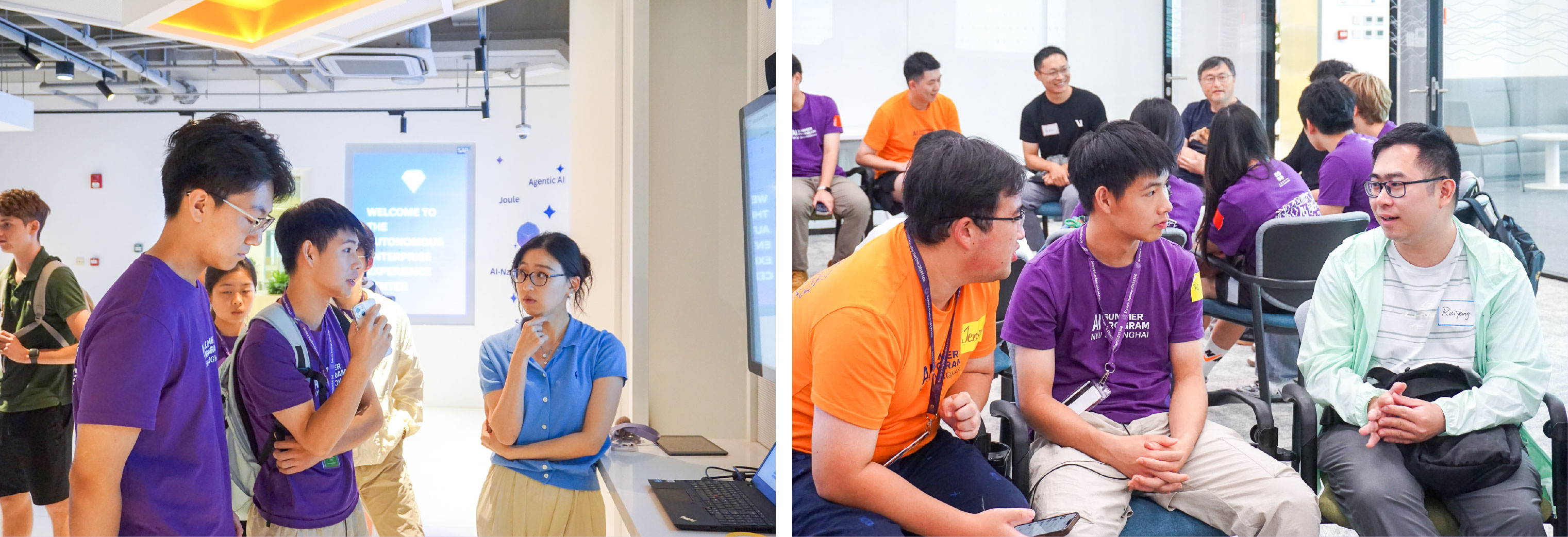
A tenth-grader from Nanjing with programming experience said he found the mathematics behind the models challenging but he learned a lot. “We couldn’t derive every formula in ten days,” he said, “but we could at least understand what problem it was solving and why it worked.”
For an eleventh-grade student from Shanghai the challenge was different. She already had experience using AI-generated code, but in the camp, she learned a lot of Python very quickly. “I still can’t write everything from scratch, but now I can understand most of the code,” she said.
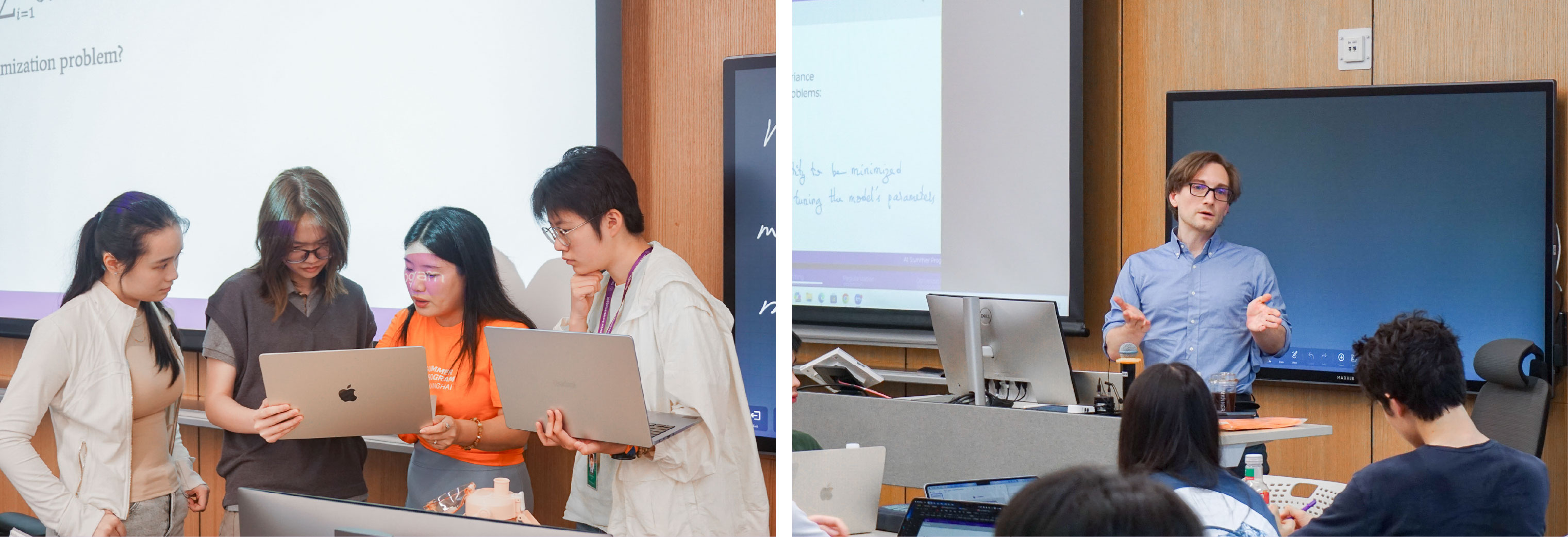
She said what she valued most was how the course connected theory and practice and the support from NYU Shanghai undergraduates, who served as peer mentors for the students. “The math and models we learned in the morning matched the code we worked on in the afternoon,” she said. “And asking a peer mentor is different from asking an AI. A person knows how to explain something in a way a student can actually understand.”
With students from 16 countries and regions, the students also had a chance to practice their cross-cultural collaboration skills. For one group of students from China, US, and Lithuania, communication was the key to their success. Their project, an AI-powered travel planning tool, showcased how students from different places and with different experiences approach a problem from different angles.
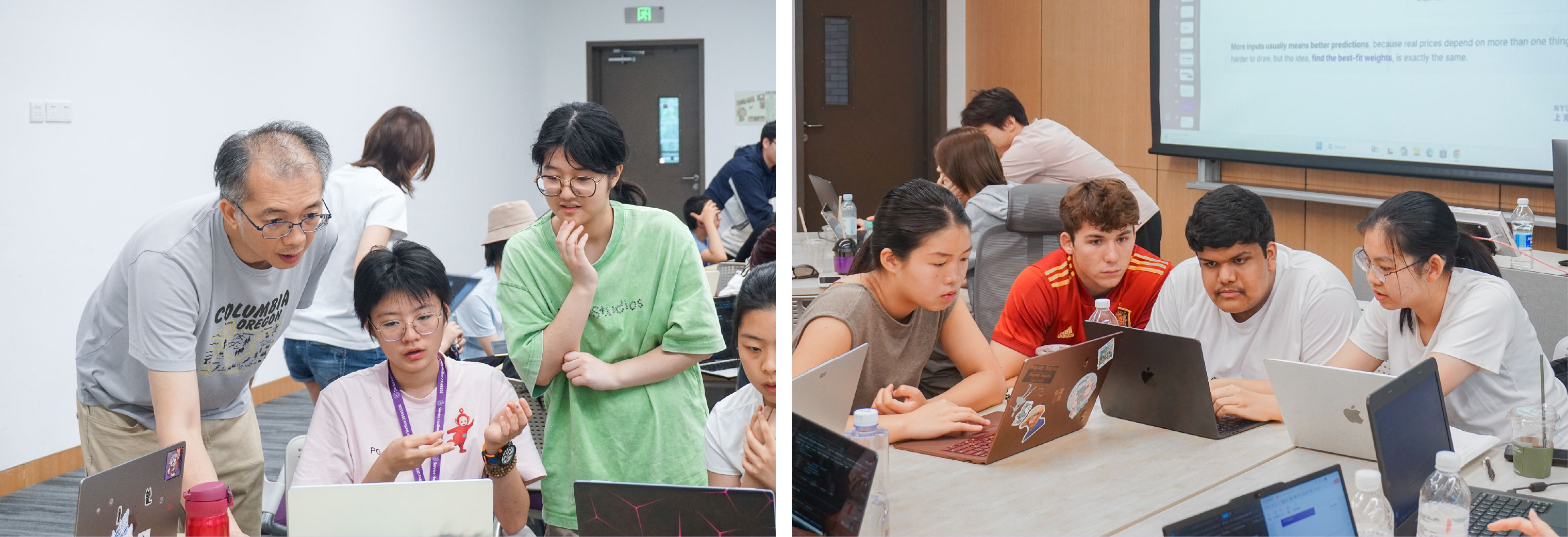
One American student introduced similar AI tools he had used in the US, while his Chinese teammates brought familiarity with local mapping services. “With an international team, you have more things to compare,” he said. “You see that the same problem can be solved in different ways.”
The team ultimately built a multi-agent system handling budget, transportation, accommodation, food, activities, and itinerary planning. Over five days, the idea developed into a working system. Their project, VibeGo, won first place in the final showcase on July 24.
For students working on image classification projects, getting a model to run was only the beginning. They had to think about how it would perform both inside and outside the classroom. One student team trained a model to recognize six categories of waste for disposal. Their first results were disappointing, forcing them to revisit the data, adjust parameters, and retrain the model.
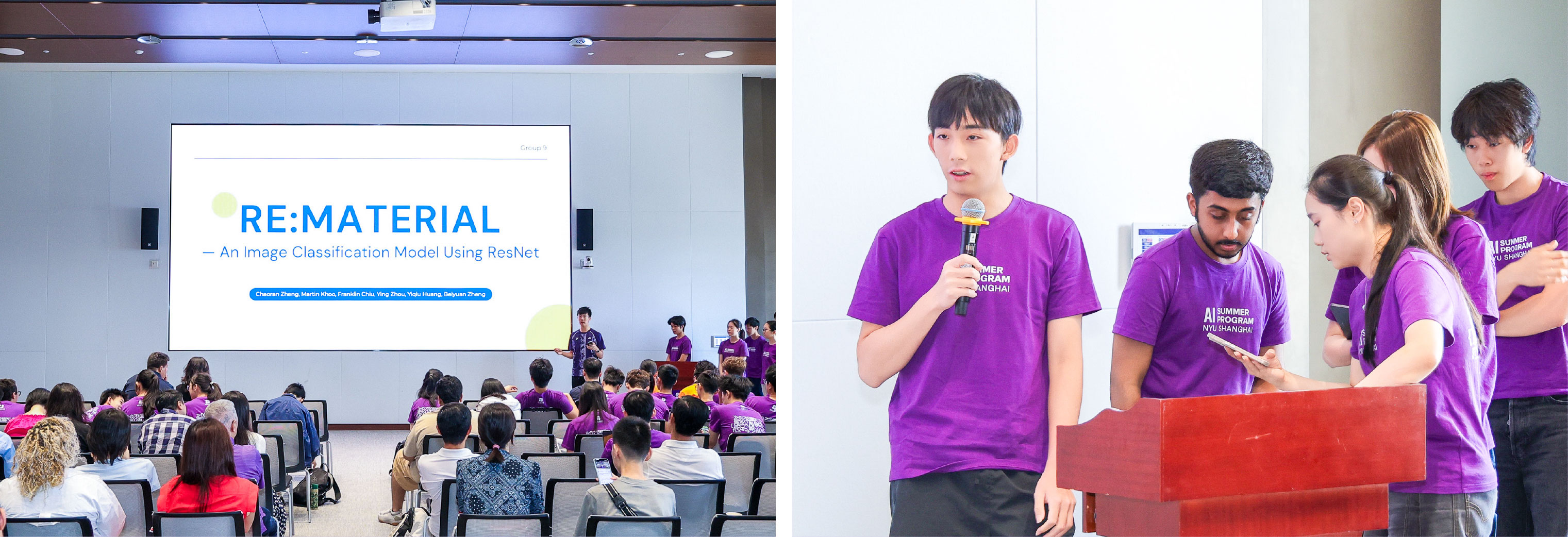
Assistant Professor of Computer Science Hua Shen praised the team for their work, noting that students were considering not only classification performance, but also whether smaller models could work on lightweight devices such as smart phones.
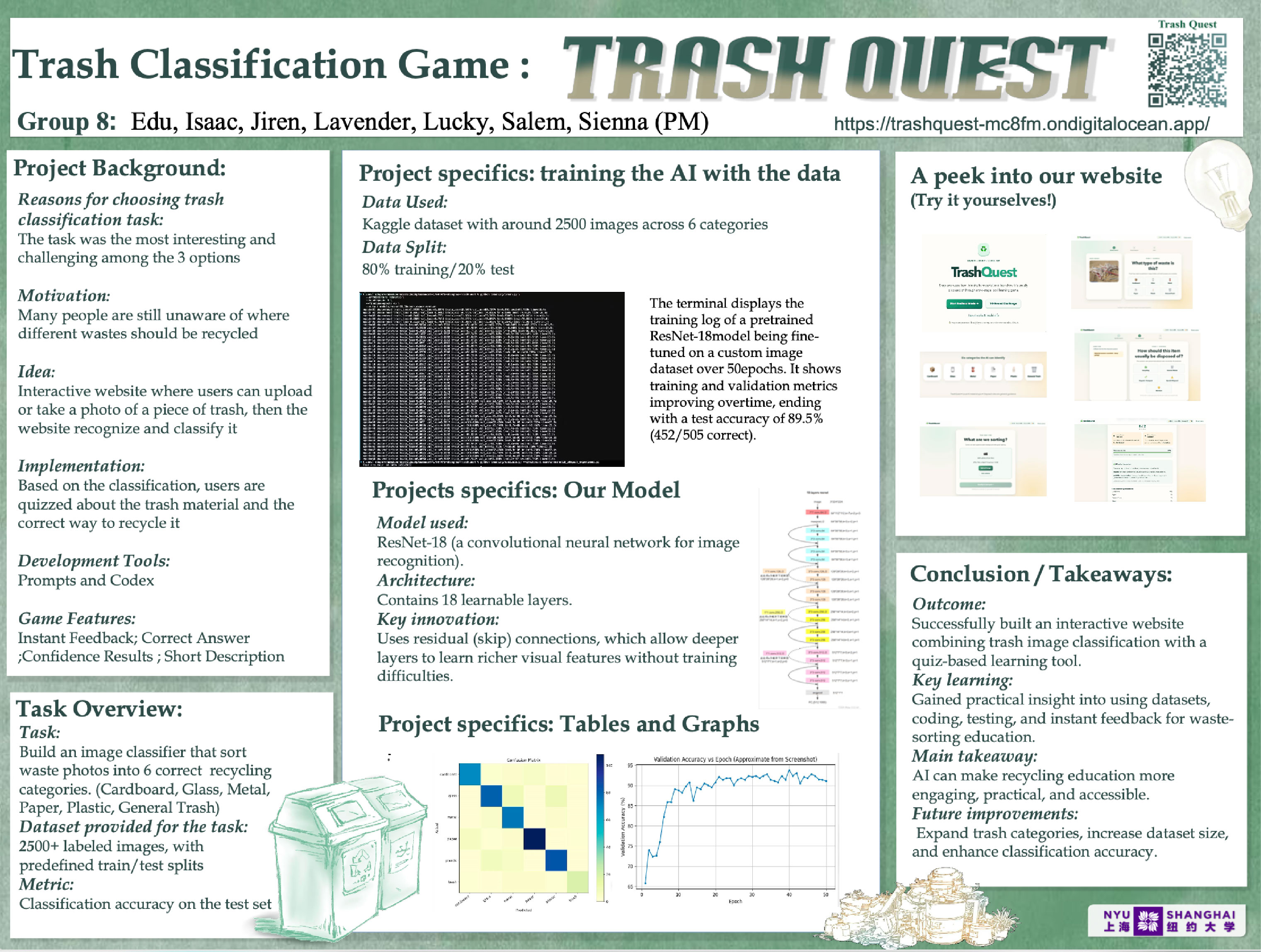
Another student group turned garbage classification into an interactive learning tool: users first guessed an item’s material and category before AI revealed the answer. By the final showcase, the project had moved from a trained model to a mobile-friendly game that students could share and use.
By the end of the program, students were more familiar with AI, but they said they wouldn’t necessarily trust it without question. One student, a ninth grader from Chongqing with extensive programming experience, used agentic coding tools for the first time during his final project and found the challenges of using AI. “When I write the code myself and there’s an error, I can usually understand why,” he said. “This time, AI used technologies I didn’t know. When something went wrong, I didn’t know where to start fixing it.”
The tools, students found, could accelerate development, but they could not replace understanding or judgment. Peer mentors therefore played an important role throughout the final projects. As student teams developed their systems and prepared posters and demonstrations, the peer mentors gave feedback on technical problems, system logic, information organization, and presentation.
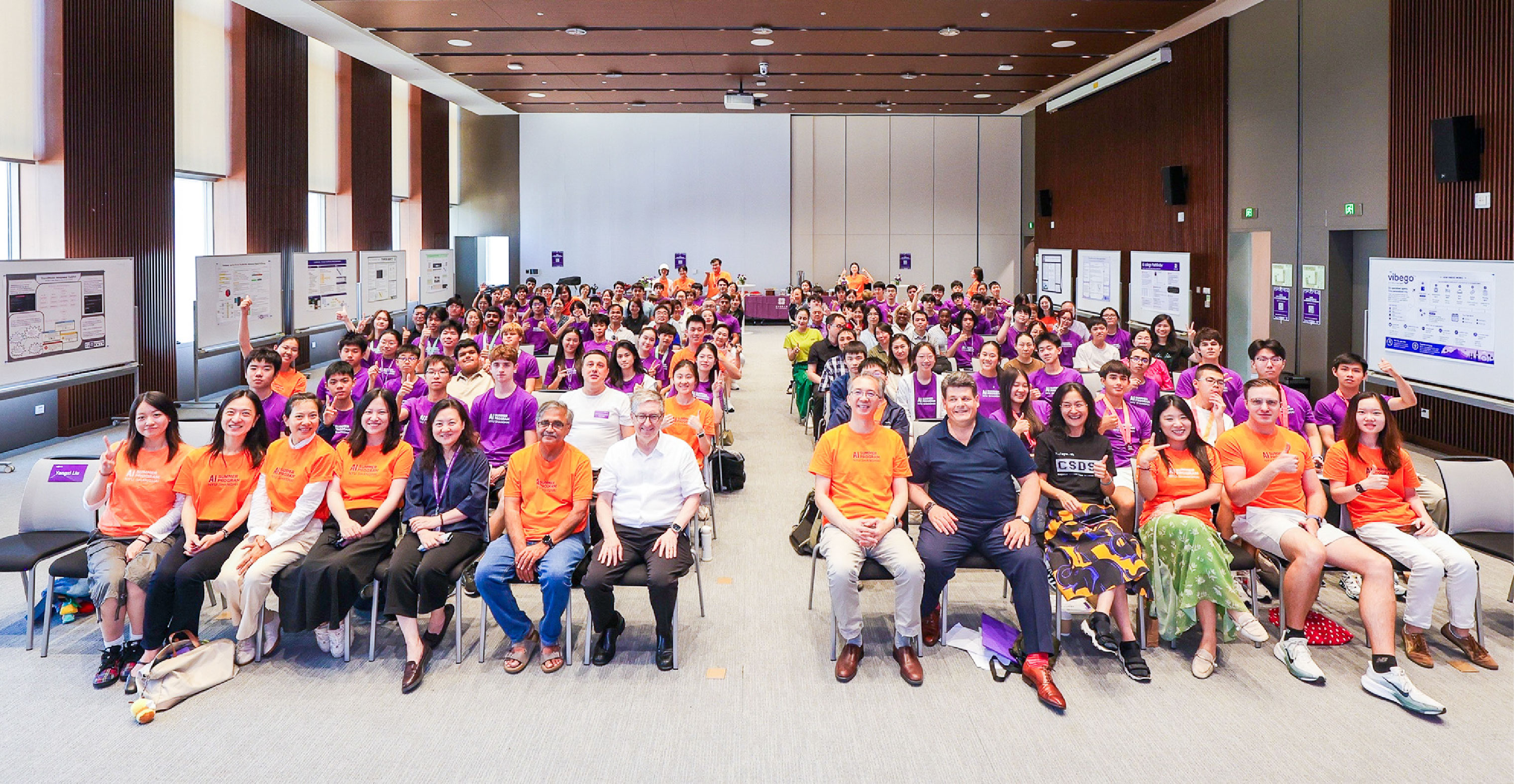
At the closing ceremony, NYU Shanghai Vice Chancellor Jeffrey Lehman advised students that for their generation, just learning to use AI would not be enough. “If you can continue to develop that deep and sophisticated understanding, you will be able to keep up with increasingly powerful AI tools, use them to do more complex and important things, and at the same time keep those tools from harming yourselves or society,” he said.
Ten days were not enough to fully “learn AI,” of course. But the next time these students encounter an AI-generated answer, they may be more likely to ask not only whether they can use it, but also how it was produced, where it could go wrong, and what decisions should remain in human hands.