

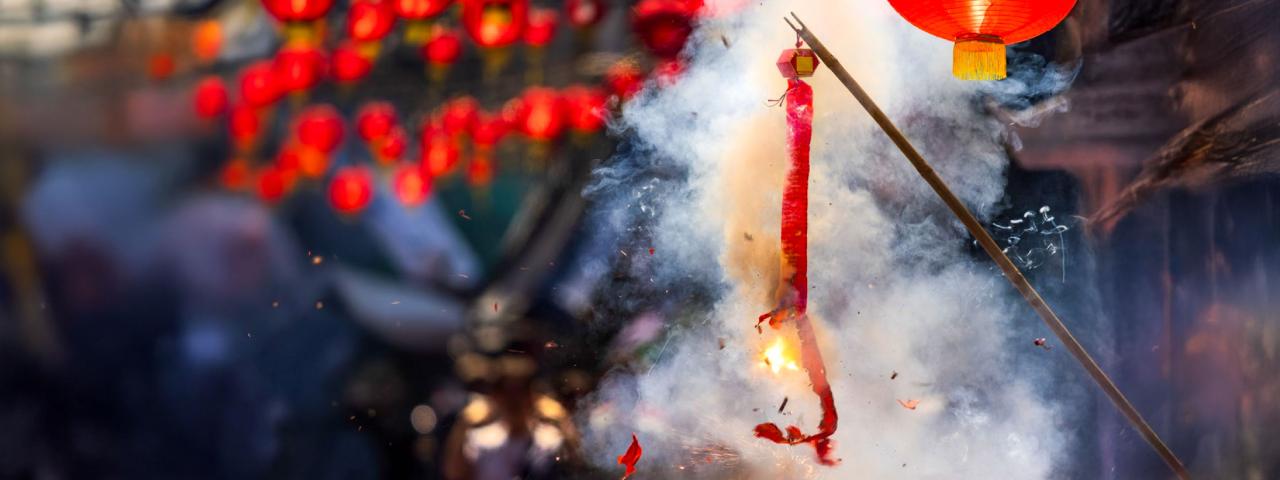
What does it mean “to go home” to a place your parents are from, but you’ve never visited yourself? That was the experience of four American NYU students studying away at NYU Shanghai as they celebrated the Spring Festival for the first time in their parent’s hometowns. Spending the new year with their extended family, they learned more about their families — and themselves — and reclaimed a piece of their cultural heritage along the way.
The Spring Festival break took them all over China. Biology major Jerry Ju, NYU ’27, from Flushing, New York spent his holiday with family in Wenzhou, Zhejiang. Mechanical Engineering major Jason Li, NYU ’28 from Queens, New York, spent his holiday with family in Changle, Fuzhou. Media, Culture, Communication major Eileen Liu Shum, NYU ’27 from Manhasset, New York spent her holiday in Shanghai with family, and Computer and Data Science major Emma Zhang, NYU ’27 from Los Gatos, California spent her holiday with family in Xiangyang, Hubei.
Navigating Cultures
What cultural custom surprised you?
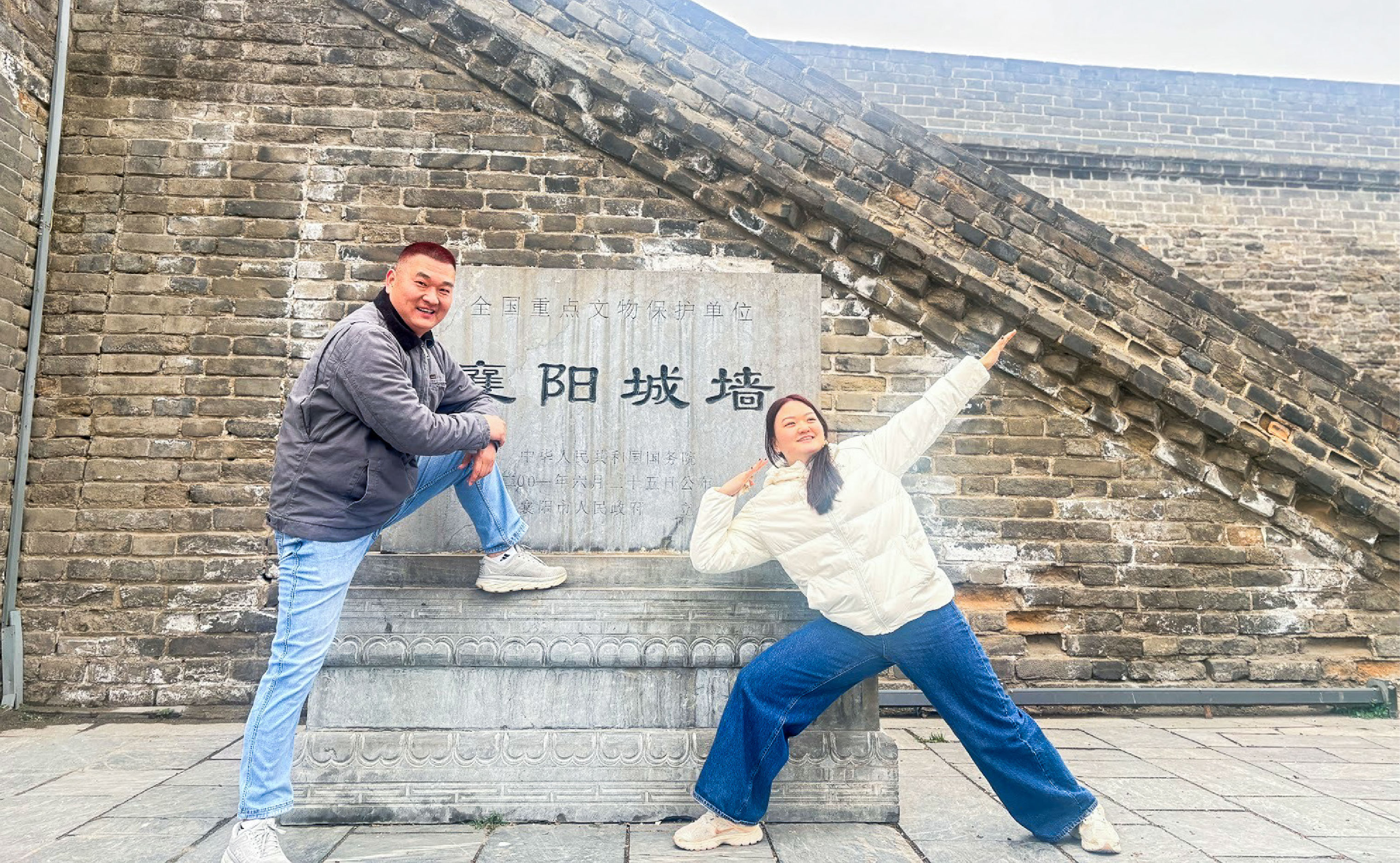
Emma Zhang: I spent the holiday with my dad and extended family in Xiangyang, Hubei. Without even a shared language, there was little common ground to bridge the gap beyond gestures and polite greetings. Even though I didn’t always correctly address my unknown relatives, they received me warmly nonetheless, teaching me that acceptance comes from effort, and not always from following the correct customs and procedures.
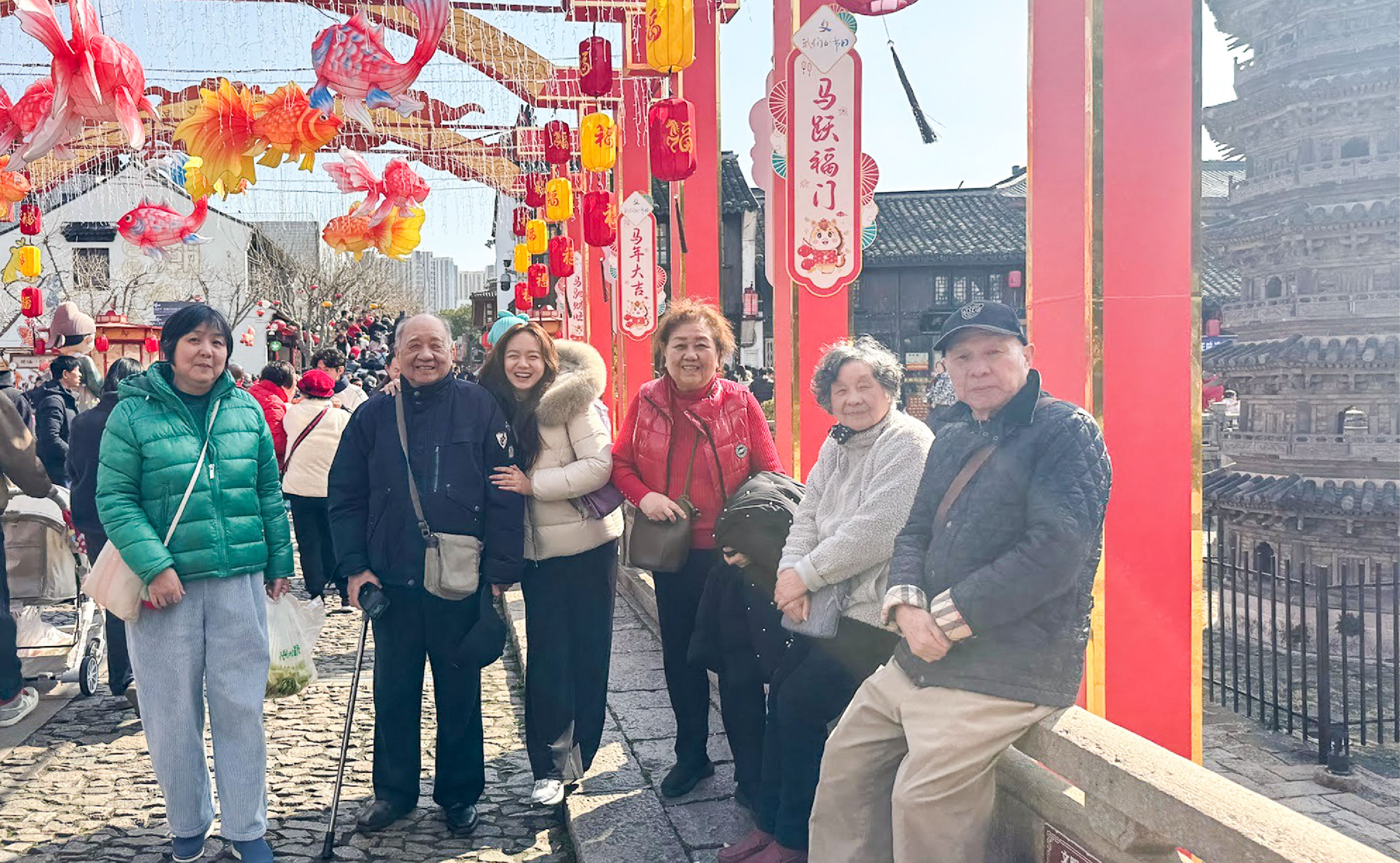
Eileen Liu Shum: I spent New Year’s in Shanghai for the first time with my grandparents and the older generation. The most challenging part of staying with family for the New Year was saying no to food. All the food was delicious, but I couldn’t get around to eating all of it because everyone was piling food on my plate. I felt so loved but too full, haha!
Connecting with Family
Was there a moment when you felt a genuine connection with a family member despite language differences?
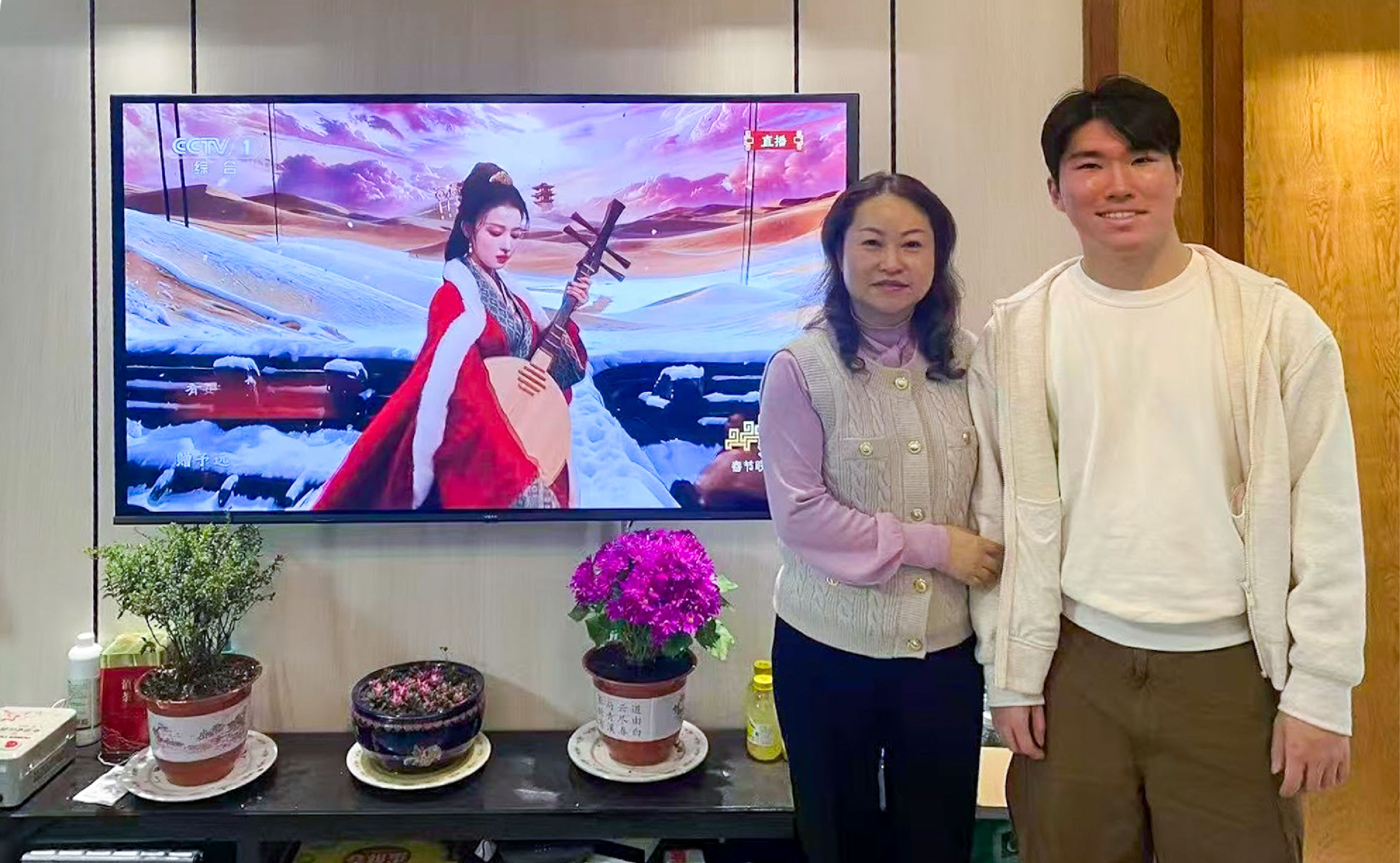
Emma Zhang: At one point, my aunt noticed me standing silently on her balcony, watching the city glow below. We had never truly spoken before; our conversations had always been limited to polite greetings. But in that moment, language became something to work around rather than against. As the eldest daughter in a Chinese family, she grew up carrying responsibilities that were never formally assigned but were always expected. These struggles were not spoken aloud, especially not to a niece from a younger, more privileged generation. But I saw the silent message in her tone and her eyes. I nodded in agreement, and I reflected on the distance between our upbringings and the inherited guilt that comes with recognizing one’s freedom. The language gap was bridged not through language fluency, but through a shared silence, the unspoken understanding of what it means to carry a family on your back.
Finding Belonging
Did you ever feel like an outsider?
Jerry Ju: In some ways, I did feel like an outsider, because the dominant language was Wenzhounese, so sometimes my newly acquired Chinese didn’t even come into use. Luckily, I had some distant cousins who could help me translate and bring me around the city.
Emma Zhang: Belonging doesn’t always look loud or obvious. Sometimes it exists in food being attentively placed in front of you, remembering your eating habits without uttering a word, in being cared for in ways that feel instinctive and deeply human. Grandma noticed small details: how I liked the fried yam balls and would quietly nudge the dish closer to me, or how I preferred soup over rice and would make sure my bowl was refilled with something nourishing. Food is my love language, and being understood through the lens of my food preferences showed me that belonging can transcend language barriers completely.
Making Memories
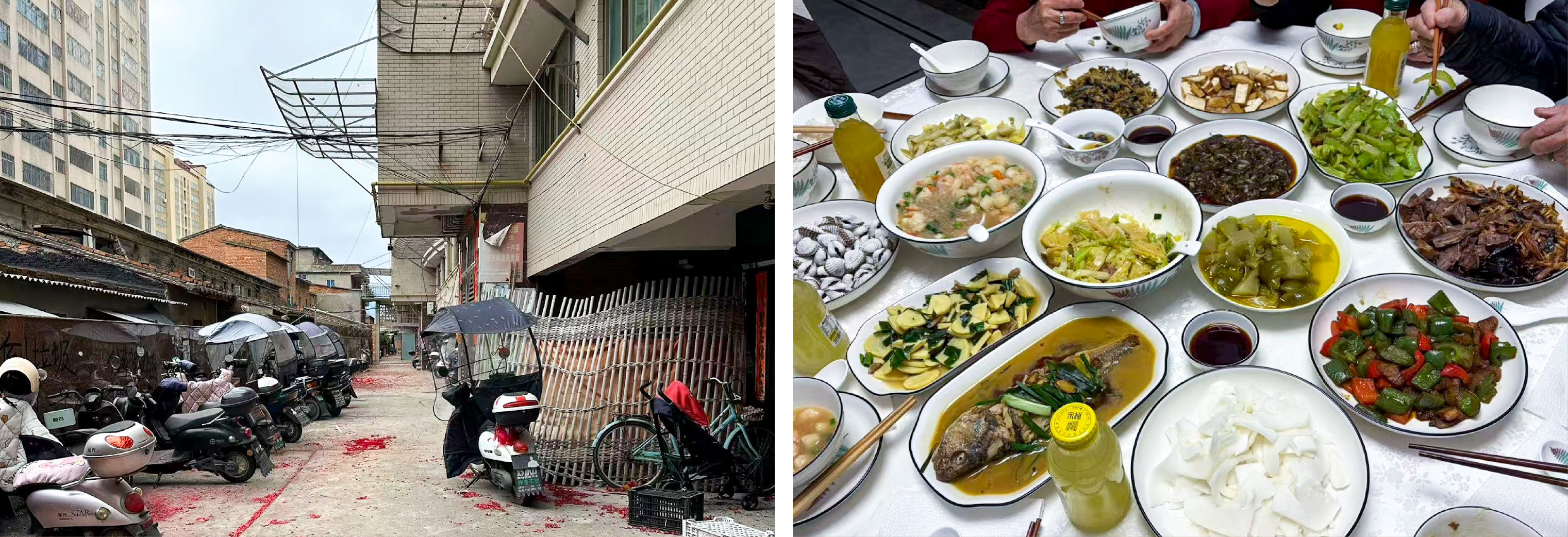
What's a moment from the holiday—something that wouldn't make it into a photo album—but one you hold close?
Jason Li: I spent New Year’s with my mom and extended family in Fuzhou, Fujian Province. My mom flew from New York to Fuzhou to spend the New Year together with me and our extended family. One moment I will remember is sitting in bed with my mom in the very house she grew up in while she shared stories from her childhood here. This was my first time being away from home for so long, so seeing her again during the holiday meant a lot.
Eileen Liu Shum: It was late and approaching midnight. My grandparents usually sleep early but [they] stayed up to hopefully see some fireworks. Just as my grandparents got tired, there were these huge fireworks going off right in front of our community. Watching my grandparents looking at the fireworks with their big eyes and smiles is a small moment I’ll always remember. It’s like they were kids again.
Personal Growth
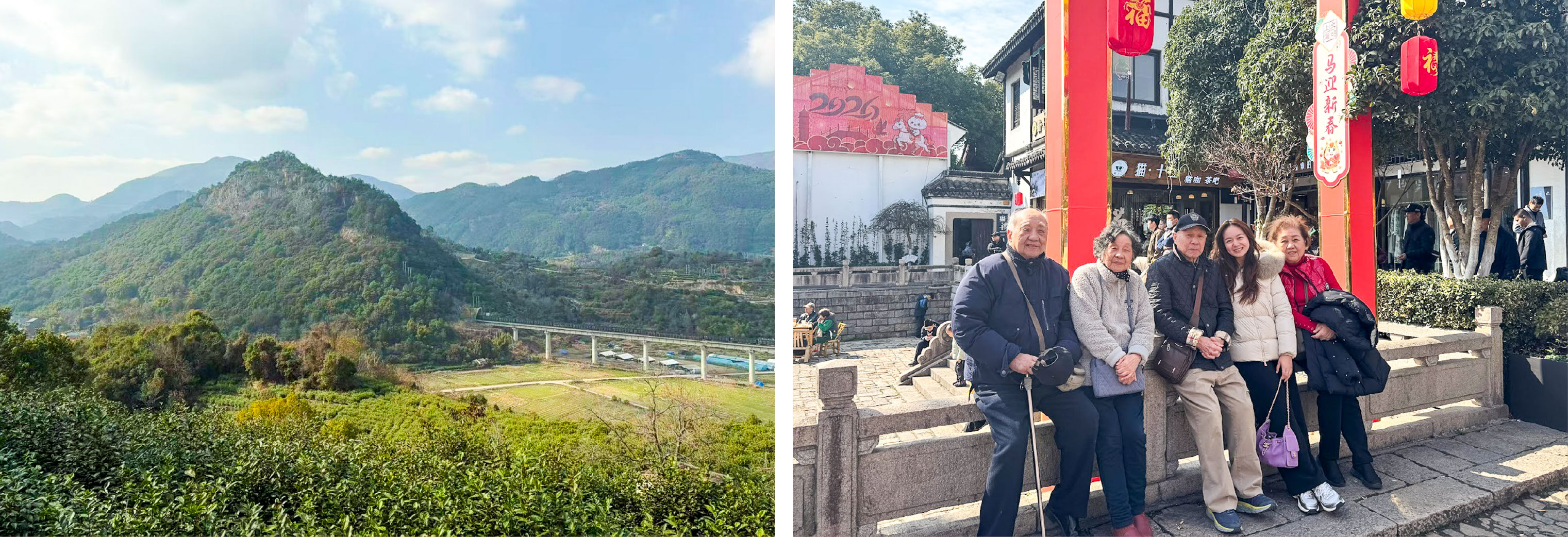
How has this experience changed you?
Jason Li: In Shanghai, I felt out of place speaking English, but in Fuzhou, I felt out of place speaking Mandarin in a city conversing in Fuzhounese. This experience showed me I need to be more proactive about engaging even when my language skills are not perfect. Going forward in Shanghai, I plan to participate more confidently while continuing to improve my Mandarin.
Emma Zhang: When I first arrived in Shanghai, I felt as though I had wings; I was free from American cultural expectations, free to explore, and free to redefine myself. But that freedom quickly became disorienting. I felt disconnected from people in a place I so desperately wanted to call my motherland. Being with my family allowed me to form bonds. Knowing that I have family across the country–people who urge me to visit and assure me I belong–has grounded me in a way that language fluency alone never could.